

 En
En


2026-09-10
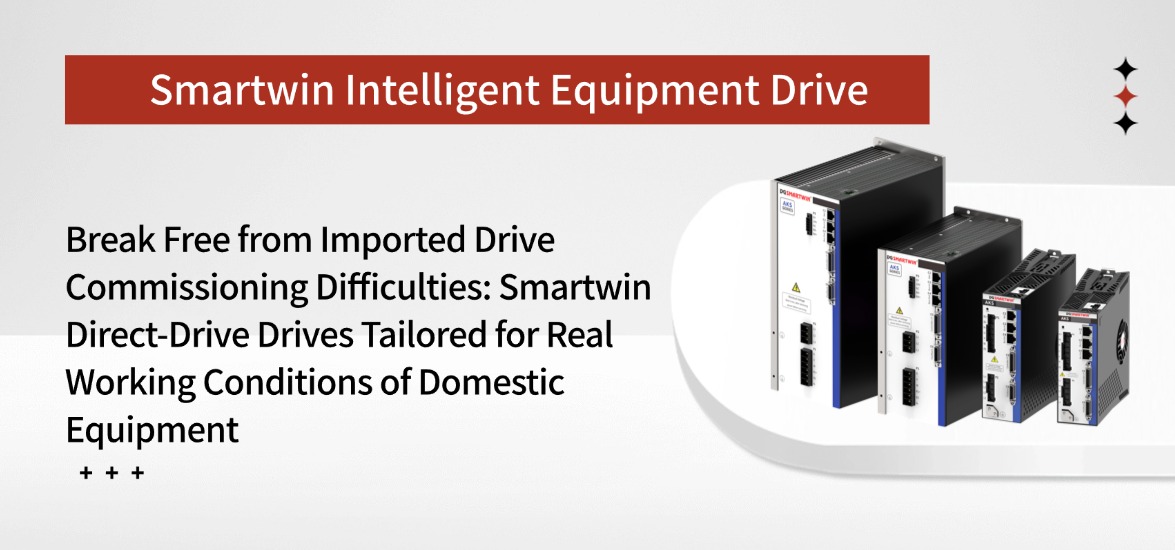
Break Free from Imported Drive Commissioning Difficulties: Smartwin Direct-Drive Drives Tailored for Real Working Conditions of Domestic Equipment
Most imported drives available on the market feature complicated parameter frameworks and unintuitive operations, resulting in high commissioning barriers. Equipment engineers have to spend substantial time learning and adapting them, slowing down prototype development and project delivery. Moreover, imported products are mostly tuned for overseas standard working conditions and cannot fully adapt to the variable and complex production sites in China. Developed to meet the R&D and mass-production demands of local automation equipment, our dedicated drives balance high performance and ease of use. Preconfigured parameters for standard operating conditions allow quick startup with simple setup after power-on, greatly lowering commissioning thresholds and suiting rapid prototyping and iterative development cycles of equipment.
2026-09-10
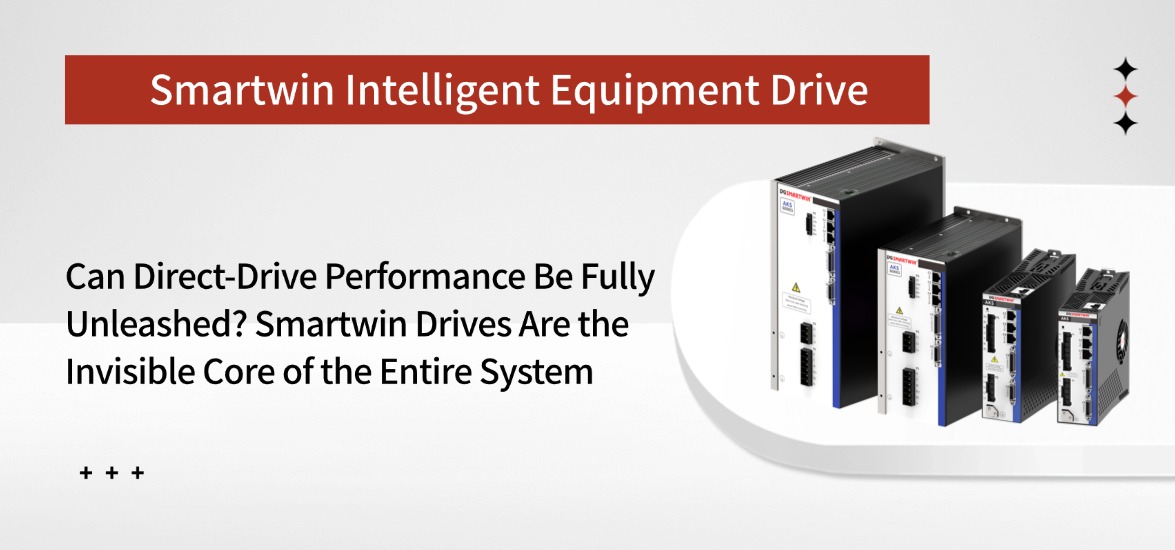
Can Direct-Drive Performance Be Fully Unleashed? Smartwin Drives: The Invisible Core of the Entire System
Many equipment manufacturers only focus on hardware parameters such as torque and speed of DD motors during product selection, ignoring the core value of drives. In fact, DD motors are solely responsible for power output. The final positioning accuracy, start-stop smoothness, anti-interference capability and operational stability of equipment are all determined by the control algorithm and closed-loop performance of the drive. Generic drives feature simplistic algorithms, poor filtering capability and sluggish closed-loop response. Even when paired with premium DD motors, issues including jitter, resonance, positioning deviation and signal fluctuation may arise, resulting in wasted hardware performance. Deeply adapted and tuned to the electrical characteristics of direct-drive motors, Smartwin dedicated drives match the motor’s power output logic at the source to fully unlock the advantages of direct-drive hardware.
2026-09-10
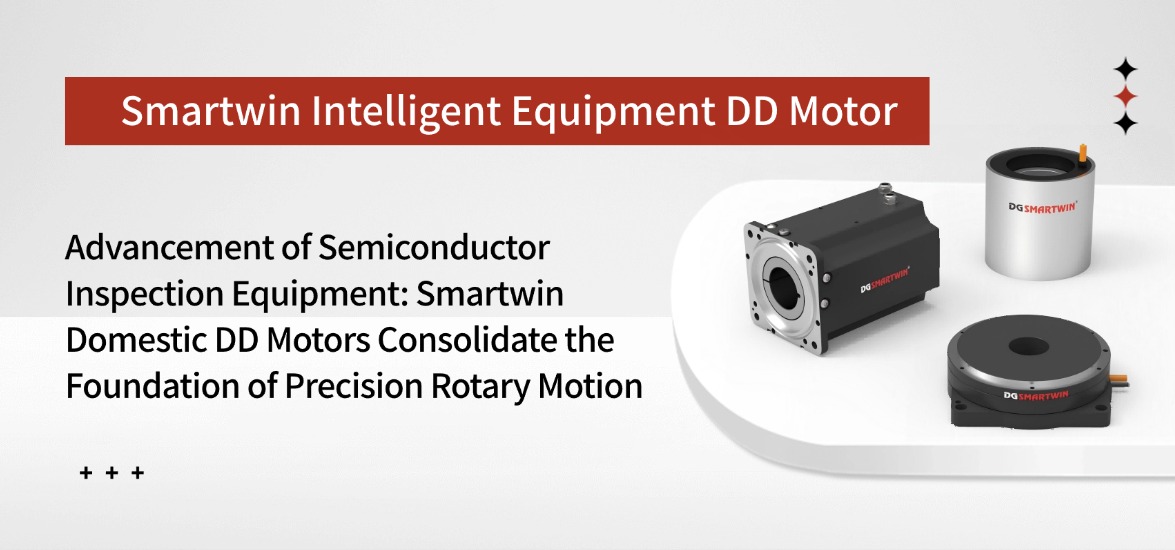
Advancement of Semiconductor Inspection Equipment: Smartwin Domestic DD Motors Consolidate the Foundation for Precision Rotary Motion
Core processes of semiconductor packaging, wafer inspection, optical precision screening and high-precision alignment equipment rely on stable, accurate and low-jitter rotary motion. AI vision inspection is extremely sensitive to imaging conditions. Tiny jitter, angular deviation and start-stop shock from rotary mechanisms will trigger image blurring and position offset, resulting in algorithm misjudgment and product missed detection, which directly affect overall equipment inspection accuracy and product yield. Inherent backlash and wear issues of conventional transmission structures cannot satisfy long-term high-accuracy and high-consistency production requirements for semiconductor equipment. High-end precision equipment must adopt pure direct-drive, zero-backlash and high-stability DD motors as rotary cores.
2026-09-10
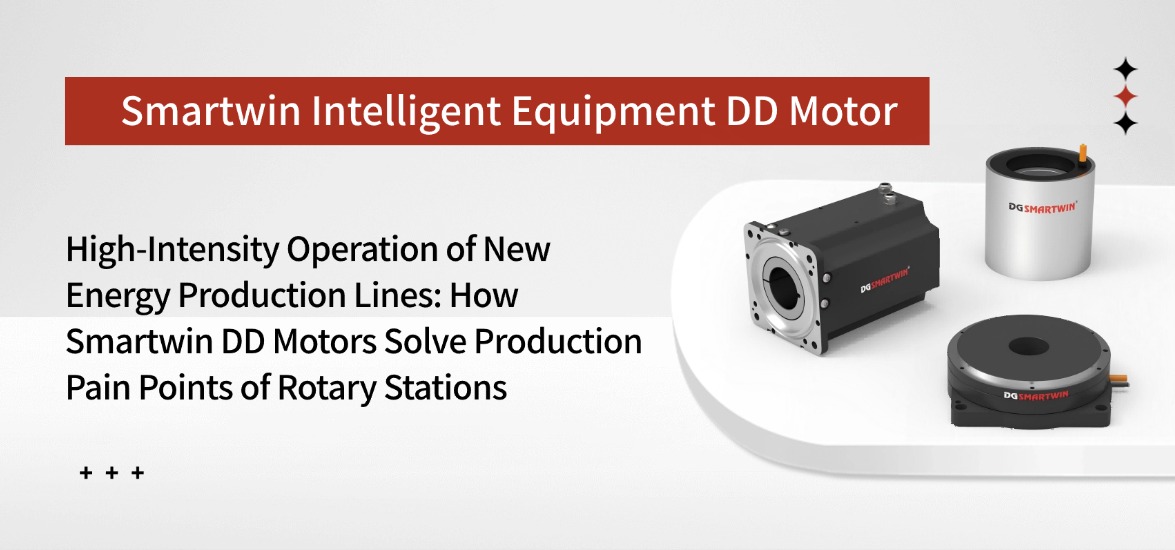
High-Intensity Operation of New-Energy Production Lines: How Smartwin DD Motors Solve Bottlenecks at Rotary Workstations
Continuous capacity expansion in energy-storage, power-battery and photovoltaic industries has pushed relevant equipment into a full-scale production mode featuring high tact time, round-the-clock operation and high-intensity workload. Processes such as cell appearance inspection, electrode-sheet rotary stations, battery stacking and PV silicon wafer sorting demand frequent start-stop, high-speed commutation and precise positioning from rotary mechanisms, setting extremely high standards for stability, durability and fatigue resistance of motion components. Under high-frequency cyclic operation, conventional motor-reducer structures suffer rapid wear and obvious accuracy degradation. Meanwhile, workshop dust and corrosive mist accelerate gearbox aging, raising equipment failure rates and triggering frequent downtime. Such structures fail to meet continuous-uptime production requirements of new-energy lines, and the industry is urgent need of specialized, highly-reliable direct-drive rotary solutions.
2026-09-10
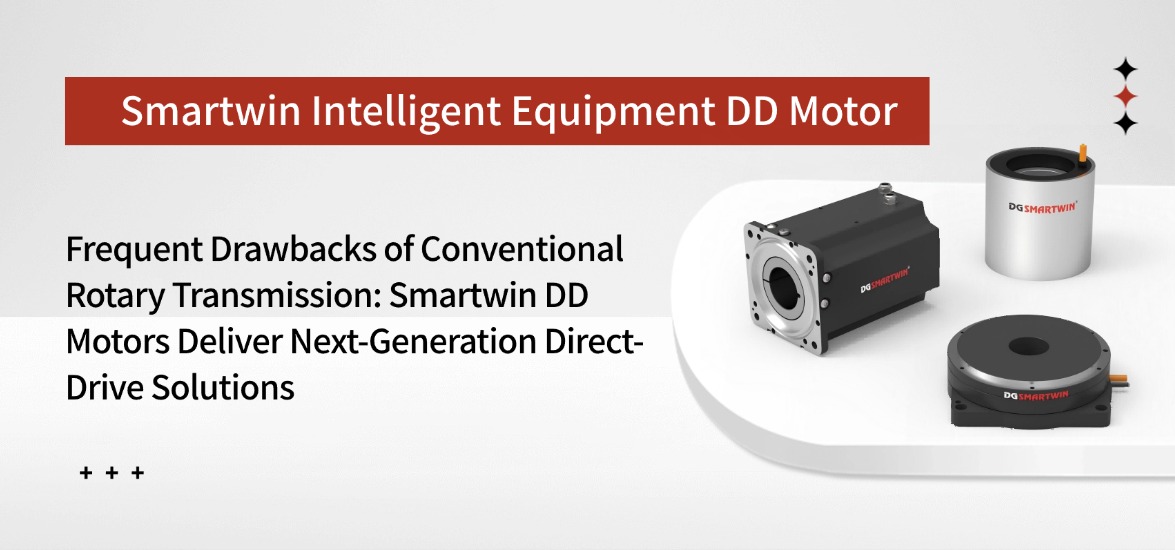
Frequent Drawbacks of Conventional Rotary Transmission: Smartwin DD Motor Delivers Next Generation Direct-Drive Solution
In high-end automation equipment for lithium-battery, semiconductor, precision inspection and photovoltaic industries, the stability of rotary workstations directly determines equipment yield and uptime. For a long time, most equipment adopts the "servo motor + reducer" transmission mode. Though with mature structure and controllable cost, its drawbacks are greatly amplified under working conditions of high precision, high tact time and long-term continuous production. Gear meshing inherently generates backlash. Wear intensifies after frequent forward-reverse rotation, and angular errors keep accumulating, resulting in positioning deviation and reduced repeat accuracy after the equipment runs for a period of time. To maintain process standards, the equipment requires frequent shutdown for calibration and replacement of gear consumables, which not only increases operation & maintenance costs but also interrupts continuous production rhythm of production lines. As intelligent manufacturing sets higher requirements for equipment stability, consistency and maintenance-free performance, conventional transmission solutions can no longer keep pace with the iteration speed of high-end equipment. DD direct-drive motors featuring zero-backlash, low wear and high stability are comprehensively replacing traditional rotary transmission structures.
2026-09-03
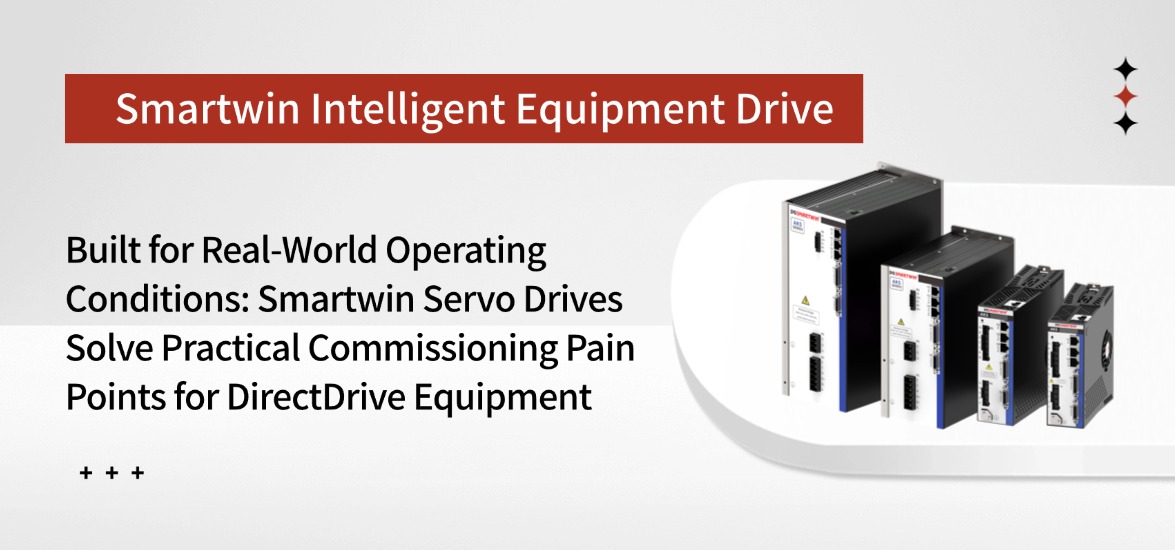
Built for Real-World Operating Conditions: Smartwin Servo Drives Solve Practical Commissioning Pain Points for Direct-Drive Equipment
Many automation engineers frequently encounter a common problem: equipment performs ideally under laboratory tests yet suffers frequent failures after deployment on the production floor. Factories are filled with frequency converters and high-power motors that generate severe electromagnetic interference. Workshops also undergo wide temperature fluctuations, with equipment running continuously under full load for extended periods. These real-world operating conditions impose stringent requirements on drives in terms of signal acquisition, anti-interference performance and long-term stable operation. Conventional drives are prone to signal fluctuation, false alarm triggers and positioning jitter under complex on-site conditions, which directly reduce overall production yield. During product development, Smartwin servo drives are fully shielding design and optimized internal filtering algorithms suppress industrial electromagnetic noise, ensuring stable signal interaction among DD motors and encoders.
2026-09-03
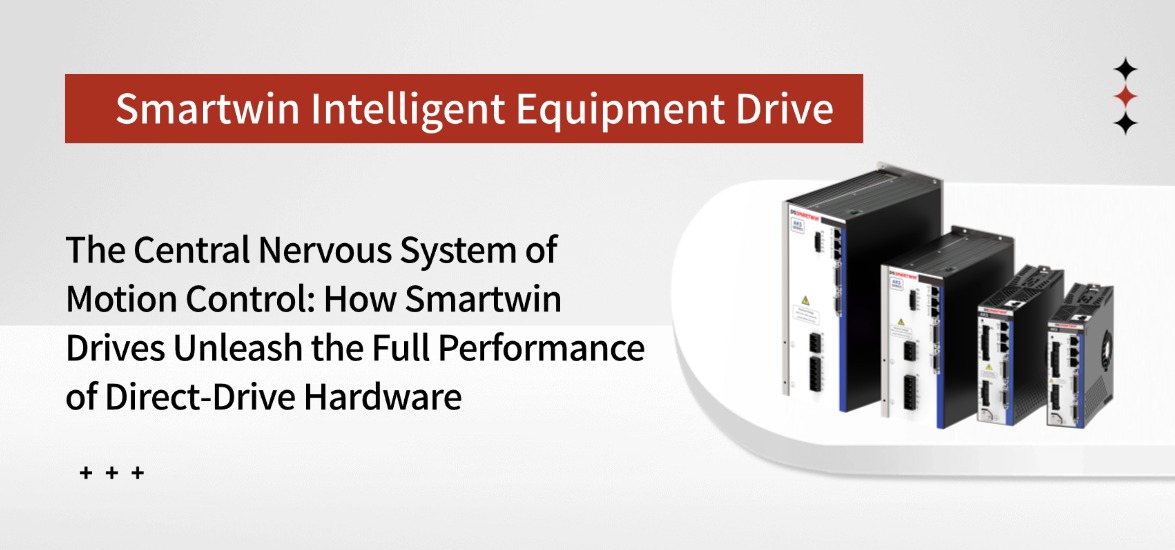
The Central Nervous System of Motion Control: How Smartwin Drives Unleash Full Performance of Direct-Drive Hardware
During equipment component selection, most engineers focus heavily on torque and speed parameters of DD motors while overlooking the critical role of drives. DD motors deliver torque output, whereas drives serve as the central control unit for the entire direct-drive system. Even with the same DD motor, pairing it with drives of different performance levels yields drastically different real-world equipment behavior in terms of response, jitter suppression and positioning stability. Drives undertake multiple tasks including command parsing, current closed-loop control, position closed-loop control and signal interaction. They receive motion commands from the host controller, dynamically adjust the output torque of DD motors in real time, and process feedback signals from encoders to realize deviation compensation. Insufficient control algorithms or poor quality signal processing within drives will prevent high-grade DD motor hardware from achieving its rated performance. Smartwin develops matching drives tailored for its own DD motors. Motors and drives are jointly calibrated to reduce hardware-software compatibility failures at the source.
2026-09-03
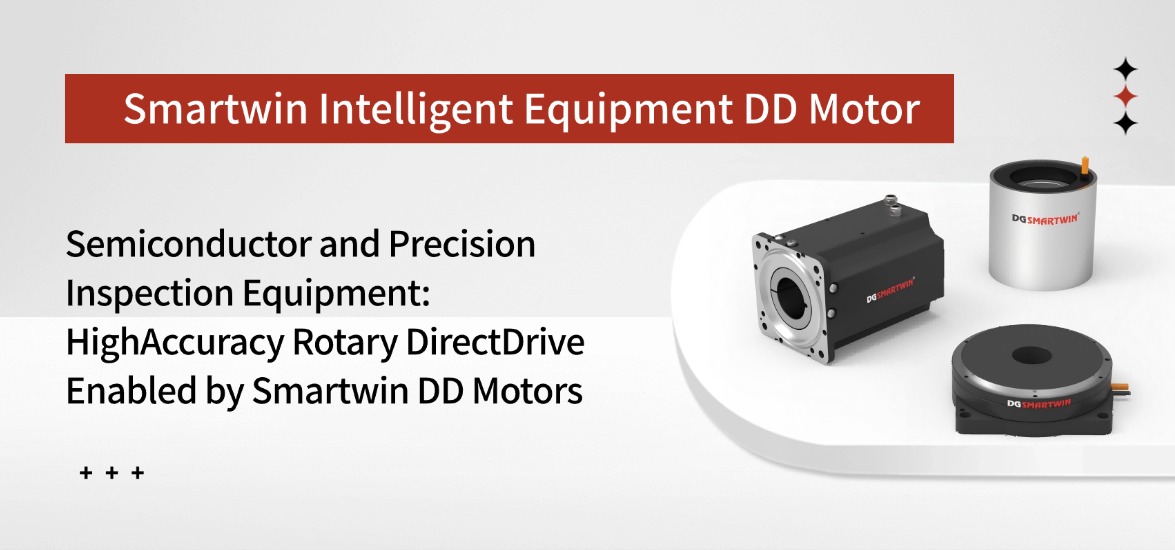
Semiconductor and Precision Inspection Equipment: High-Accuracy Rotary Direct-Drive Enabled by Smartwin DD Motors
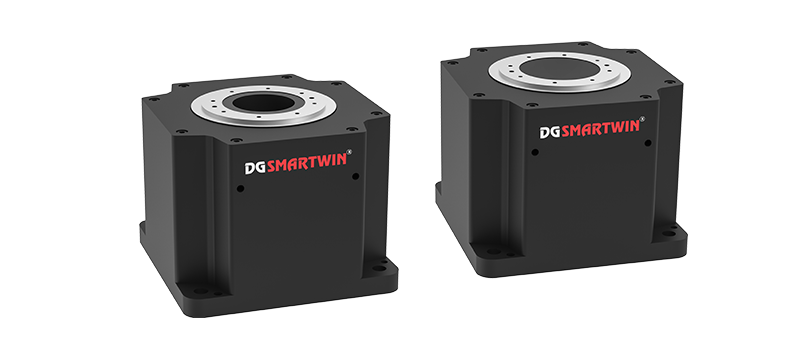
Semiconductor chip packaging, wafer inspection and optical precision-inspection equipment impose extremely high requirements on angular positioning, repeat positioning and dynamic response of rotary mechanisms. For conventional motor-plus-reducer solutions, gear clearance introduces angular errors. Errors keep accumulating after repeated reciprocating rotation, which easily leads to missed inspections and misjudgment of workpieces. With the rapid development of domestic semiconductor and optical-inspection industries, equipment manufacturers have growing demand for domestically produced high-accuracy DD motors. Featuring direct-drive design with zero gear transmission backlash, DD motors deliver stable angular positioning. They are well-suited for precision rotary stations such as wafer rotary tables and optical scanning platforms, supporting stable output process for high-end inspection equipment.
2026-09-02
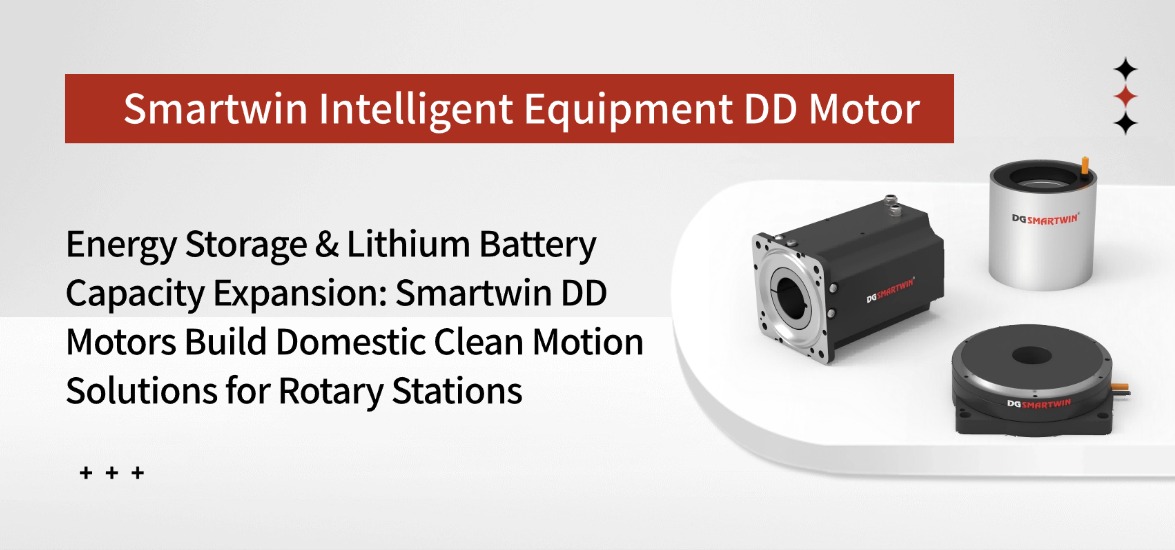
Energy Storage & Lithium Battery Capacity Expansion: Smartwin DD Motors Build Domestic Clean Motion Solutions for Rotary Stations
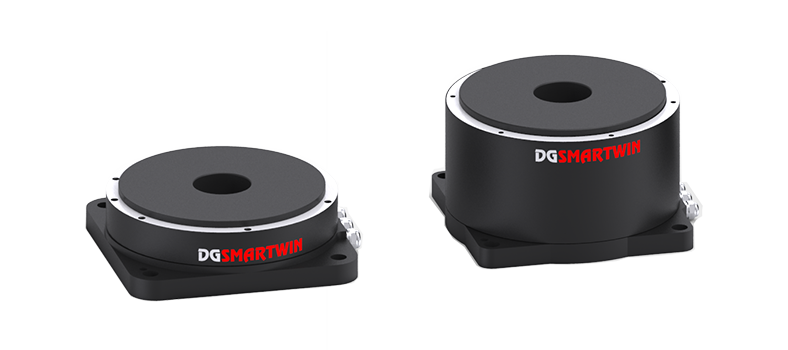
Energy storage, power battery and photovoltaic manufacturing represent the fastest growing segments of industrial automation. Production lines in these industries are continuously evolving toward long-stroke layouts, high-speed cycle beats, clean and low-dust operation, and 24/7 non-stop production. Rotary processes such as cell inspection, pole piece positioning, and photovoltaic wafer sorting generally require high-frequency forward and reverse rotation as well as high-precision angular positioning. Traditional motor-plus-reducer solutions suffer from angular deviation caused by mechanical backlash. Gear wear leads to continuous accuracy degradation over time, while frequent disassembly and maintenance greatly reduces overall production line uptime. Smartwin DD motor direct-drive solutions eliminate all intermediate transmission structures and directly drive loads through the motor output shaft. This design completely removes transmission backlash, delivers stable angular positioning, and perfectly adapts to high-frequency reciprocating rotary processes on new energy production lines.
2026-09-02
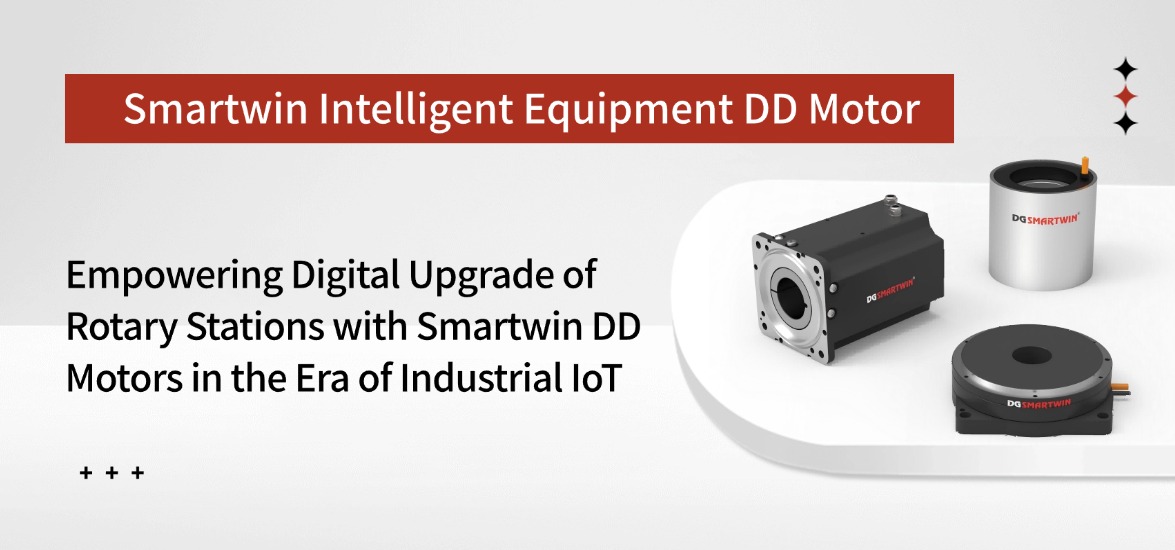
Empowering Digital Upgrade of Rotary Stations with Smartwin DD Motors in the Era of Industrial IoT
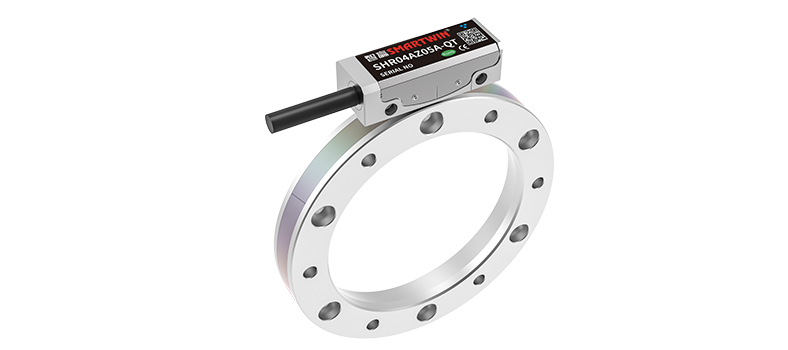
The focus of modern industrial automation has shifted from merely realizing mechanical rotation to digital oriented capabilities including machine networking, data acquisition, remote operation & maintenance, and multi-axis coordinated control. Numerous rotary stations for lithium-ion battery cell inspection, semiconductor wafer rotary tables, and photovoltaic silicon-wafer sorting demand high-frequency reciprocation, angular positioning and dynamic following. Traditional motor-plus-reducer solutions suffer from inherent drawbacks such as mechanical backlash and insufficient accuracy. More importantly, they can hardly output complete operational data, making integration with factory 5G-loT platforms difficult and becoming a bottleneck for production-line digital transformation. While optimizing the hardware performance of DD motors, Smartwin has also enabled full-fledged data interaction capabilities. Featuring direct-drive zero-backlash design, Smartwin DD motors eliminate intermediate transmission components such as reducers and pulleys, with the output end directly coupled to the load workpiece. Paired with self-developed encoders, they feed back real-time operational status including angle, temperature and vibration to satisfy the construction requirements of digital factories.