

 En



How to Avoid Cable Fatigue Risks for Hollow DD Motor Wiring? SMARTWIN Analyzes Selection and Cabling Guidelines for DDA Hollow Direct-Drive Motors
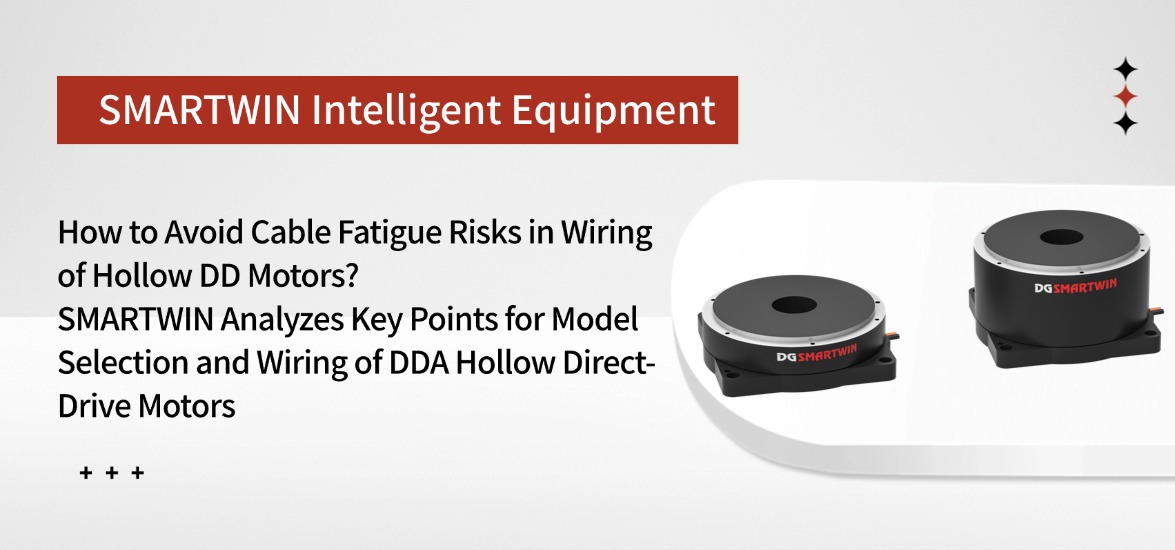
How to Avoid Cable Fatigue Risks for Hollow DD Motor Wiring? SMARTWIN Analyzes Selection and Cabling Guidelines for DDA Hollow Direct-Drive Motors
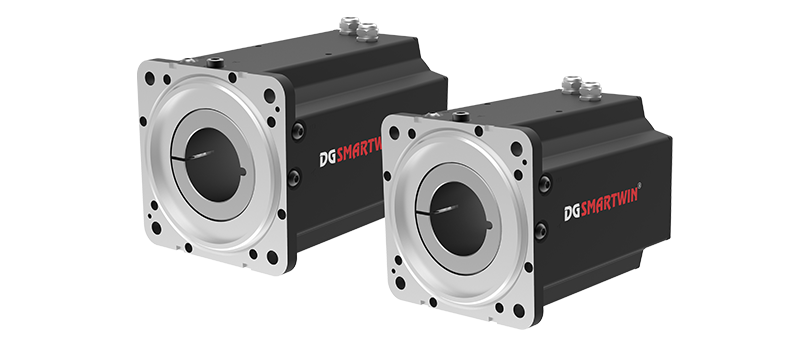
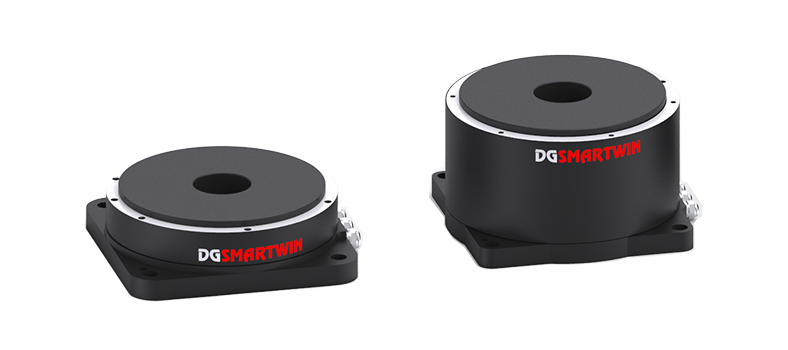
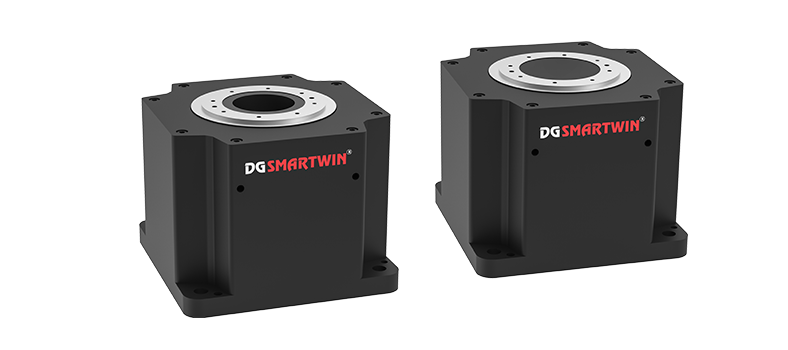
Hollow direct-drive motors of the DDA series are widely adopted in rotary stations for optical inspection and panel inspection. Since the stage requires rotation while air tubes and signal cables run through the center, the hollow through-bore delivers the most space-saving mechanical layout.
However, hidden wiring failures often emerge after mass production. Even if all indicators pass prototype validation, internal cables may suffer fatigue damage and core wire breakage after hundreds to thousands of operating hours, triggering random equipment alarms and downtime. Replacing cables from different brands frequently fails to resolve the issue.
Reviews of multiple field projects indicate the cable itself is usually not the root cause. Failures concentrate in three design aspects: clearance of the hollow bore, internal limiting structures, and matching between rotation travel and wiring scheme. These risks remain invisible at the prototype stage because cable fatigue develops cumulatively.
I. Undersized Hollow Bore Insufficient to Meet Required Cable Bend Radius
Some commercial hollow DD motors focus only on torque performance with inadequate reserved inner bore clearance. When multiple signal cables and pneumatic hoses are routed together inside the cavity, harnesses become crowded and rub against one another during reciprocating rotation. If the dynamic bend radius falls below the cable manufacturer’s specified minimum limit, cyclic torsion fatigue gradually causes insulation cracking and conductor strand breakage.
1. Insufficient space inside the bore causes stacked harnesses with continuous friction during rotation.
2. Dynamic torsion radius fails to meet the cable’s minimum allowable bending specification, leading to progressive conductor fatigue and strand breakage after repeated cycles.
3. Modification becomes difficult once the machine frame is finished; upgrading to a larger-bore motor brings high rework cost.
SMARTWIN DDA hollow DD motors are available with multiple standard bore sizes. At the early project phase, our application engineers evaluate the required bore diameter based on the customer’s actual cable quantity and outer diameter, reserving adequate bend clearance to prevent excessive extrusion inside the cavity. For heavy harness layouts with numerous tubes and wires, custom flange and bore dimensions are supported. This avoids overpacking cables into limited space and mitigates cable fatigue risks at the motor selection stage.
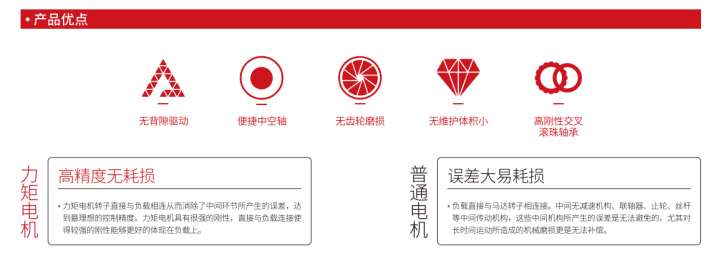
II. Lack of Harness Retention Features Inside Hollow Cavity — Torsion Stress Acts Directly on Cables
Conventional hollow DD motors only provide a through bore without internal separation or retention structures for harnesses. Cables and air hoses pass through the bore in an unrestrained free-hanging state. Every forward and reverse rotation of the stage applies full torsion stress directly onto the cables and hoses. Fatigue damage develops gradually; such risks seldom appear during short prototype tests but surface collectively after hundreds to thousands of production hours, resulting in unplanned production downtime.
SMARTWIN DDA hollow DD motors can be equipped with internal harness separation and retention structures to guide orderly routing, distribute torsion stress generated by rotation, and reduce direct friction and tension on harnesses. We also supply dedicated cabling process recommendations, including rotation travel limits and strain-relief solutions at both cable ends. These controls prevent harnesses from exceeding allowable torsion angles and lower the risk of fatigue failure.
III. Evaluate Rotation Travel During Motor Selection & Confirm Overall Mechanical Compatibility
Many mechanical designs only specify torque and positioning accuracy, while ignoring the matching between the hollow motor’s rotation angle and cable torsion tolerance. If the mechanism requires unlimited 360° continuous rotation, routing wires purely through the central bore has inherent limitations. Such applications must adopt a hollow motor paired with a slip ring.
At the proposal evaluation stage, SMARTWIN engineers confirm the actual rotation range and full harness list upfront. We differentiate two operating scenarios: limited-angle reciprocating rotation and unlimited continuous rotation, and offer two solutions: either the DDA hollow DD motor alone, or the motor combined with a slip ring. In one automated optical inspection rotary stage project, we eliminated cable fatigue related downtime by three coordinated measures: properly sized through bore, internal harness retention structures, and torsion-resistant cable selection.
Q: Can high-flex cables completely solve cable fatigue issues inside hollow DD motors?
A: No. There are two root causes for fatigue failure. First, excessive compression and torsion stress caused by undersized bore, missing harness restraints or overtravel rotation. Second, improperly selected cable grade. Simply upgrading to high-flex cables can only slow down fatigue slightly and cannot eliminate cumulative damage from continuous twisting and squeezing. To avoid this risk, you must first optimize bore space, add harness retention structures and limit rotation angles, then adopt dedicated torsion-resistant cables.
Q: Is 360° unlimited continuous rotation achievable with wiring through the hollow bore?
A: When both ends of the harness are rigidly fixed without rotary compensation structures, cables routed through the center have a torsion limit. This routing method is only suitable for reciprocating rotation within a finite angular range. If unrestricted continuous rotation is required, center-through wiring should not be used. Instead, adopt a hollow DD motor paired with a slip ring to release cable torsion stress.