

 En



Sudden Load Change of DD Motors Leads to Loss of Angular Locking? SMARTWIN Intelligent Equipment Strengthens Anti-disturbance Capability of Rotary Stages
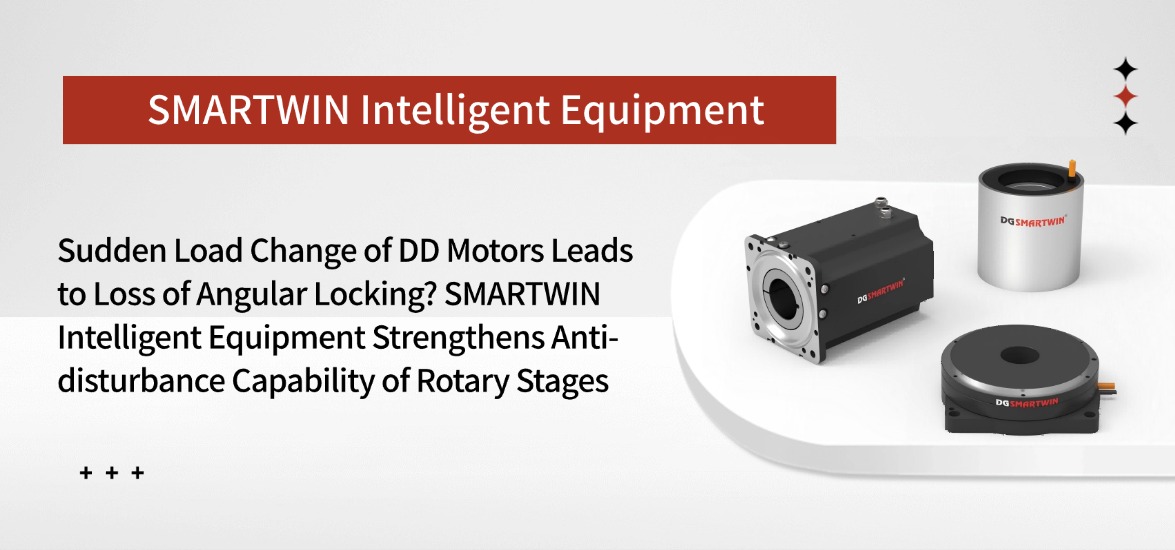
Sudden Load Change of DD Motors Leads to Loss of Angular Locking? SMARTWIN Intelligent Equipment Strengthens Anti-disturbance Capability of Rotary Stages
At 3C and semiconductor assembly stations, DD motor rotary stages frequently operate under sudden load variation conditions. For example, at the instant of nozzle picking, pressing and bonding, or fixture opening/closing, an instantaneous external impact is exerted on the rotary stage. Some conventional DD motors feature insufficient locking rigidity; tiny angular offset occurs after receiving instantaneous impact.
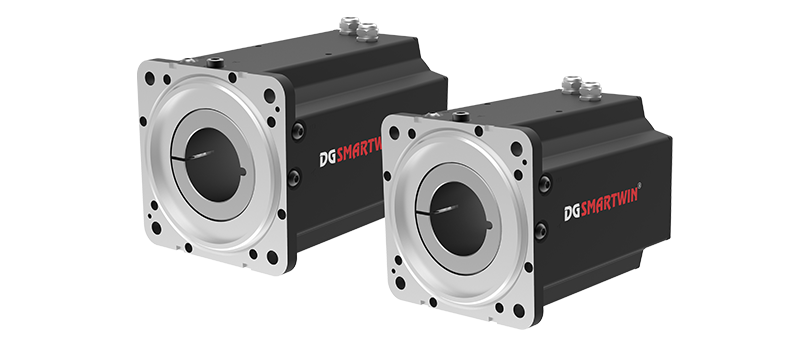
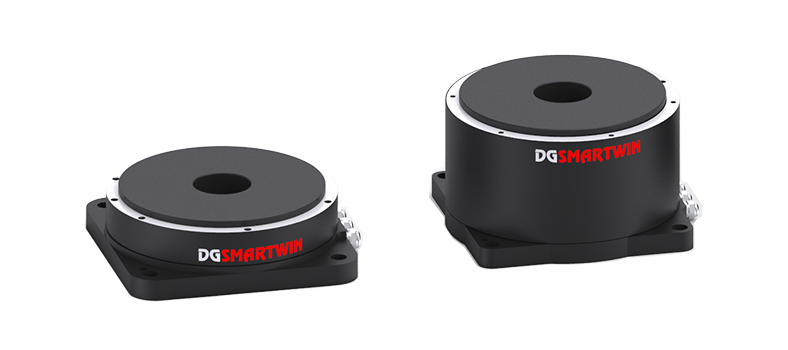
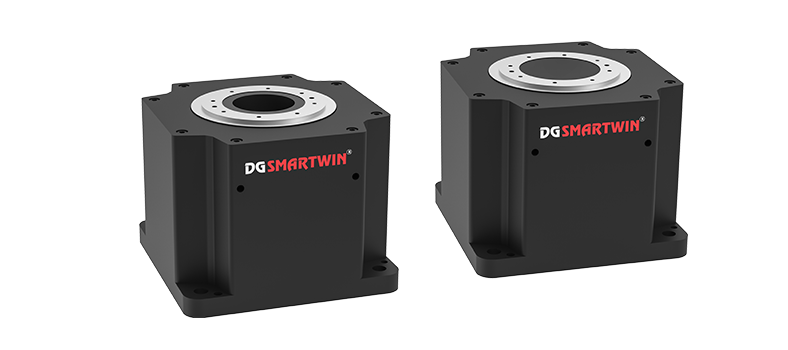
The offset is minimal and hard to detect via static inspection, yet it results in mounting misalignment and alignment deviation, producing defective workpieces. Production lines have to shut down frequently for re-calibration, hurting overall equipment effectiveness (OEE). Drawing on numerous field failure cases, DGSMARTWIN DD motors from SMARTWIN Intelligent Equipment are performance-enhanced against instantaneous load disturbance.
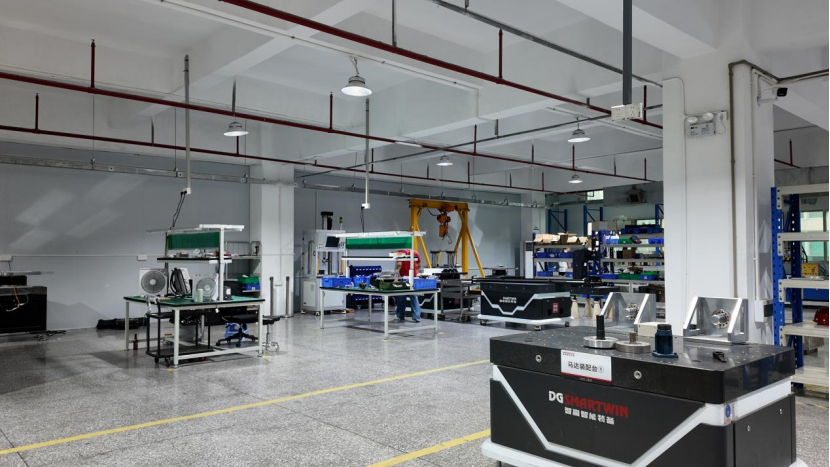
1. Insufficient Motor Locking Rigidity Causes Angular Offset under Instant External Force
When the DD motor is under static locking status, insufficient holding torque margin will lead to slight angular slip once the rotary stage receives instantaneous impact force. No alarm will be triggered by the equipment, making it difficult for maintenance personnel to defect the issue promptly. As production continues, every pick-and-bond operation introduces minor offset, and accumulated errors eventually result in batch process defects.
Simply increasing the locking gain of the controller may cause motor oscillation as a side effect and cannot resolve the problem from the hardware root cause. SMARTWIN DD motors reserve sufficient holding torque margin at the design stage, paired with high-precision closed-loop encoders for real-time angular monitoring. When the stage suffers instantaneous external disturbance, rapid angular correction can be performed to suppress angular slip and guarantee reliable angular positioning for mounting and alignment stations.
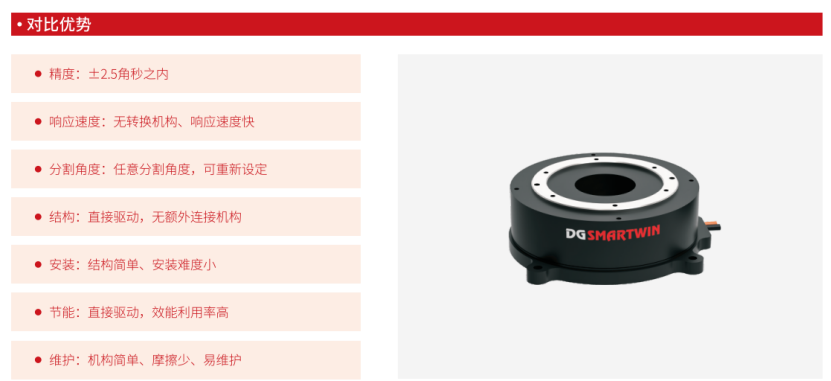
2. Slow Encoder Feedback Response Fails Timely Compensation upon Disturbance
Some DD motors are equipped with encoders of low resolution and slow feedback refresh rate. After angular offset occurs on the rotary stage, the feedback system cannot capture angular changes rapidly to implement compensation and correction. By the time the system reads the position deviation, workpiece processing and bonding have already been completed and defects are generated.
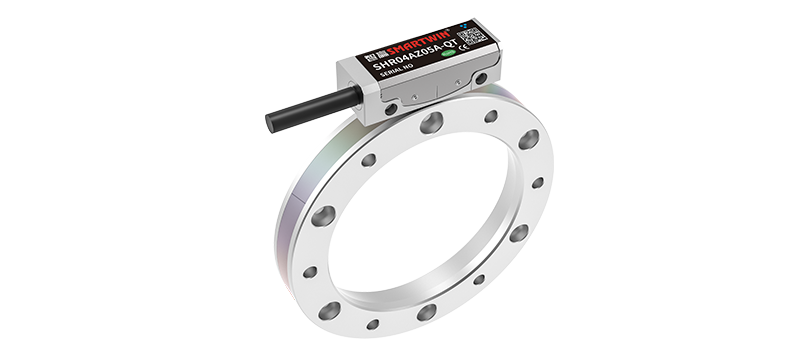
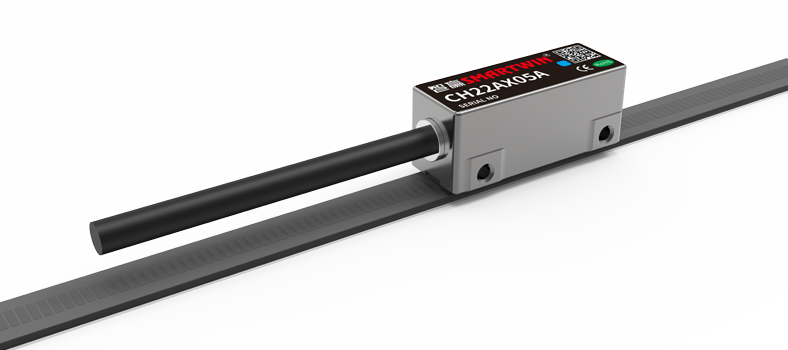
Encoders with high resolution and high refresh rate form the hardware foundation for anti-disturbance performance. SMARTWIN DD motors are fitted with high-response closed-loop encoders to feed back angular status in real time. Once position change induced by external force occurs, the system can quickly identify and carry out position compensation to reduce process risks caused by sudden load variation.
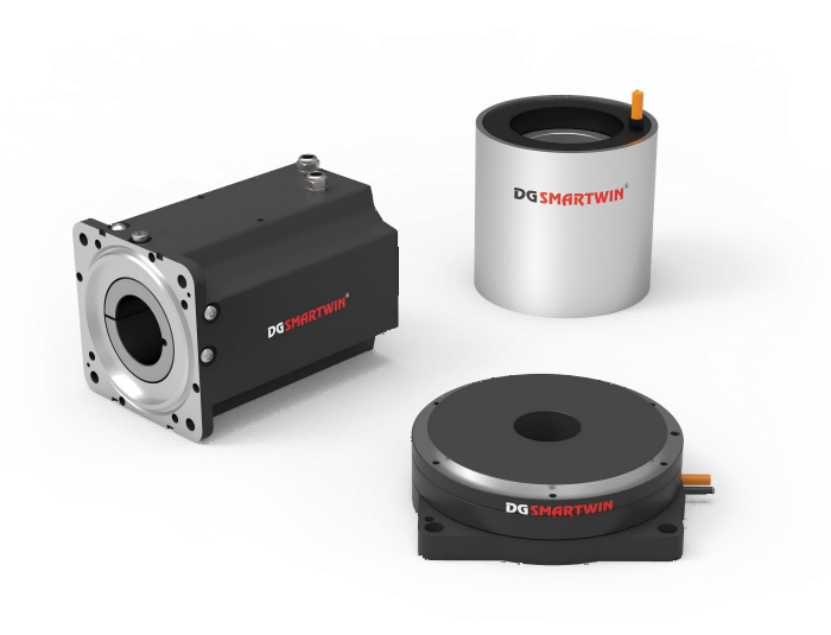
3. Pre-project Load Condition Evaluation to Avoid Risks of Insufficient Selection Margin
Many projects only calculate steady-state average load during motor selection while ignoring instantaneous impact loads such as picking and pressing. Undersized selection leads to insufficient motor torque reserve, which may result in locking failure under impact conditions. Replacing motors after machine fabrication incurs high modification costs.
The technical team of SMARTWIN Intelligent Equipment can participate in the early stage of projects to help equipment manufacturers calculate steady-state load and instantaneous impact load, reserving reasonable performance margin to avoid hidden risks of improper selection. Prototype testing of DD motors with various torque specifications is available to verify anti-disturbance performance at the machine prototype phase. In one 3C automated assembly project, DD motors selected according to working conditions significantly reduced angular slip of the rotary stage under external force, cut the frequency of machine shutdown for calibration and improved production line OEE.
Q: For the same angular deviation, how to distinguish whether it originates from the controller or the motor?
A: Here is a simple judgement method: After increasing the position loop gain, if angular deviation decreases but motor oscillation or abnormal noise occurs, the mechanical system composed of motor and load most likely has insufficient angular rigidity. Parameter tuning can only improve the symptom temporarily rather than solve the root cause. If both deviation and vibration change synchronously and remain controllable when adjusting gain, the issue is more likely related to controller parameter tuning. Simply raising position loop gain cannot fix hardware rigidity weakness, and forced gain increase may trigger oscillation side effects.
Q: Are there hidden risks if only steady-state load is calculated during selection?
A: Yes, this is a common misconception in component selection. Many projects only calculate steady-state average load and neglect instantaneous impact loads from picking and pressing, leading to insufficient motor torque reserve. Under instantaneous impact conditions, problems such as angular offset and alignment deviation may occur. Such hidden defects are usually exposed after machine assembly and on-site commissioning, bringing high modification costs for motor replacement. Therefore, peak impact load must be checked in the early selection phase to avoid costly rework later.