

 En



Vibration of Long-Travel Linear Motor Modules at High Speed? SMARTWIN Discusses Application-Matching Key Points for Direct-Drive Modules
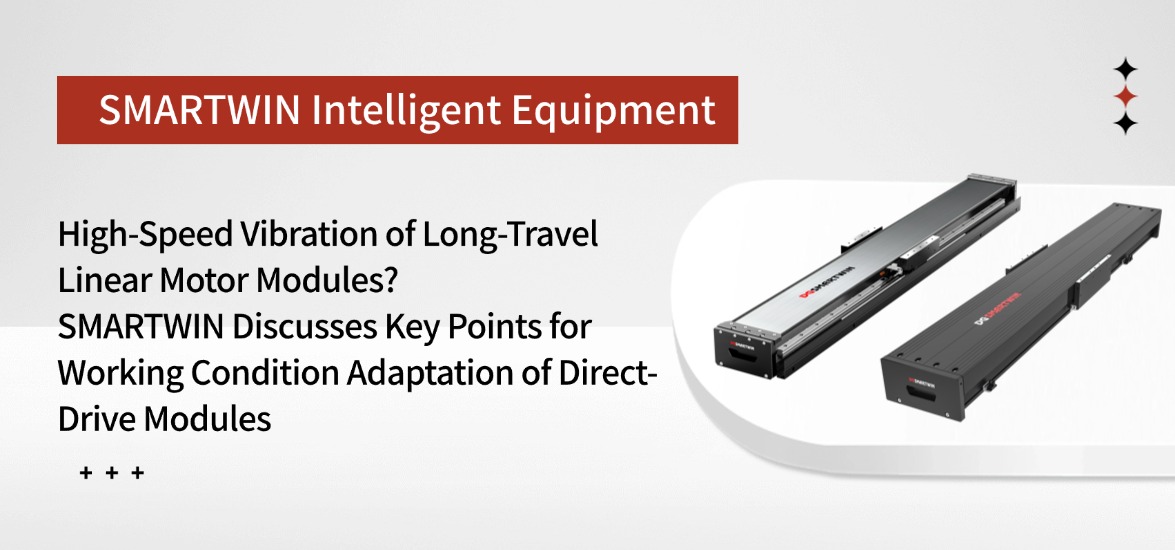
Vibration of Long-Travel Linear Motor Modules at High Speed? SMARTWIN Discusses Application-Matching Key Points for Direct-Drive Modules
Linear motor modules are widely adopted for transfer stations in lithium battery and photovoltaic industries. Many commissioning engineers encounter the same tricky issue: the slide carriage runs smoothly and controllably at low speed, but obvious vibration arises once the speed increases, accompanied by excessive fluctuation of repeat positioning accuracy. Linear motors do not have mechanical transmission parts such as ball screws or belts. This makes many engineers wonder why contactless direct drive still suffers from high-speed vibration. Summarized from abundant on-site commissioning cases of linear motor modules, vibration originates from the whole system including cogging force, guideway condition, base rigidity and encoder feedback, instead of a single component.
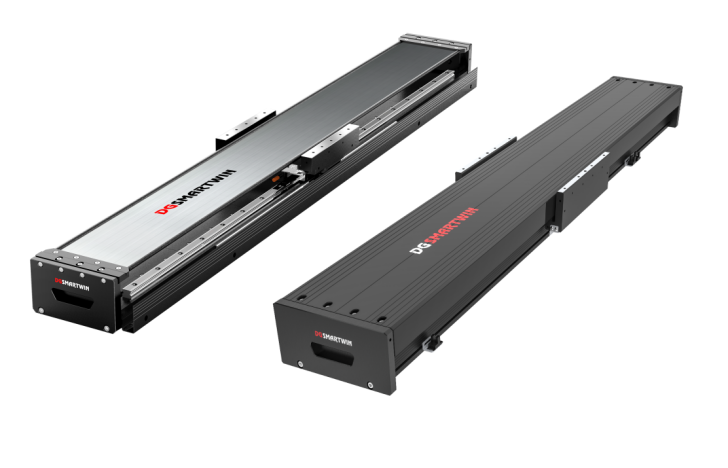
I. Speed Disturbance Induced by Cogging Force — Performance Varies Among Linear Motor Series
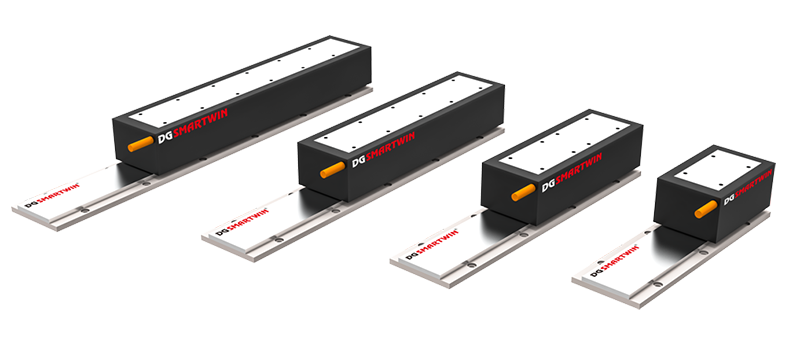
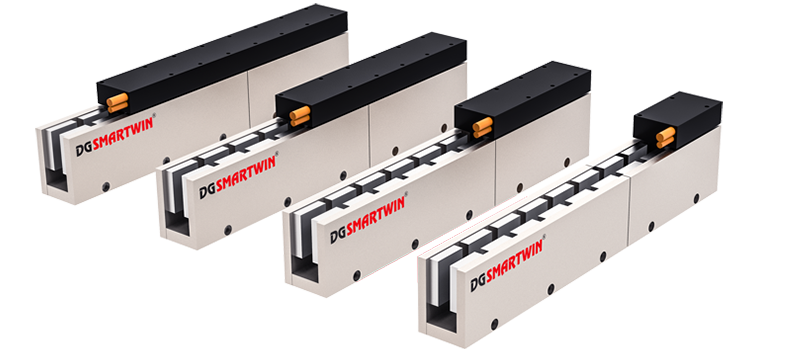
Iron-core linear motors inherently exhibit cogging effects, which introduce speed disturbances. The standard CFS series is suitable for general working conditions. For applications demanding superior speed uniformity, the low-cogging CFW iron-core linear motor series or KYAC ironless linear motors are recommended to mitigate speed fluctuation caused by cogging force.
1. The cogging force of standard iron-core motors tends to be amplified by resonance at certain operating speeds, manifested as steady- state vibration of the slide carriage during constant-speed travel.
2. For processes requiring ultra-smooth motion, low-cogging or ironless models shall be prioritized during selection.
3. In numerous projects, only thrust and stroke specifications are verified at the selection stage, while cogging characteristics are overlooked. Such hidden risks often surface collectively during high-speed trial production.
During the selection process, SMARTWIN matches the appropriate motor series according to customer requirements on speed ripple and motion smoothness. Instead of claiming that cogging force can be completely eliminated, we perform precise selection based on process boundaries to keep cogging disturbance within allowable thresholds, balancing thrust, cost and motion performance.
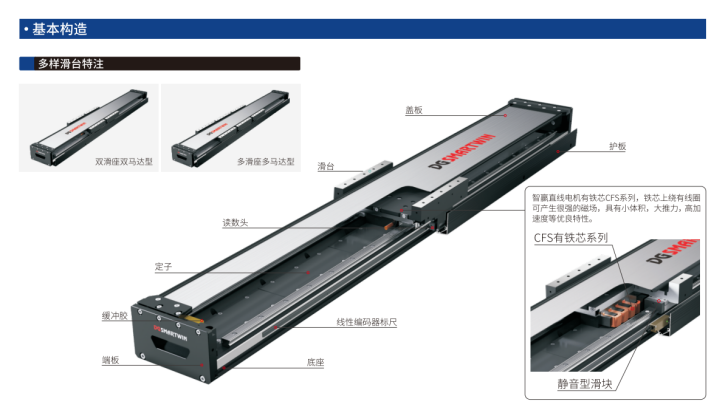
II. Insufficient Mounting Accuracy of Base and Guideways Triggers Vibration at High Speed
Linear motors are high-response direct-drive components and sensitive to base flatness and guideway parallelism. Poor base machining flatness or misalignment of assembled guideway leads to fluctuating friction at high speed, which translates into vibration of the slide carriage. Meanwhile, insufficient base rigidity causes structural resonance under high-speed reciprocating motion and further amplifies vibration amplitude.
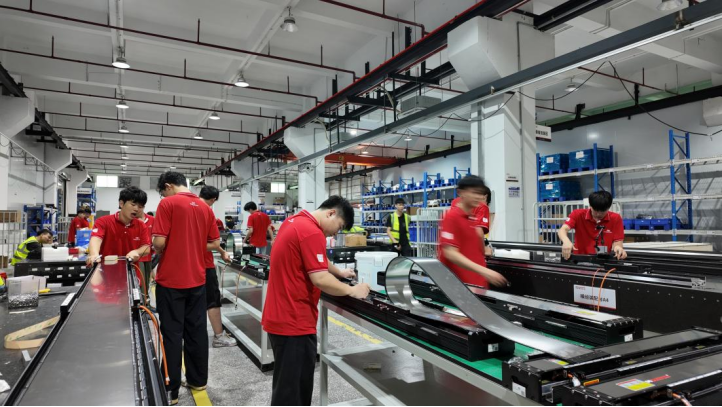
When delivering linear motor modules, SMARTWIN provides factory test reports together with reference specifications for base machining and guideway assembly for customers. We remind users to control machining and assembly quality so as to reduce vibration introduced by external mechanical factors.
III. Encoder Feedback and Drive Parameter Matching to Optimize High-Speed Dynamic Performance
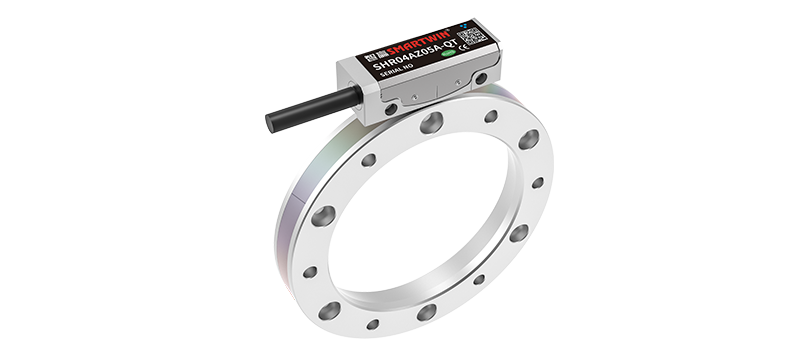
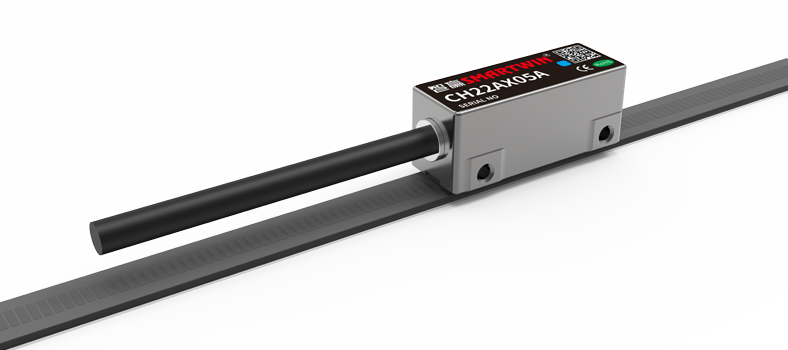
The linear modules are equipped with self-developed SA series optical/magnetic linear encoders and paired with AKS drives. Parameter settings of the feedback chain affect dynamic performance at high speed. Even with identical hardware, improper configuration of drive filters and velocity-loop parameters can lead to oscillation and vibration under high-speed operation.
SMARTWIN application engineers support customers with on-site parameter tuning. Stable high-speed operation is achieved only when hardware is selected to fit the working conditions first, followed by drive parameter optimization.
FAQ
Q: Linear motors have no ball screws or belts, so why do they still vibrate at high speed?
A: Direct drive does not equal zero vibration. Although transmission mechanisms such as screws and belts introduce backlash, pitch error and elastic deformation, the flexibility of the transmission chain naturally filters out part of high-frequency disturbances and acts as an inherent buffer. Linear motors eliminate intermediate transmission links; the mover and slide carriage are nearly rigidly coupled without such buffering. As a result, various disturbances are transmitted directly to the slide carriage and become visible. Vibration originates from system-level factors including cogging force, guide friction fluctuation, base rigidity, encoder feedback and servo tuning. Direct drive only makes disturbances easier to detect, rather than being the root cause of vibration.