

 En
En



CFS vs CFW Series Iron Core Linear Motors: Key Differences and Applications
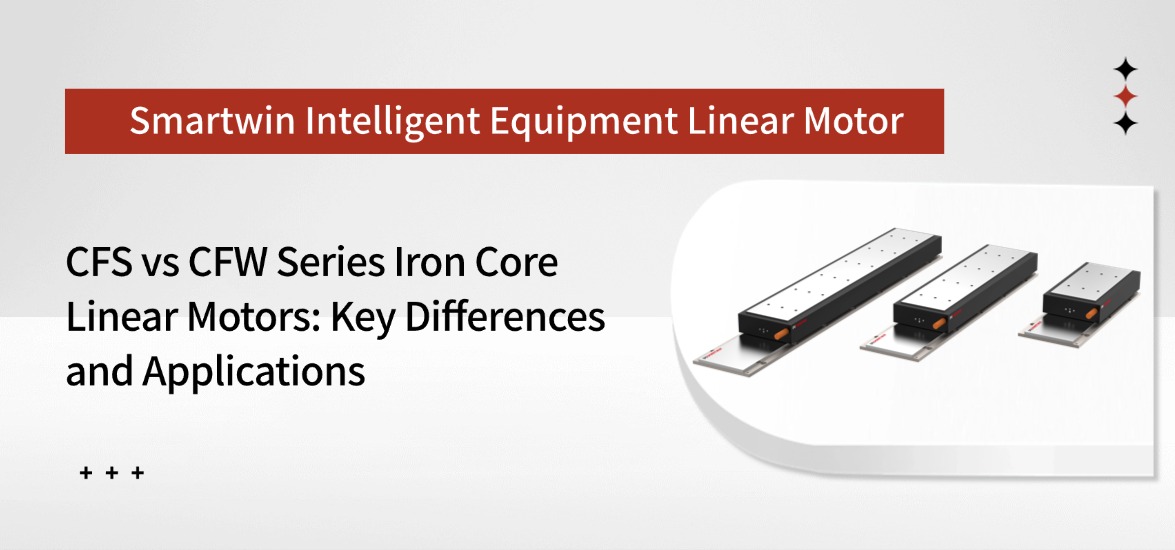
This article compares the key differences between CFS and CFW, including thrust capability, dynamic performance, typical applications, and selection considerations, helping engineers choose the right linear motor solution for their equipment.
1. What Are CFS and CFW Iron Core Linear Motors?
Iron core linear motors create linear motion through electromagnetic interaction between the coil and magnetic track. The iron core structure increases magnetic flux density, allowing the motor to deliver higher force output in direct-drive motion systems.
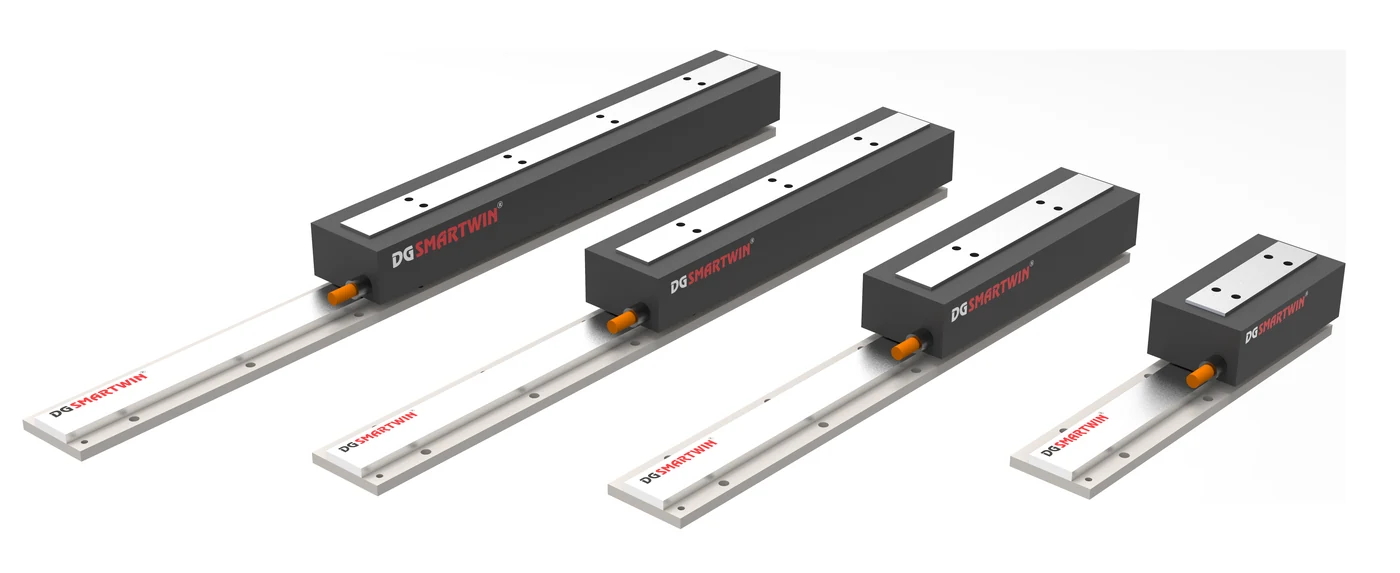
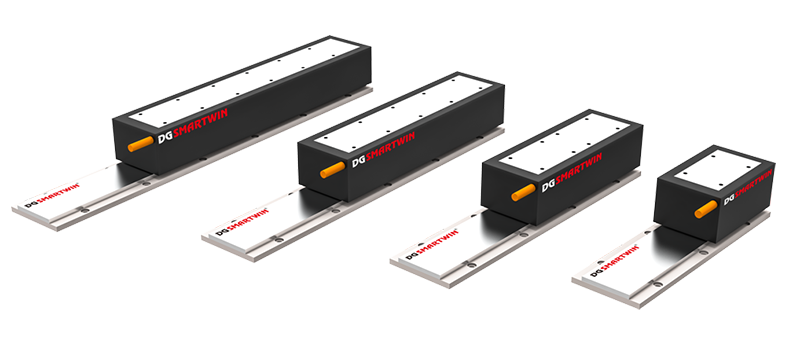
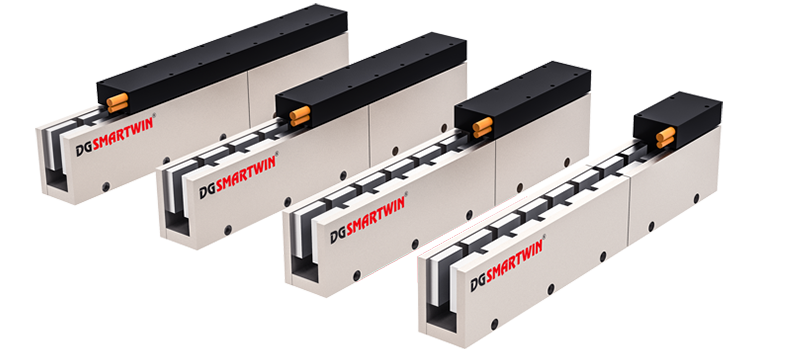
Smartwin's CFS and CFW series iron core linear motors are developed for precision automation equipment with different performance requirements. Although both use iron core technology, their design priorities are different.
The CFS series emphasizes balanced performance, offering stable thrust output, accurate positioning, and flexible integration for automation systems that require reliable continuous operation.
The CFW series is optimized for higher dynamic performance, providing greater force capability and faster response for equipment with higher speed or productivity requirements. If you want to understand more about what a linear motor is used for in modern automation, check our dedicated guide on this topic.
2. Key Differences Between CFS and CFW Series
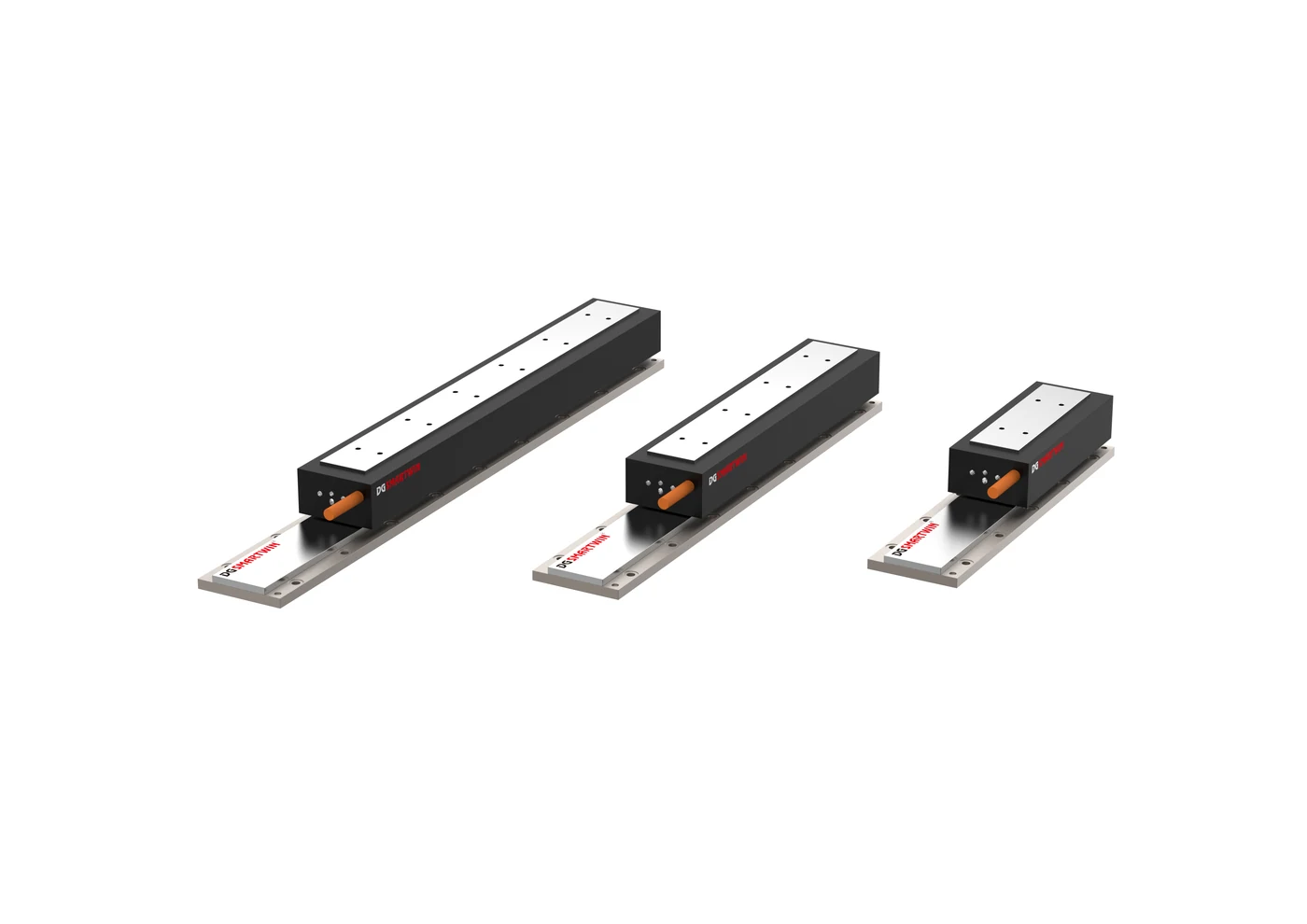
CFS and CFW are both Smartwin iron core linear motors, but they are optimized for different motion requirements. The main differences are related to thrust capability, dynamic response, and motion performance.
Thrust Capability
Thrust capability is one of the key factors that differentiates the CFS and CFW series.
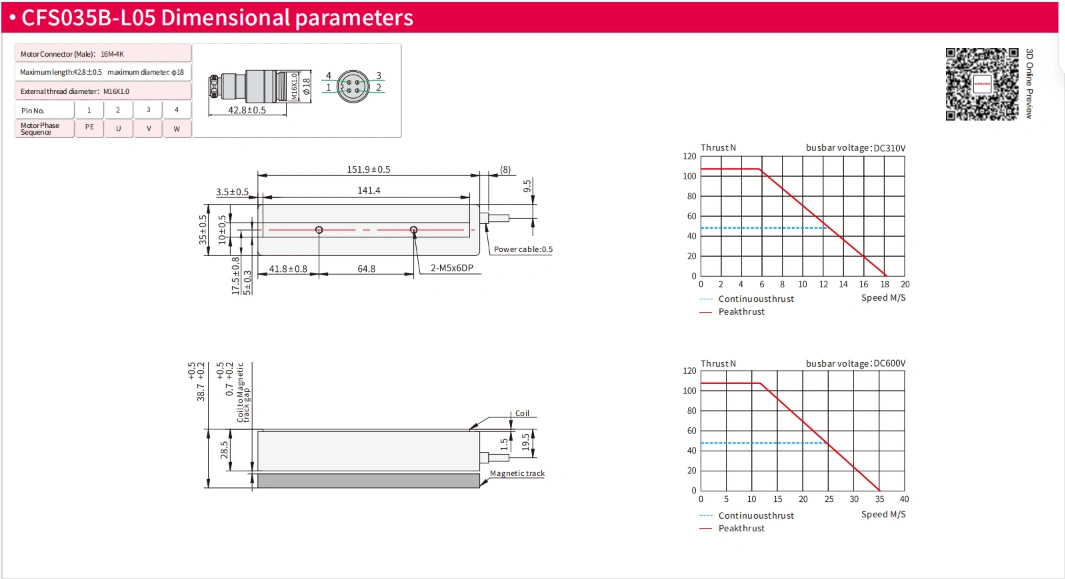
The CFS series is designed for balanced force output and stable motion performance. For example, the CFS045 provides up to 289 N continuous thrust and 677 N peak thrust, making it suitable for precision motion systems that require reliable positioning and consistent operation.
The CFW series delivers higher thrust capability for applications with greater force demands. The CFW045 can achieve up to 560 N continuous thrust and 1680 N peak thrust, providing additional driving force for larger moving loads or higher acceleration requirements. For a deeper understanding of linear motor thrust force, including peak vs. continuous force differences, read our detailed explanation here.
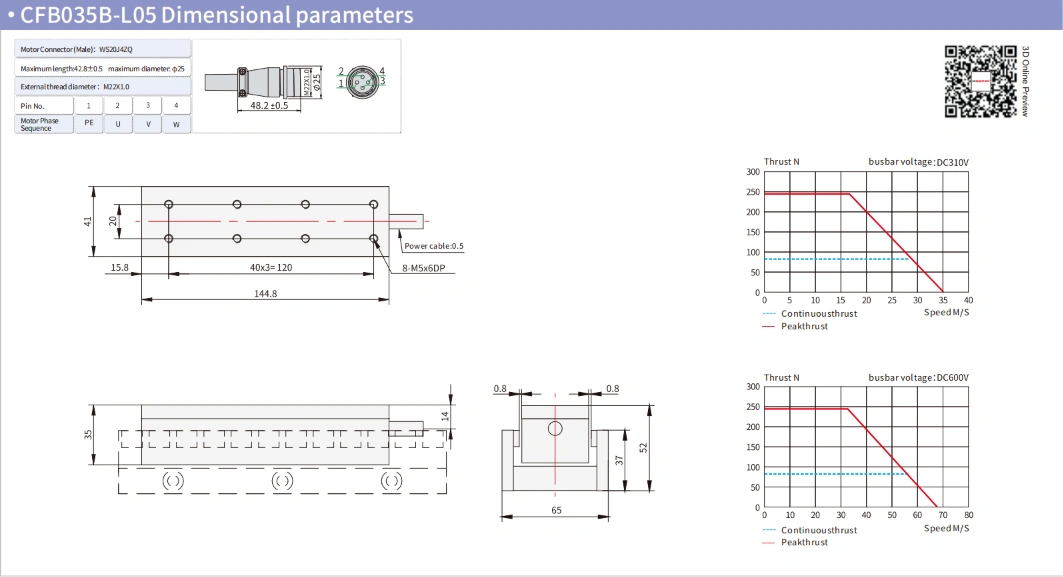
The difference in thrust output gives engineers more flexibility when selecting a motor based on the load conditions and motion targets of their equipment.
| Comparison Factor | CFS Series | CFW Series |
| Design Focus | Balanced motion performance | High dynamic performance |
| Thrust Capability | Moderate thrust output | Higher thrust capability |
| Response Characteristics | Stable and consistent movement | Faster response and acceleration |
| Motion Priority | Precision and smooth operation | Speed and force performance |
Dynamic Response
Thrust is not the only factor that affects linear motor selection. The motor's response during acceleration, deceleration, and repeated positioning also has a direct impact on machine efficiency.
The CFS series prioritizes smooth and stable movement, making it a good fit for systems where motion consistency and positioning accuracy are important.
With its higher force capability, the CFW series responds more quickly during high-speed movement and frequent acceleration cycles, helping equipment achieve shorter positioning times and improved throughput.
3. Typical Applications for CFS and CFW Motors
Although CFS and CFW are both iron core linear motors, they serve different equipment requirements. The selection usually depends on the motion characteristics of the machine, including positioning requirements, moving load, operating cycle, and production objectives.
CFS Series for Precision-Oriented Applications
The CFS series is commonly used in equipment where stable and repeatable motion is more important than maximum speed. It is suitable for precision automation systems that perform frequent positioning tasks and require consistent movement throughout continuous operation.
Typical applications include semiconductor inspection stages, optical measurement equipment, precision positioning platforms, and other direct-drive motion systems where accurate trajectory control is essential. In these applications, the motor needs to maintain predictable movement behavior while working together with feedback systems and precision components. Explore how high precision linear motors improve wafer inspection performance in advanced semiconductor processes.
For equipment manufacturers, CFS provides a balanced solution for applications that require reliable motion performance, flexible integration, and precise positioning without excessive force requirements.
CFW Series for High-Dynamic Motion Systems
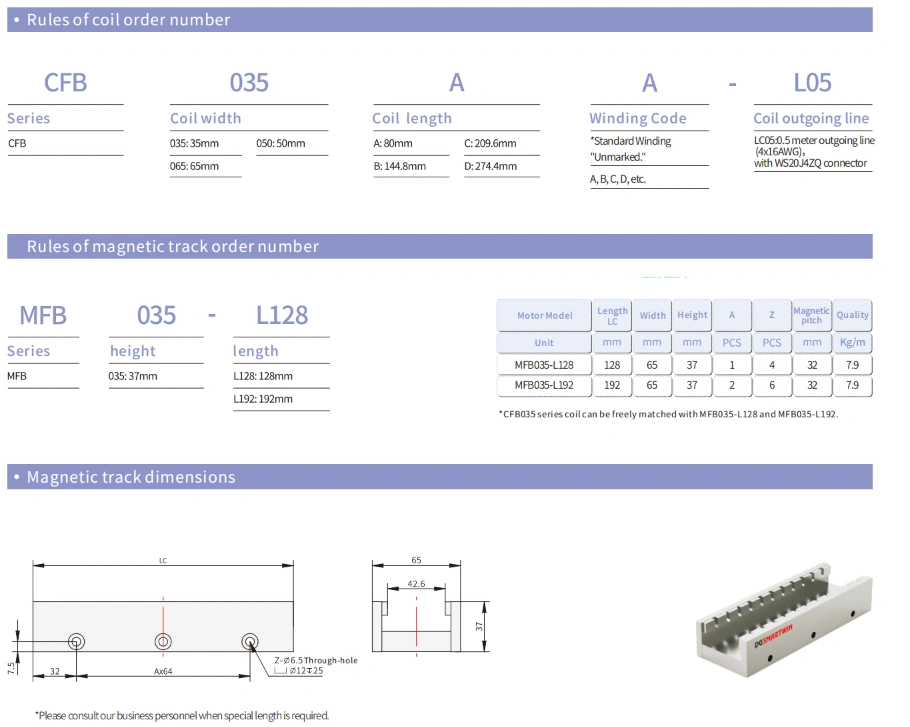
The CFW series is designed for equipment where higher motion capability and production efficiency are key considerations. It is commonly applied in high-speed automation systems, larger positioning stages, multi-axis equipment, and manufacturing processes with frequent acceleration and rapid movement.
With its higher thrust capability, CFW can support larger moving loads and more demanding motion profiles. This makes it suitable for systems where reducing cycle time, improving throughput, and maintaining stable operation are important design goals.
For high-performance automation equipment, CFW provides the additional driving capability needed to achieve faster and more efficient linear motion.
4. How to Match CFS and CFW Linear Motors to Your Equipment
Selecting the right CFS or CFW linear motor requires evaluating the complete motion requirements of the equipment. Factors such as moving load, travel distance, operating speed, duty cycle, feedback configuration, and mechanical structure all affect the final motor choice. When you need guidance on how to choose an efficient direct drive linear motor, follow our step-by-step selection guide to make an informed decision.
Choosing CFS for Stable Precision Motion
CFS is a suitable choice for systems that require consistent movement, accurate positioning, and reliable operation over repeated cycles. When the application focuses on precision rather than maximum dynamic performance, a balanced motor configuration can help maintain stable equipment operation.
This makes CFS a practical solution for precision automation equipment, inspection systems, and positioning platforms where smooth motion and flexible integration are important considerations.
Choosing CFW for Higher Dynamic Requirements
CFW is better suited for equipment that places greater demands on motion capability, such as higher loads, faster movement, or shorter cycle times. Its stronger driving performance allows the system to handle more demanding motion profiles while maintaining precise control.
For high-speed automation and production equipment, CFW provides additional performance margin when throughput and movement efficiency become key design considerations.
A proper linear motor selection should consider the entire machine design rather than only motor specifications, ensuring the chosen solution matches the actual operating conditions and performance goals. You may also find it helpful to compare linear drives vs linear motors to determine which architecture best fits your application needs.
Smartwin Iron Core Linear Motor Solutions

Smartwin provides iron core linear motor solutions for precision automation, semiconductor equipment, and high-performance motion systems. With CFS and CFW series options, Smartwin helps engineers select suitable linear motor configurations based on factors such as load requirements, motion speed, and positioning performance.
If your project involves comparing different motor technologies, you might also be interested in reading about coreless linear motor vs brushless linear motor differences to understand which type suits your specific application scenario.
FAQ
1. What is the difference between Smartwin CFS and CFW linear motors?
CFS and CFW are both Smartwin iron core linear motors, but they are designed for different motion requirements. CFS focuses on balanced precision motion and flexible integration, while CFW provides higher thrust capability and stronger dynamic performance for more demanding motion conditions.
2. Is CFW a higher performance version of CFS?
No. CFW is not simply an upgraded version of CFS. The two series are optimized for different application needs: CFS provides stable and balanced motion performance, while CFW is designed for applications that require higher force output and faster motion response.
3. Which Smartwin linear motor is suitable for semiconductor equipment?
The right choice depends on the motion requirements of the equipment. CFS is often suitable for precision positioning and inspection applications where stable movement is important, while CFW is better suited for systems requiring higher thrust, faster movement, or shorter cycle times.
4. Why choose an iron core linear motor?
An iron core linear motor provides higher force density compared with many ironless designs, making it suitable for applications that require strong thrust, fast response, and precise direct-drive motion. It is commonly used in automation equipment where high performance and accurate positioning are required. Before you finalize a specification for your machine, work through our direct drive motor selection guide for industrial automation to confirm that the model you pick matches your real load and duty cycle.
Conclusion
By evaluating factors such as load, speed, motion profile, and system requirements, equipment manufacturers can select the most suitable linear motor configuration.
Contact Smartwin to discuss your linear motor requirements and find the right CFS or CFW solution for your precision motion application.
Back To List