

 En
En



Linear Motor Thrust Force Explained: Peak Force, Continuous Force, and Selection Tips
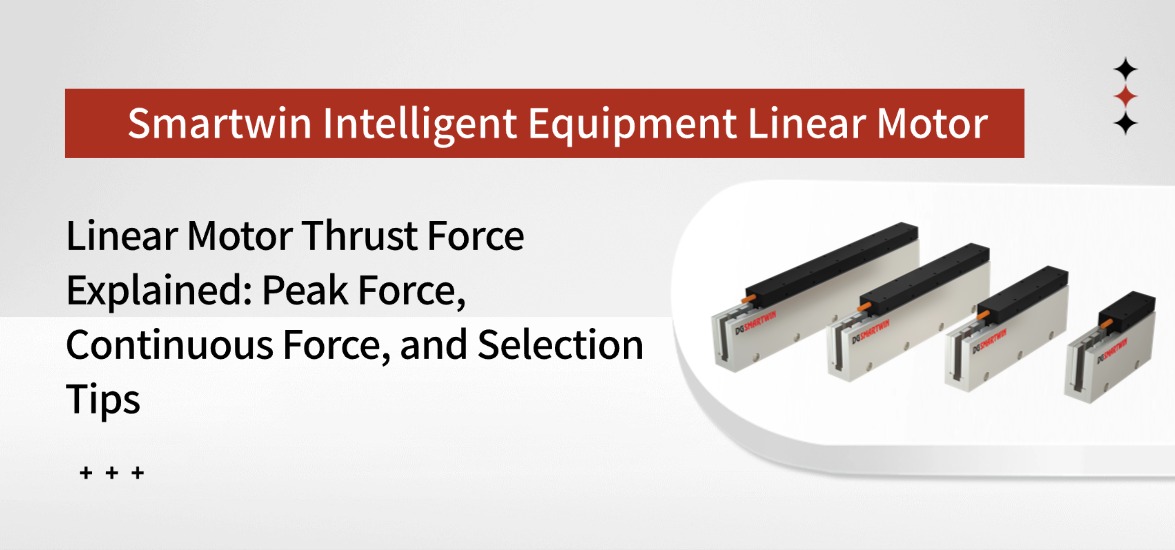
This article explains linear motor thrust force, what it really means, how peak force and continuous force differ, and how to select the right linear motor system for real industrial applications.
What Is Linear Motor Thrust Force
Linear motor thrust force is the driving force that moves the mover along a straight motion axis. It is generated through electromagnetic interaction within the motor structure and directly determines how motion is produced in the system.
This force defines the system’s ability to handle different load conditions and maintain stable motion performance during acceleration, steady operation, and deceleration phases.
In practical applications, thrust force is closely related to motion stability and positioning behavior, especially in high-speed or high-precision automation systems where consistent output is required.
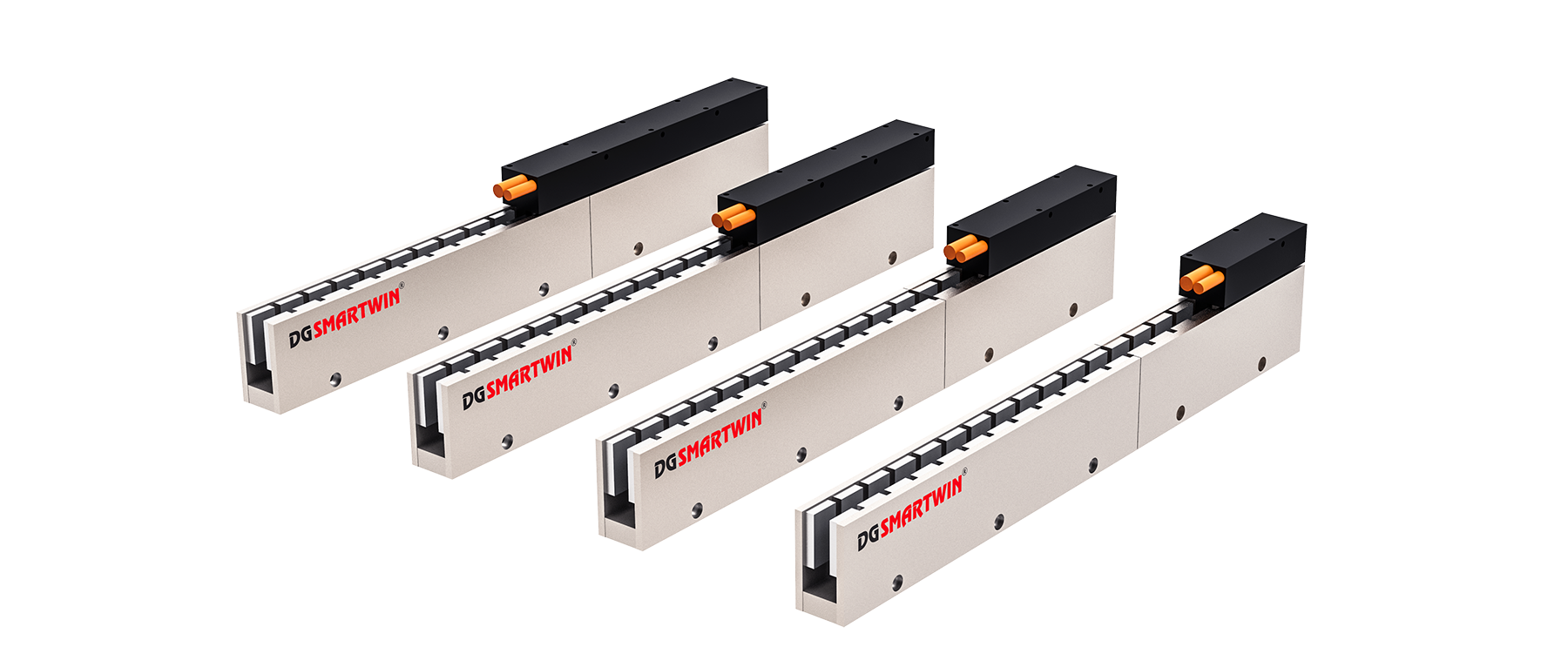
Peak Force vs Continuous Force: Linear Motor Thrust Force Comparison
Aspect | Peak Force | Continuous Force |
Definition | Maximum thrust force a linear motor can output for a short period | Stable thrust force that can be maintained during long operation |
Usage scenario | Acceleration, deceleration, sudden load change | Continuous running, steady motion processes |
Duration | Short-term (temporary operation) | Long-term (sustained operation |
Limiting factor | Current limit and control conditions | Thermal stability and heat dissipation |
Role in system | Handles dynamic motion demands | Ensures stable industrial performance |
Performance characteristic | High output but not sustainable | Lower than peak but reliable over time |
In real motion systems, peak force supports short dynamic events, while continuous force defines whether the linear motor can maintain stable performance in long-duration industrial operation.
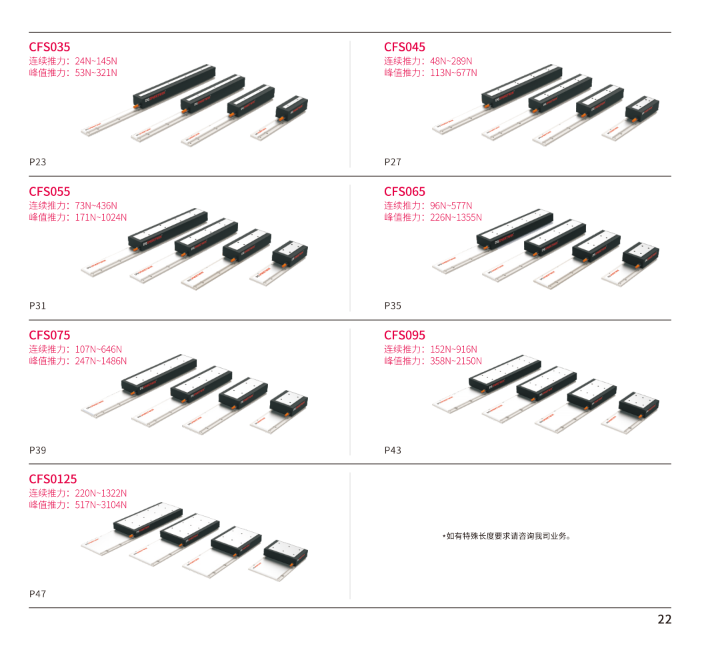
How Linear Motor Thrust Force Affects Load, Speed, and Acceleration
Thrust force determines how effectively a motion system responds to changes in operating conditions, especially when handling different payload ranges, typically from a few kilograms in precision stages to hundreds of kilograms in heavy-duty automation systems.
When thrust force is properly matched to the application, the system can maintain stable motion behavior even under load variations of around 10%–30%, helping reduce performance fluctuations during continuous operation.
Acceleration performance is directly influenced by available thrust. In high-speed automation lines, improving thrust capacity can reduce motion cycle time by 15%–40%, depending on stroke length, payload mass, and motion profile design.
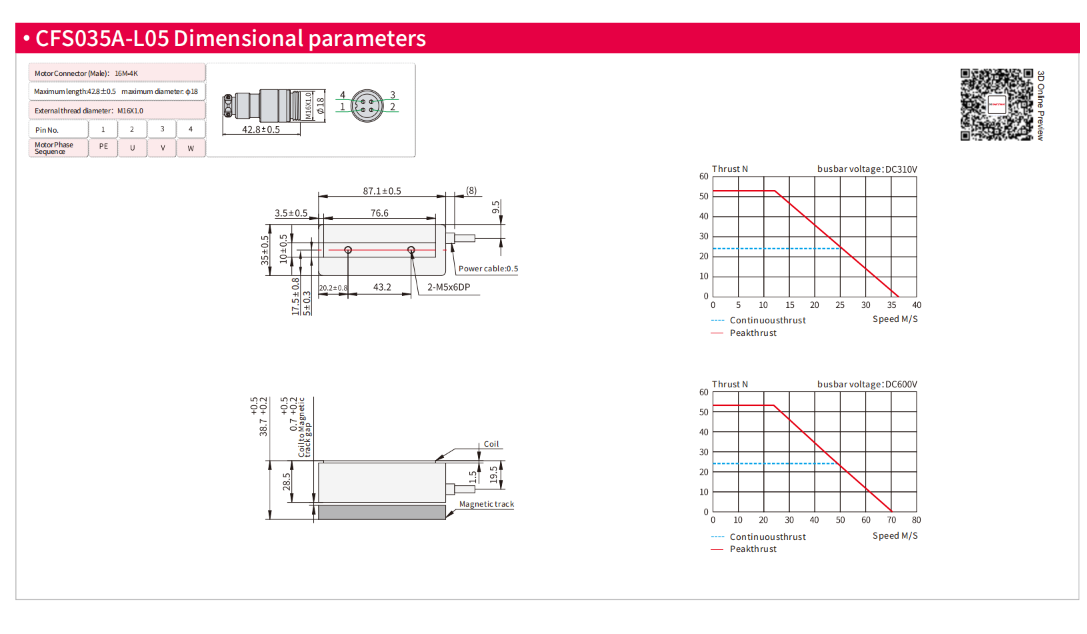
In real industrial environments, load variation is a key factor. For example, in multi-axis assembly or transfer systems, instantaneous load changes can increase required force by 20%–50% during peak motion phases, especially during start-stop cycles.
If thrust force is not properly aligned with application demand, positioning deviation may increase beyond ±10–50 μm in precision systems, and cycle stability may degrade under high-frequency operation conditions.
Why Higher Linear Motor Thrust Force Is Not Always Better
A common misunderstanding in motion system design is that selecting a motor with higher linear motor thrust force will automatically improve overall performance.
In practice, excessive force capacity can lead to a mismatch between the motor and the application, especially in systems that do not require heavy load handling. This often results in unnecessary energy consumption and more complex mechanical design requirements.
When thrust capacity is significantly higher than actual demand, motion control tuning may become less efficient, particularly in lightweight or high-speed systems where responsiveness is critical.
Thermal performance is also affected. A system operating far below its optimal thrust utilization range may experience reduced efficiency during long-duration production cycles, even if peak capability is high.
For most industrial applications, performance is determined not by maximum thrust force, but by how well the selected force range aligns with real load, speed, and duty cycle requirements.
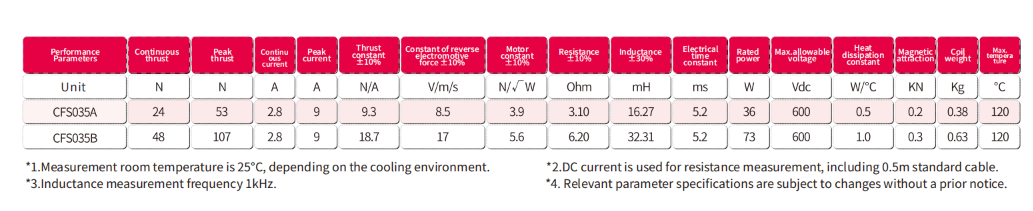
Linear Motor Thrust Force Selection Tips
1.Start from real application conditions, including load mass, motion stroke, and system operating environment, rather than selecting based only on catalog specifications.
2.Calculate total effective load, including moving parts, external payload, and frictional resistance within the mechanical system.
3.Define acceleration and cycle time requirements, since higher acceleration demands higher peak thrust capability.
4.Evaluate duty cycle carefully; continuous operation scenarios require sufficient continuous force rather than relying only on peak force ratings.
5.Consider thermal behavior under long operation cycles, especially in high-speed or 24/7 production environments where heat accumulation affects stability.
6.Apply a reasonable safety margin to handle dynamic load variation, but avoid excessive oversizing that may reduce efficiency and control performance.
How Smartwin Helps You Choose the Right Linear Motor Thrust
Thrust selection is not an isolated parameter decision, but part of how the entire motion system behaves under real operating conditions.
Smartwin focuses on matching thrust capability with actual motion behavior, ensuring the motor works within the expected dynamic range of the machine.
Instead of treating thrust as a single rated value, the selection process is aligned with how force is used across different motion phases such as start-up, steady movement, and repeated cycle transitions.
The selection also takes into account how force demand changes during real production conditions, especially in processes where load distribution is not constant across the full stroke.
Different motor configurations are applied to match the nature of motion, whether the system requires compact high-response movement or longer-stroke industrial handling.

This approach helps ensure the selected linear motor delivers consistent force utilization throughout the entire motion cycle, improving overall system stability and usability in real equipment integration.
Need help selecting the right linear motor thrust for your application? Contact Smartwin Linear Motor Solutions for tailored system recommendations and engineering support.
Back To List