

 En
En



Direct Drive Motor Selection Guide for Industrial Automation
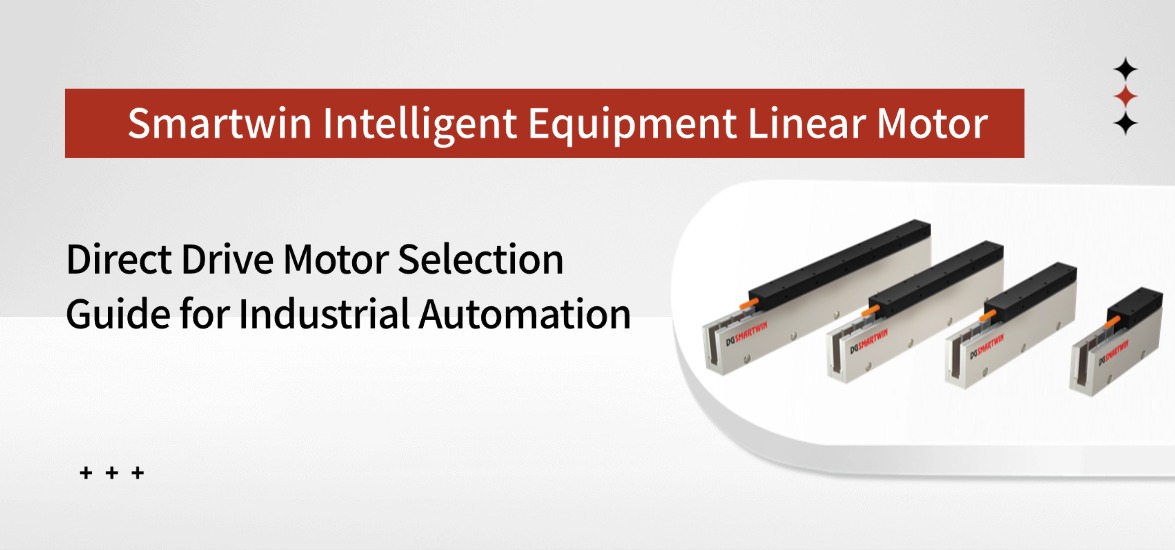
This guide explains key direct drive motor types, selection factors, system comparisons, and common selection mistakes in industrial automation applications.
What Is a Direct Drive Motor in Industrial Automation
A direct drive motor is a motion system that generates torque or linear force directly at the load through electromagnetic interaction, without intermediate mechanical transmission.
This structure enables more precise motion control and reduces mechanical loss in high-performance automation equipment.
Direct drive systems are commonly used in semiconductor equipment, precision assembly, and high-speed inspection systems where positioning stability and fast response are required.
Most industrial setups integrate these motors with servo drives and high-resolution feedback systems to maintain accurate control during dynamic motion processes.
Main Types of Direct Drive Motors
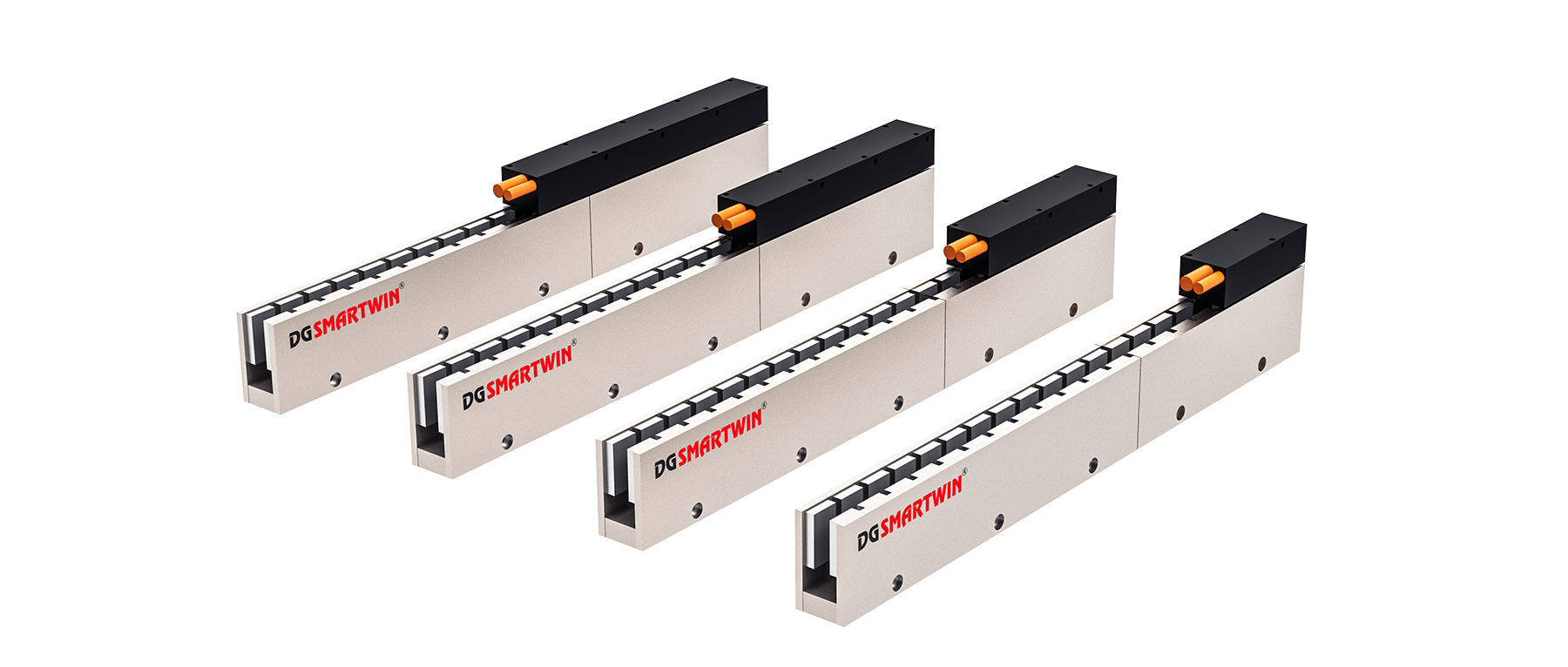
Direct drive motors are typically classified based on motion direction and electromagnetic structure, each designed to meet different industrial performance requirements.
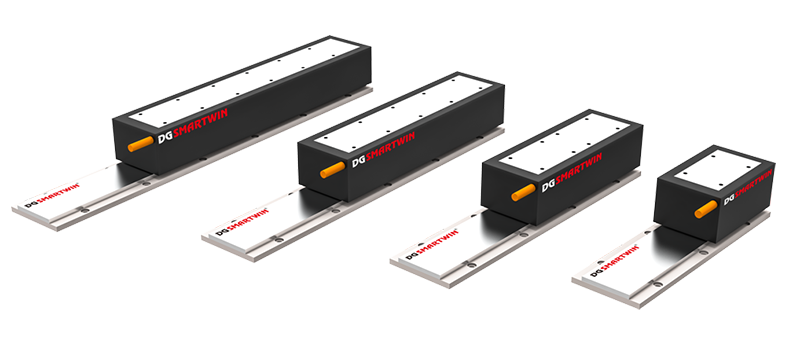
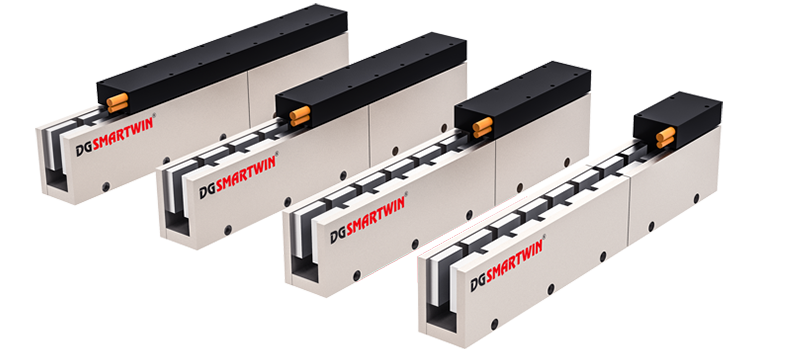
1.Linear direct drive motors
Linear direct drive motors are used for straight-line motion systems where continuous positioning accuracy and fast response are required. They are commonly applied in transfer modules, semiconductor wafer handling, and precision positioning stages.
In high-performance configurations, linear systems can support acceleration levels in the range of 2–5G, enabling fast cycle transitions in high-speed automation lines while maintaining stable positioning at micron-level accuracy.
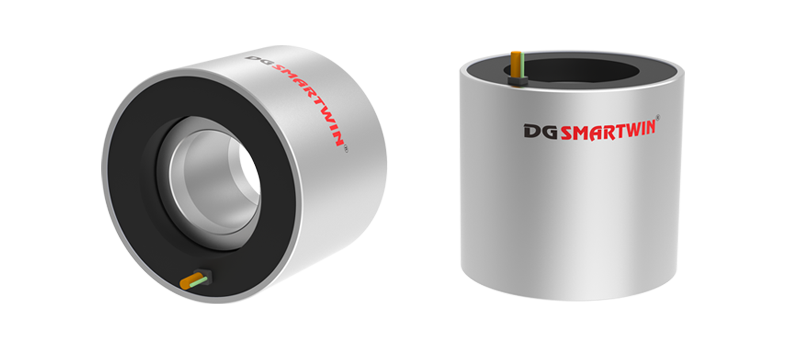
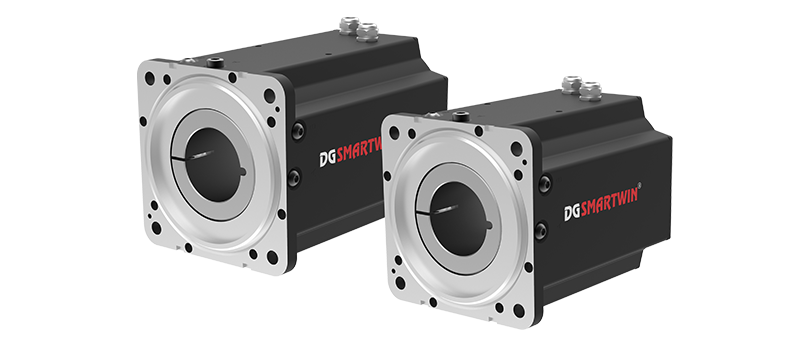
2.Rotary direct drive motors
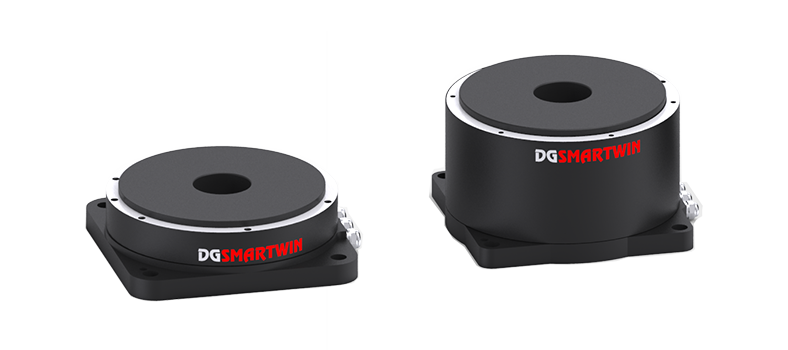
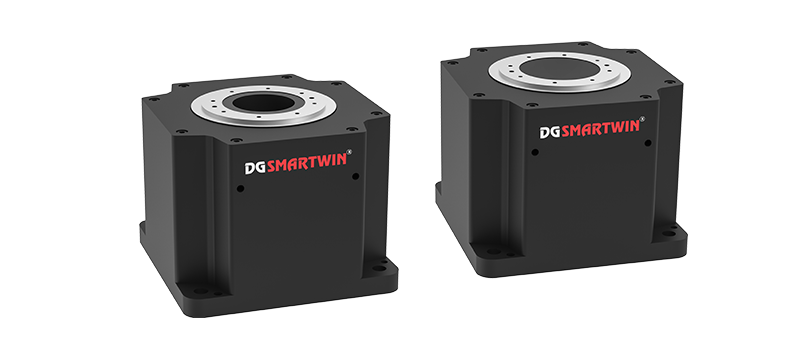
Rotary direct drive motors are designed for applications requiring angular motion with high precision and no mechanical backlash. They are widely used in rotary indexing tables, robotic joints, and precision inspection platforms.
In advanced automation systems, rotary direct drive setups can achieve positioning repeatability within approximately ±5–10 arcseconds, depending on encoder resolution and servo tuning quality, making them suitable for high-precision assembly and measurement tasks.
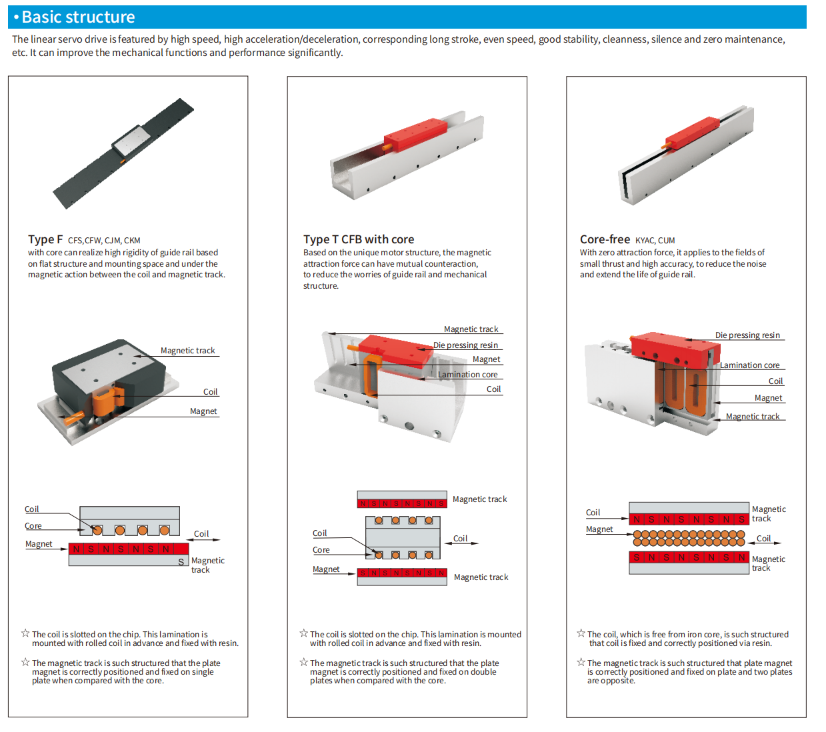
3.Iron-core and ironless structural configurations
Iron-core direct drive motors are designed to deliver higher thrust or torque density, making them suitable for heavy-load or high-force industrial applications where output capability is critical.
Ironless structures reduce cogging force by eliminating iron interaction in the mover, resulting in smoother motion behavior and better performance in high-speed precision systems where vibration control is important.
Selection between these structures is determined by force demand, motion smoothness requirements, and available installation space within the equipment design.
Key Factors in Linear Direct Drive Motor Selection
Direct drive motor selection in industrial automation is driven by system behavior rather than isolated specification values. Each parameter affects how the motor performs under real motion conditions such as acceleration, load transition, and continuous cycling.
1.Load and inertia matching
Load conditions include not only the static payload but also moving mass, fixture design, and friction characteristics of the system. In high-speed motion, inertia mismatch can significantly affect dynamic response, often leading to 20%–40% variation in positioning stability during rapid acceleration or deceleration phases. Proper matching ensures smoother energy transfer during motion transitions and reduces control compensation effort.
2.Acceleration and cycle time requirements
Acceleration capability directly determines how quickly a system reaches target speed and completes each motion cycle. In pick-and-place, inspection, or transfer systems, improving acceleration performance can reduce overall cycle time by 10%–35%, especially in short-stroke repetitive operations where motion transitions dominate total cycle duration.
3.Duty cycle and thermal stability
Duty cycle defines how frequently the motor operates under load within a given time period. In continuous production environments, thermal accumulation becomes a limiting factor. Without proper thermal management, performance stability may begin to degrade after extended operation, especially in 24/7 manufacturing lines where heat dissipation is continuously challenged.
4.Positioning accuracy and feedback system
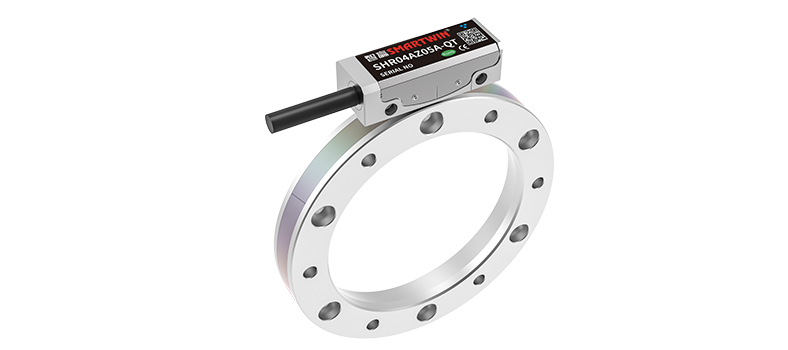
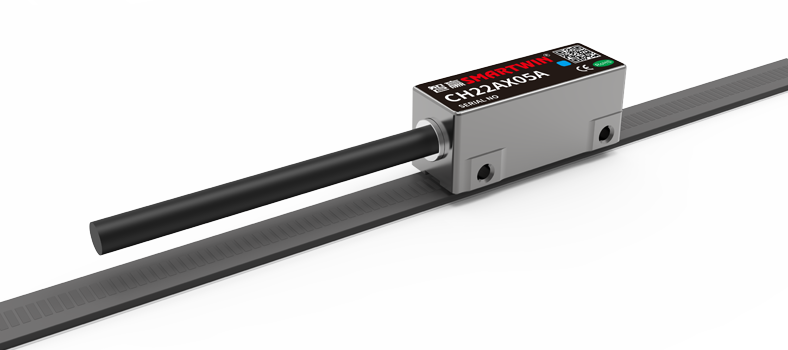
Positioning performance depends heavily on encoder resolution and signal quality. High-precision systems typically require micron or sub-micron level feedback to maintain closed-loop control stability. Any limitation in feedback resolution can directly affect repeatability during high-frequency motion cycles.
5.Environmental and operating conditions
Operating environment influences long-term reliability of the system. Temperature fluctuations can affect motor performance consistency, while vibration and contamination may impact mechanical alignment and sensor accuracy. These factors become more critical in semiconductor, electronics, and precision manufacturing environments where stability requirements are strict.
Direct Drive Motor vs Traditional Transmission Systems
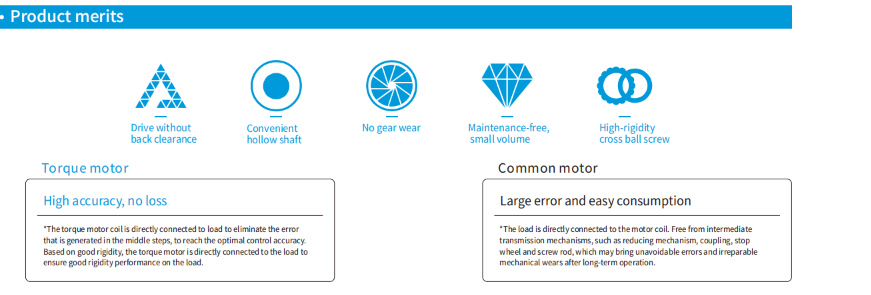
Direct drive systems differ significantly from conventional motion architectures in both structure and performance behavior.
Aspect | Direct Drive Motor | Traditional Transmission System |
Motion transmission | Direct electromagnetic force | Mechanical conversion via transmission |
Backlash | Near zero | Gradually increases over time |
Maintenance frequency | Low | Regular mechanical servicing required |
Acceleration capability | Typically 2–10G depending on system | Usually lower due to mechanical limits |
Positioning stability | High under dynamic load | Affected by wear and mechanical clearance |
In industrial environments with high duty cycles, direct drive systems often reduce mechanical maintenance requirements by 30%–60%, especially in continuous production lines.
Common Iron Direct Drive Motor Selection Mistakes to Avoid
1.Designing around peak specifications instead of real motion profiles
Some selections focus too heavily on maximum force or torque values, without analyzing how the motor behaves across the full motion cycle. In practice, acceleration, deceleration, and dwell phases place very different demands on the system, and ignoring this distribution often leads to unstable performance during real operation.
2.Treating load inertia as a simplified static value
A frequent issue is evaluating inertia as a single fixed number rather than a dynamic system parameter. In high-speed equipment, changes in fixture mass, tooling, or product variation can shift effective inertia during operation, which may cause oscillation or overshoot in motion control if not properly accounted for.
3.Selecting oversized motors without system-level coordination
Choosing a motor with excessive force margin may seem safer, but it can introduce control inefficiencies when servo tuning is not adjusted accordingly. In many automation systems, this mismatch can increase settling time and reduce motion responsiveness, particularly in short-cycle positioning tasks.
4.Ignoring heat accumulation behavior in continuous operation
Thermal impact is often underestimated during selection, especially in systems operating under long duty cycles. Localized heating in coils or drives can gradually affect motion consistency, leading to subtle positioning drift or reduced repeatability over extended production runs.
5.Focusing on single-parameter optimization instead of system balance
Some selection processes prioritize one factor such as force, speed, or precision in isolation. However, real industrial performance depends on how these factors interact across the full system, including control response, mechanical structure, and duty cycle constraints.
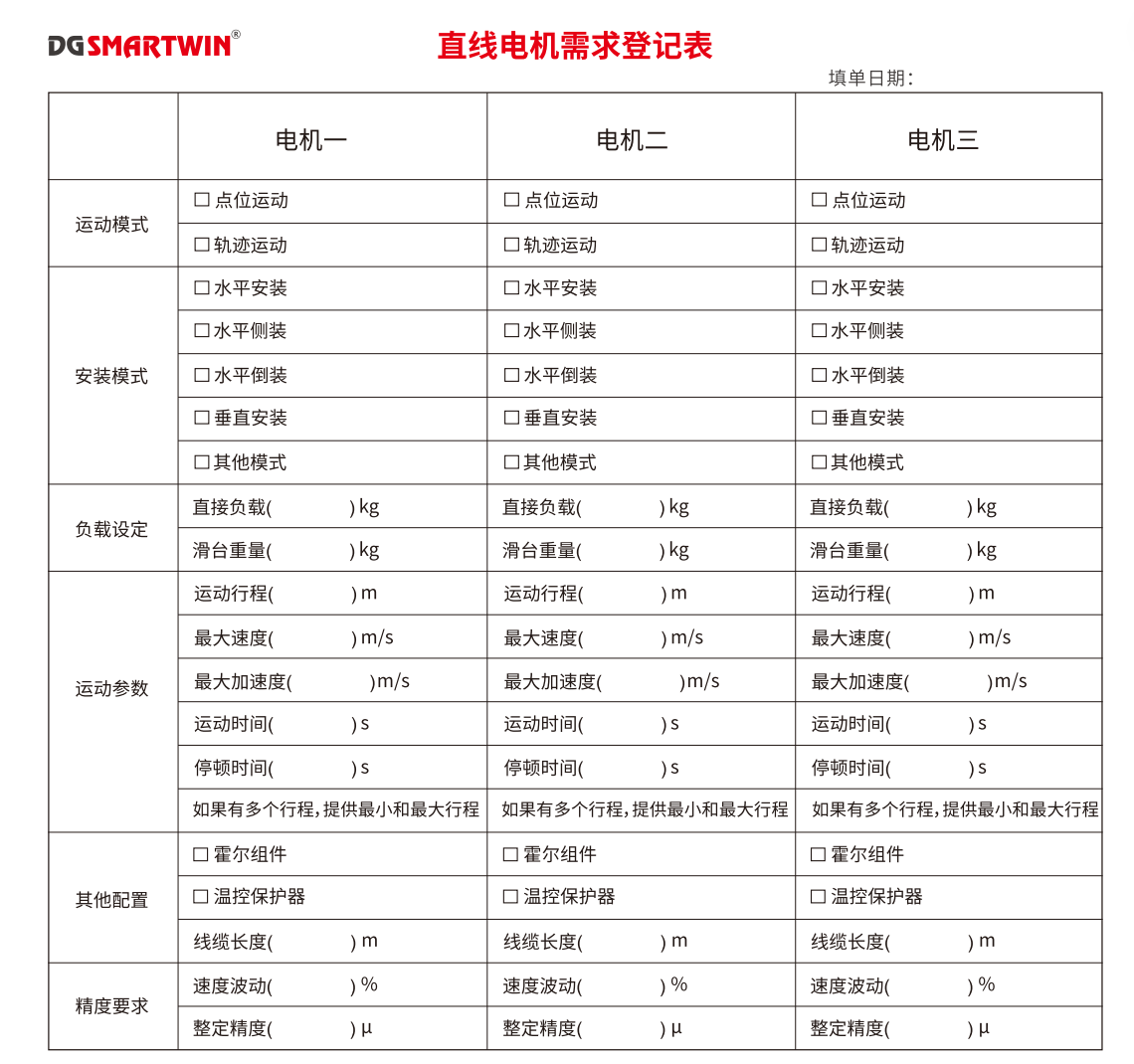
How Smartwin Supports Direct Drive Motor Selection
Smartwin focuses on matching direct drive motor performance to real equipment requirements, helping ensure the system operates consistently under actual production conditions.
Selection is based on key operating factors such as load variation, motion cycle characteristics, and precision stability needs, rather than isolated specification values.
Recommendations are aligned with system-level performance targets, including positioning stability, response behavior, and long-term operational consistency.
Motor configurations are adjusted according to application demands, balancing force output, motion smoothness, and high-speed capability within the same system.
This approach helps improve integration reliability, reduce adjustment effort during machine setup, and support more stable motion performance in industrial automation applications.
Contact Smartwin to discuss your direct drive motor application and get tailored selection support for stable, high-performance industrial automation systems.
Back To List