

 En
En



What Is a Linear Motor Used For?
This article explains the main applications of linear motors and why direct-drive motion technology is preferred in high-end equipment.
1. What Is a Linear Motor Used for in Automation?
Linear motors are widely used in automation equipment where fast movement, precise positioning, and reliable operation are critical. Compared with conventional systems driven by ball screws, belts, or gears, linear motors create motion directly through electromagnetic force, eliminating many mechanical transmission limitations and enabling faster response with smoother and more consistent movement.
High-Speed Pick and Place Systems
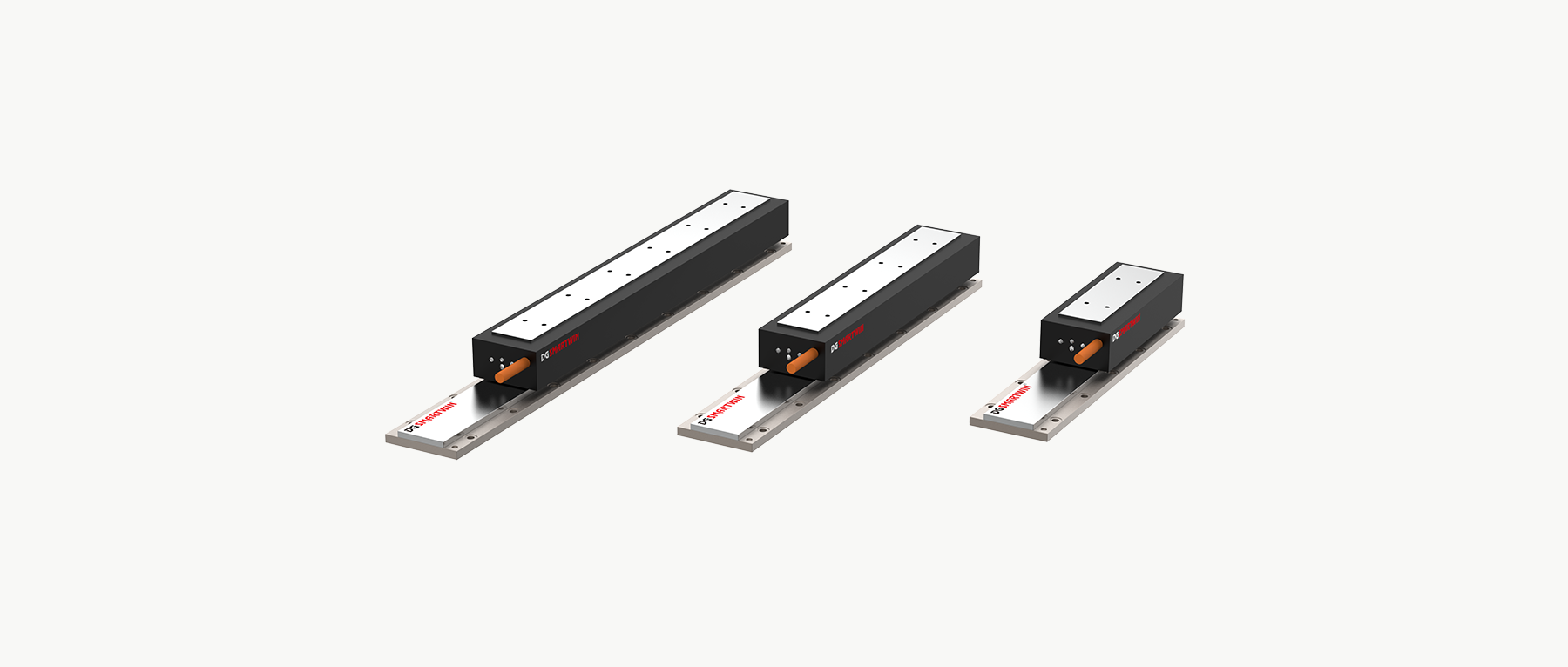
In electronics assembly, SMT machines, and semiconductor handling equipment, linear motors support rapid transfer, repeated positioning, and coordinated multi-axis motion. These systems often operate at high frequency, requiring quick acceleration, accurate positioning, and stable performance over long production cycles. The direct-drive design helps reduce mechanical wear while improving dynamic response and motion efficiency.
Automated Inspection Equipment
Linear motors are also used in optical inspection, measurement platforms, and precision testing systems that require controlled scanning and repeatable positioning. By providing smooth motion and stable speed regulation, they help inspection equipment maintain measurement accuracy and reduce errors caused by mechanical backlash or friction. This makes them suitable for applications where consistent inspection quality and positioning reliability are essential.
2. Linear Motors in Semiconductor and Inspection Equipment
Semiconductor manufacturing is one of the most demanding applications for motion systems, where positioning accuracy, dynamic response, and motion stability directly affect process quality. Equipment such as wafer inspection systems, lithography stages, and wafer handling platforms require fast and repeatable movement, making semiconductor linear motors a widely adopted solution for advanced precision automation.
High Precision Positioning
Semiconductor processes often require positioning repeatability at the micron level to ensure consistent wafer processing and inspection results. Linear motors provide direct electromagnetic force generation with minimal motion deviation, enabling precision stages to achieve repeatability of ±1μm to ±3μm depending on system configuration and feedback resolution.
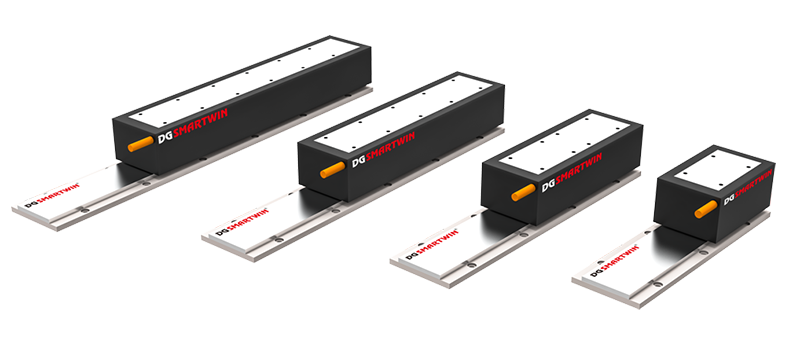
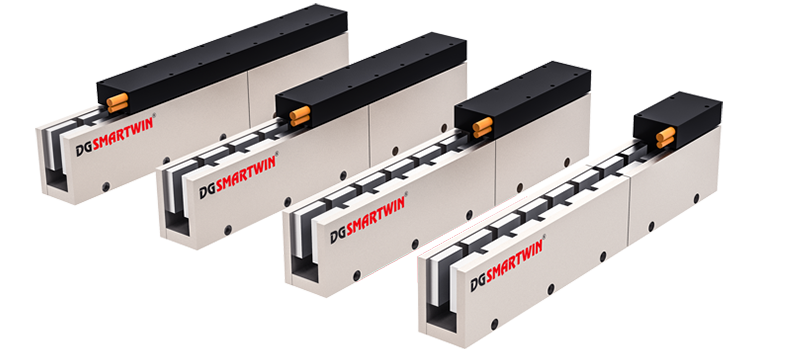
For applications such as wafer inspection and precision measurement, stable positioning is essential because even small motion errors can affect image acquisition and measurement accuracy. Smartwin’s CJM coreless linear motors are designed for applications requiring smooth motion and low disturbance, while CKM iron core linear motors provide higher thrust capability for systems that require stronger dynamic performance.
Fast Scanning Motion
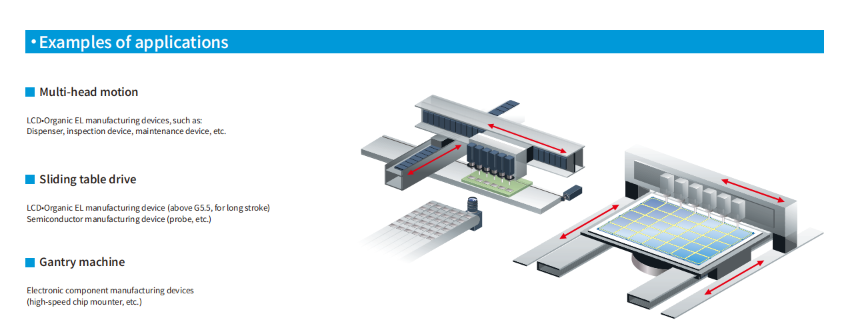
Many semiconductor inspection processes require continuous scanning across wafer surfaces rather than simple positioning between fixed points. Linear motors support high-speed movement with excellent acceleration and velocity control, enabling inspection stages to maintain stable scanning paths while improving throughput.
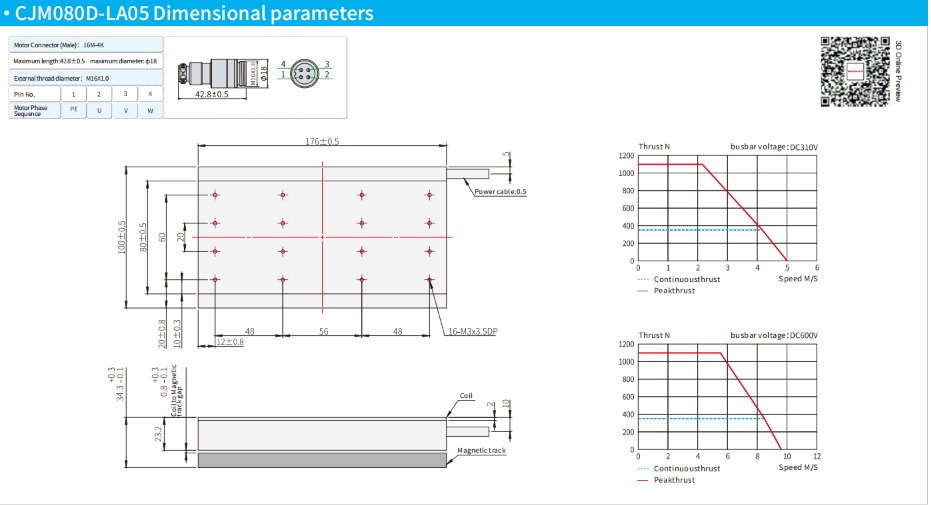
For high-speed automation applications, Smartwin linear motor solutions can support motion requirements such as speeds up to 5m/s and acceleration up to 5G, making them suitable for equipment that requires rapid response and frequent high-speed movement.
Stable Operation for Long-Term Production
Semiconductor equipment is often designed for continuous operation with strict reliability requirements. Linear motors reduce the number of mechanical components involved in motion generation, helping improve long-term stability and reduce maintenance requirements caused by component wear.
3. Linear Motors for Laser Processing and Precision Stages
Laser processing equipment requires motion systems that can deliver precise movement along complex paths while maintaining stable performance during high-speed operation. Applications such as laser cutting, laser marking, micro-machining, and optical alignment rely on accurate positioning, smooth motion, and reliable control, making precision linear motor stages an effective solution for demanding processes.
High Trajectory Accuracy
In laser cutting and micro-machining, the motion stage must closely follow programmed paths to achieve consistent processing results. Even minor deviations can influence edge quality, feature dimensions, and alignment accuracy, especially when working with fine structures or tight tolerances.
Linear motor stages provide accurate path control and repeatable movement, helping maintain machining consistency throughout continuous operations.
Smooth Motion with Low Vibration
Motion disturbance and vibration can affect surface finish, cutting quality, and optical alignment performance. By generating thrust directly through electromagnetic force, linear motors provide smoother motion with fewer mechanical influences compared with conventional transmission-based systems.
This makes them well suited for applications where processing quality depends on stable and controlled movement.
Fast Dynamic Response
Laser systems frequently perform rapid acceleration, deceleration, and direction changes during operation. Fast response from the motion stage helps shorten transition time between processing points and improves overall equipment efficiency.
When combined with appropriate encoder feedback and control systems, linear motor stages can achieve responsive movement while maintaining the consistency required for precision laser applications.
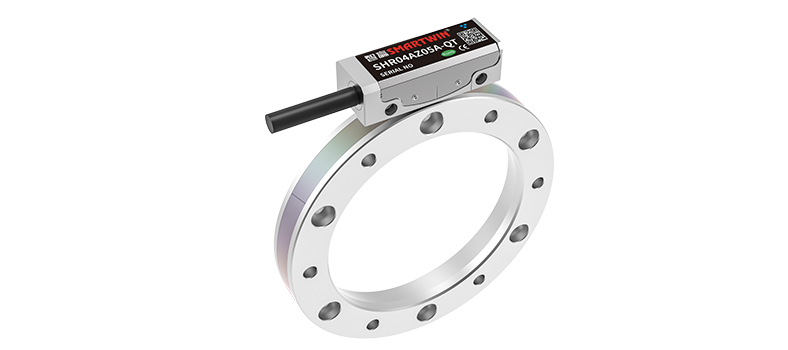
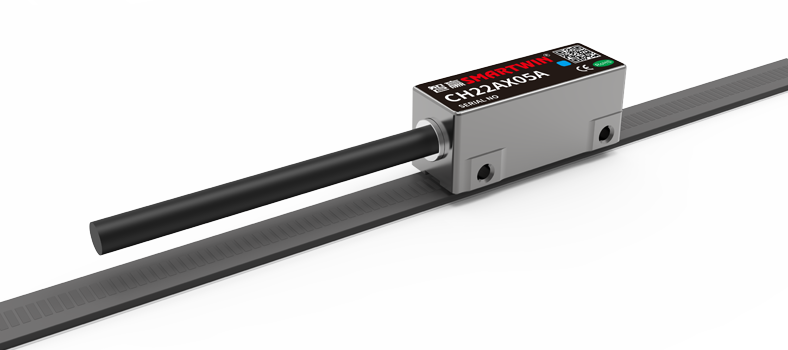
For laser processing applications, motion capability directly influences machining quality and production efficiency. Smartwin offers linear motor and encoder configurations that can be selected according to application requirements, including thrust, travel range, feedback resolution, and operating conditions.
4. Why Direct Drive Motion Is Used in High-End Equipment
High-end equipment such as semiconductor systems, laser processing machines, and precision inspection platforms often require motion performance beyond the limits of conventional mechanical transmission systems. The challenge is not only achieving higher speed, but also maintaining consistent positioning, fast response, and stable operation during continuous production.
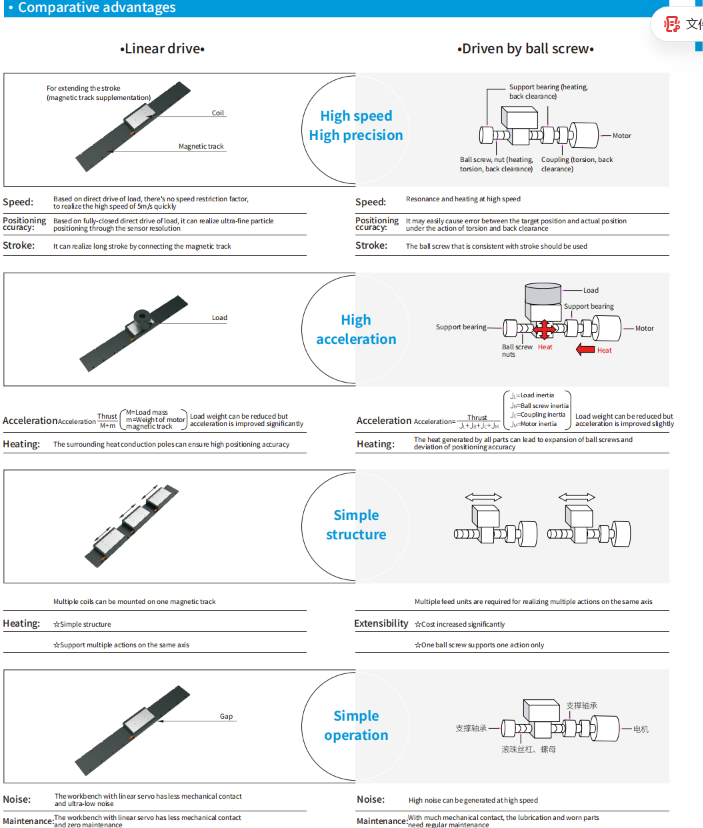
A direct drive linear motor generates linear motion directly through electromagnetic force, while traditional systems rely on mechanical components to transfer motion. This difference affects key performance factors such as speed, acceleration, positioning accuracy, and maintenance requirements.
Performance Factor | Traditional Motion Systems | Direct Drive Linear Motor |
Motion Structure | Use ball screws, belts, or gears to convert rotary motion into linear movement | Generate linear thrust directly through electromagnetic force |
Speed Capability | Precision ball screw systems typically operate around 1–2 m/s, with higher speeds limited by screw vibration, friction, and mechanical stability | Linear motor systems can achieve 5 m/s or higher, making them suitable for high-speed scanning and positioning applications |
Acceleration | Commonly limited to around 0.5–2G depending on load, guide structure, and transmission design | High-performance systems can reach 5G or higher acceleration for rapid movement and frequent direction changes |
Positioning Performance | Accuracy is affected by factors such as screw pitch error, mechanical clearance, and thermal expansion, often remaining within the several-micron range | With high-resolution feedback, precision linear motor stages can achieve sub-micron positioning resolution for demanding applications |
Dynamic Response | Mechanical transmission components add inertia and reduce response speed during acceleration and deceleration | Direct force generation provides faster response to motion commands and smoother dynamic behavior |
Maintenance Requirements | Requires periodic maintenance of mechanical parts, including lubrication, adjustment, and wear inspection | Fewer transmission components reduce mechanical wear and long-term maintenance requirements |
For high-end manufacturing equipment, the value of direct-drive motion comes from the ability to combine speed, precision, and consistency in one motion system. This makes it particularly suitable for applications where motion performance directly affects product quality, such as semiconductor inspection, laser processing, precision measurement, and advanced automation.
In practical equipment design, selecting the right linear motor requires balancing factors such as thrust, moving load, travel distance, operating speed, and feedback resolution. Smartwin provides different linear motor and encoder configurations to support these engineering requirements, allowing motion solutions to be matched with specific equipment conditions and performance targets.
FAQ About Linear Motor Applications
1. What is a linear motor used for?
A linear motor is mainly used for applications requiring high-speed movement, precise positioning, and stable motion control. Common applications include automation equipment, semiconductor manufacturing systems, wafer inspection, laser processing machines, precision measurement platforms, and high-accuracy positioning stages.
2. Why are linear motors used in automation equipment?
Linear motors are used in automation equipment because they provide fast response, smooth movement, and reliable positioning for high-frequency operations. They are commonly applied in pick and place systems, SMT equipment, semiconductor handling, and inspection machines where rapid movement and multi-axis synchronization are required.
3. Why are linear motors important for semiconductor equipment?
Semiconductor equipment requires extremely accurate positioning and stable scanning performance. Linear motors are widely used in wafer inspection, lithography stages, and wafer handling systems because they provide micron-level repeatability, smooth scanning motion, and consistent performance during continuous operation.
4. Are linear motors suitable for laser processing applications?
Yes. Linear motors are suitable for laser cutting, laser marking, micro-machining, and optical alignment applications that require accurate trajectory control and stable movement. Their smooth motion and fast dynamic response help maintain consistent machining quality during complex processing operations.
5. What is the difference between a linear motor and a traditional motion system?
The main difference is how motion is generated. Traditional systems use components such as ball screws, belts, or gears to convert rotary motion into linear movement, while linear motors create linear force directly through electromagnetic interaction. This allows faster response, fewer mechanical limitations, and more consistent motion performance.
Conclusion
Selecting the right linear motor requires considering factors such as thrust, moving load, travel range, speed, and feedback requirements. Smartwin supports engineers in choosing suitable linear motor and encoder configurations based on specific equipment conditions, helping achieve the required balance between accuracy, speed, and motion stability. Contact Smartwin to explore a suitable direct-drive motion solution for your application.
Back To List