

 En
En



Reduce Fragmentation Rate and Boost Scanning Efficiency: SMARTWIN Linear Modules Support PV Cell Inspection and Sorting Processes
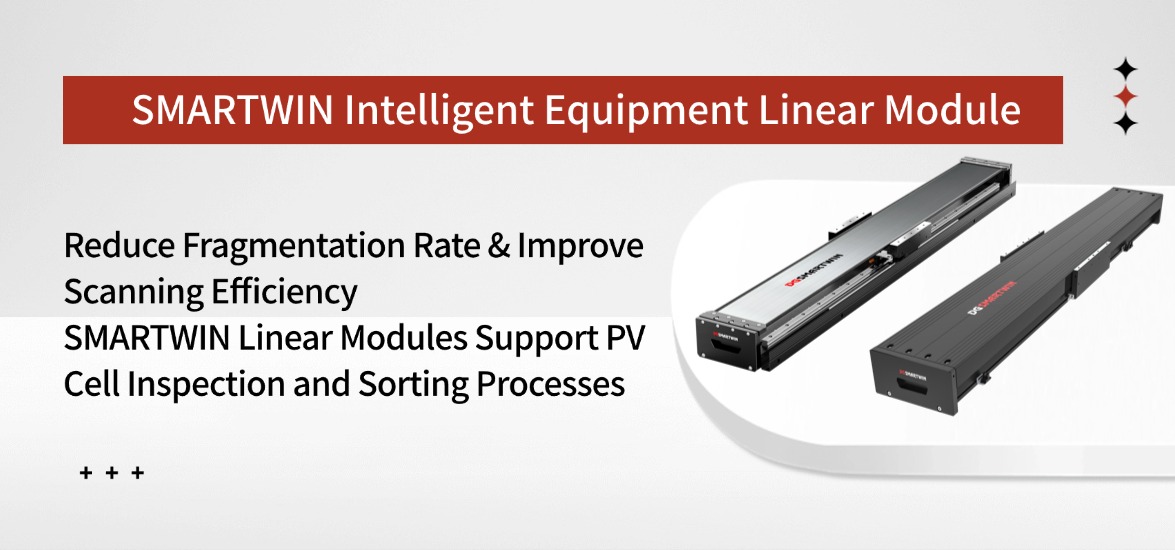
Reduce Fragmentation Rate and Boost Scanning Efficiency: SMARTWIN Linear Modules Support PV Cell Inspection and Sorting Processes
I. Analysis of Transmission Requirements for PV Industry Equipment
Printing, scribing and sorting of photovoltaic cells, as well as visual inspection before module lamination, rely on linear motion mechanisms to move cameras or processing heads. Solar cells are brittle materials; vibration and impact during motion directly cause fragmentation. Therefore, smooth operation of linear modules serves as a core performance indicator. Meanwhile, workpieces on PV production lines are large in size, which often requires linear motion units with long travel strokes.
Many PV equipment manufacturers face a trade-off when raising line tact: faster scanning leads to higher fragmentation rate, while slower scanning fails to meet capacity targets. Solar cells are thin, brittle and large. Insufficient buffering during axis start-stop will transfer stress to the suction cup and induce hidden cracks.
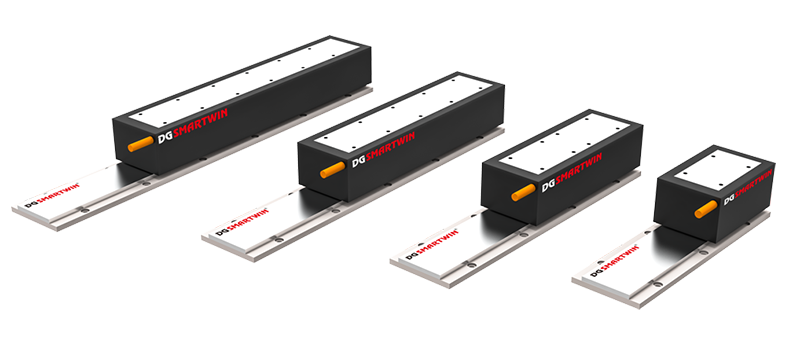
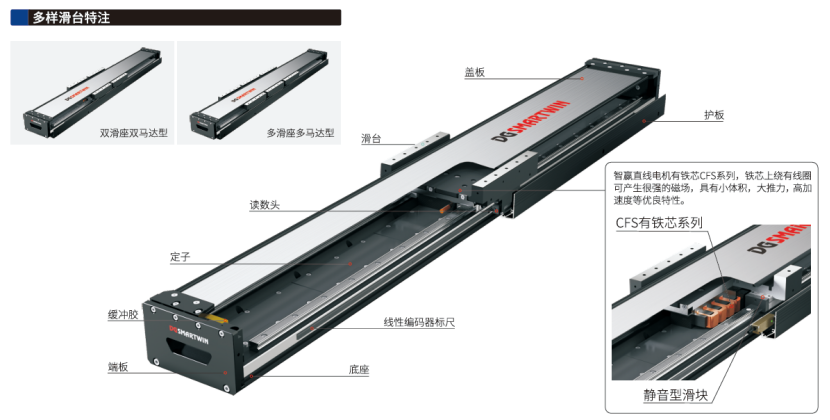
SMARTWIN Intelligent Equipment linear modules are optimized with vibration-damping structures to deliver low start-stop impact and smooth operation. Instead of simply lowering acceleration for smoother motion, we start from guide rail preload, slide inertia matching and transmission rigidity distribution. High-frequency components generated during acceleration and deceleration are absorbed by the base and slide platform, avoiding transmission to the end effector.
In a cell sorting equipment project for a major domestic PV equipment manufacturer, SMARTWIN Intelligent Equipment linear modules carry vision inspection cameras to scan entire solar cells at constant speed. Fragmentation rate is stably controlled to meet the mass production requirements of the photovoltaic industry.
II. Fragmentation Originates From Motion Axes, Not Suction Cups
At cell sorting stations, fragments are rarely caused by suction cup damage. Instead, residual vibration from slide table stop is transmitted through the fixture to silicon wafers, inducing hidden cracks. This phenomenon is more pronounced at scribing stations: cut half-cells have high edge stress, and minor jitter during transfer will cause direct cracking.
SMARTWIN Intelligent Equipment linear modules take "low-vibration transfer" as a hard product specification, featuring full closed-loop control and zero-contact wear, well suited for high-response inspection stations. What cell inspection stations require is constant-speed slide movement, stable image capture by cameras, and immediate transfer after scanning, with no jerks during the whole process.
III. Long-Travel Modules and Multi-Axis Combined Solutions
PV module inspection equipment often requires long travel strokes exceeding 1 meter. With the popularization of large-size solar cells, single-axis travel lengths keep increasing. The main challenge for long-travel applications is not reaching the end of travel, but accuracy degradation at the far end, mid-span deflection, and seam effect at joint sections.
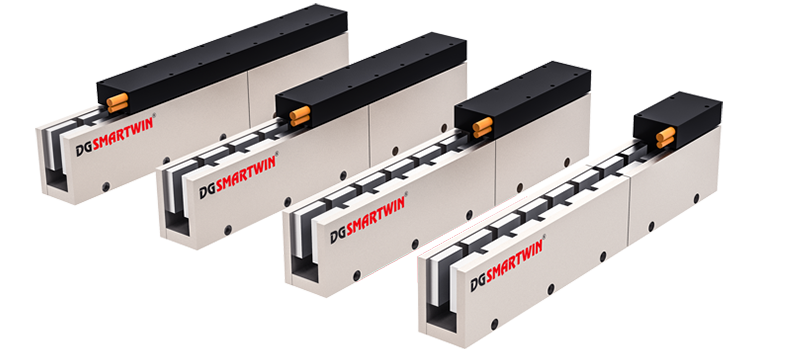
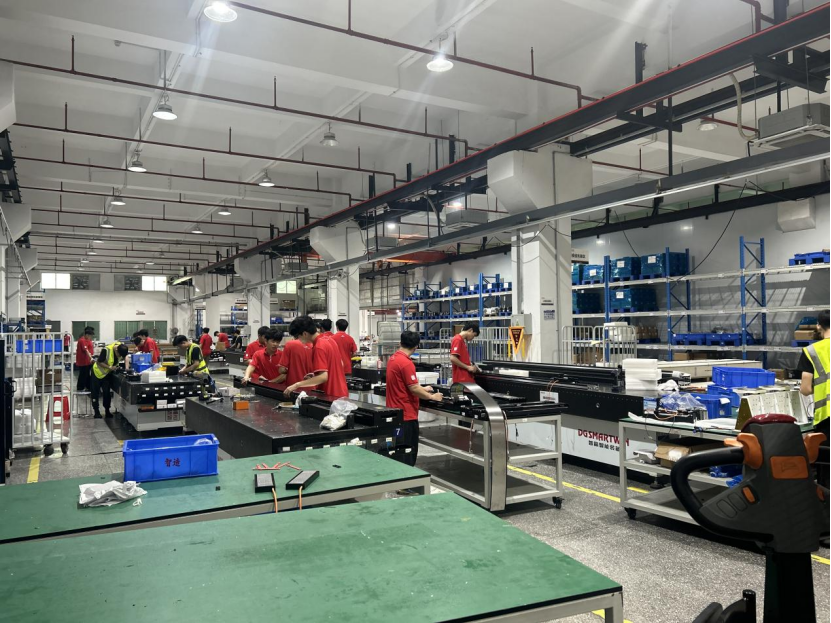
SMARTWIN Intelligent Equipment linear modules deliver stable transmission over long travel and support assembling gantry structures via multiple spliced modules. Equipped with standardized mounting datums, the modules enable fast assembly for equipment manufacturers and shorten the overall machine processing cycle. Splicing is not simply joining two standard modules together. Positioning pin holes are machined on splicing surfaces and pre-stretching is applied to the base, ensuring the straightness and parallelism after splicing remain within tolerance bands.
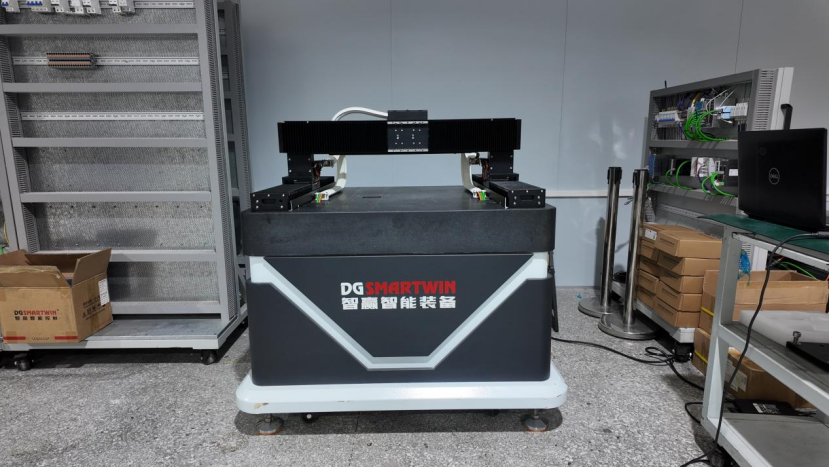
For workstations requiring gantry synchronization such as dual-camera parallel scanning and large-area AOI inspection, inter-axis coupling is an inevitable challenge. The gantry synchronous control solution minimizes the following error between master and slave axes, eliminating the "scissor effect" even when the two modules operate at high speed.
When the production line switches product specifications requiring extended travel or wider gantry span, slide mounting surfaces, sensor slots and cable carrier routing can be confirmed in advance. Backed by SMARTWIN’ s robust hardware and matched motion control, potential risks such as deflection compensation and thermal elongation allowance for long-travel applications can be eliminated at the sample stage.
IV. Reliability and Durability Under Harsh Environments
Some PV workshops experience large temperature and humidity fluctuations. Especially for pre-lamination inspection and module framing stations, the workshop contains moisture, adhesive vapor, and volatilized flux residue from solder ribbons. After only months of operation, conventional modules suffer from sticky guide rail surfaces and emulsified grease inside sliders, leading to silent accuracy degradation.
SMARTWIN linear modules can be treated with rust protection upon request to resist workshop corrosion, extend equipment service life and reduce after-sales maintenance burden for equipment manufacturers. The protection treatment is not a simple coat of anti-rust paint; instead, it is graded according to workstation conditions. General stations adopt surface anodization and coating treatment. High-humidity stations deploy stainless steel guide rails and corrosion-resistant seals. Special stations are equipped with fully enclosed protective covers and positive-pressure air purging.
SMARTWIN implements corresponding environmental adaptability design on the control side: anti-corrosion coating is applied to drive heat sinks, encoder connectors achieve IP65 or higher protection rating, and signal cables are shielded and sleeved to prevent moisture from creeping into electrical chambers along cables. Thermal drift compensation algorithms are embedded in firmware. Even with a workshop temperature swing of around ten degrees, positioning points will not shift due to thermal expansion and contraction.
Regarding after-sales maintenance, equipment manufacturers’ biggest concern is not high spare-part cost, but emergency on-site service requests for line shutdowns. SMARTWIN builds durable module hardware and adopts proactive fault diagnosis: pre-alarms for abnormal parameters and traceable wear trends allow equipment manufacturers to schedule planned downtime for part replacement instead of emergency troubleshooting. PV production lines only have a few shutdown windows per year; no operator can afford unexpected equipment failures during peak production.