

 En
En



High-Load Continuous Production for Lithium Battery Lines: SMARTWIN Linear Modules Build Solid Motion Foundation for Long-Distance Reciprocating Stations
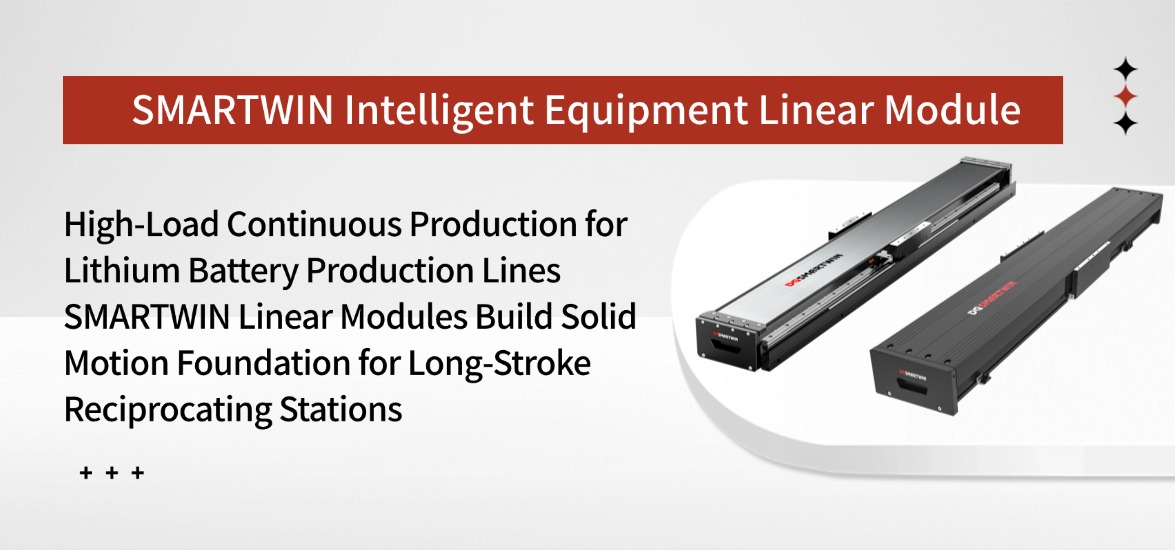
High-Load Continuous Production for Lithium Battery Lines: SMARTWIN Linear Modules Build Solid Motion Foundation for Long-Distance Reciprocating Stations
I. Motion Control Challenges in Lithium Battery Manufacturing Lines
Processes including pole piece cutting, winding, electrolyte injection, sealing and cell inspection for lithium batteries impose stringent requirements on the stability, cleanliness and consistency of motion mechanisms. As production line tact speeds keep rising, motion units must support high-speed reciprocating movement without positioning deviation; otherwise, cell yield will be directly compromised. Conventional modules show obvious shortcomings in this scenario: particle generation and insufficient rigidity, failing to meet production specifications for lithium battery workshops.
Many lithium battery equipment manufacturers encounter the same bottleneck during tact acceleration: single stations operate normally, but positioning drifts after full-line continuous shifts due to superimposed vibration and accumulated thermal deformation. Unlike small 3C parts, battery cells carry high individual value and are produced in large batches. A single transfer deviation may lead to scrappage of the entire batch.
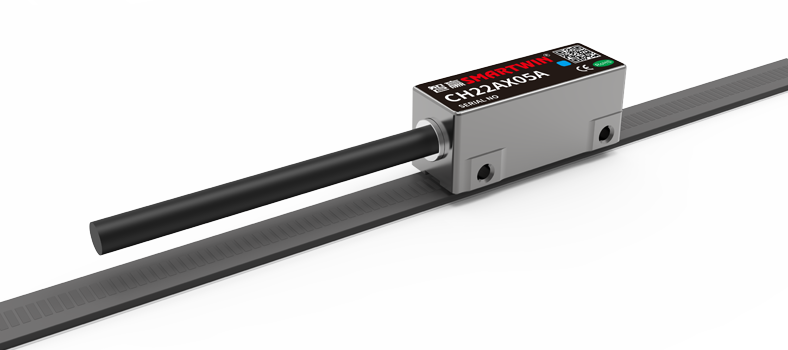
SMARTWIN linear modules are specially optimized for clean working conditions in the lithium battery industry. Internal components adopt low-particle materials with a high-rigidity structural design, delivering minimal deformation under high-speed motion. Instead of simply repackaging standard products with different grease and marketing them as clean-grade versions, we comply with lithium battery workshop particle specifications starting from guide rail sealing, slide material selection and model sizing.
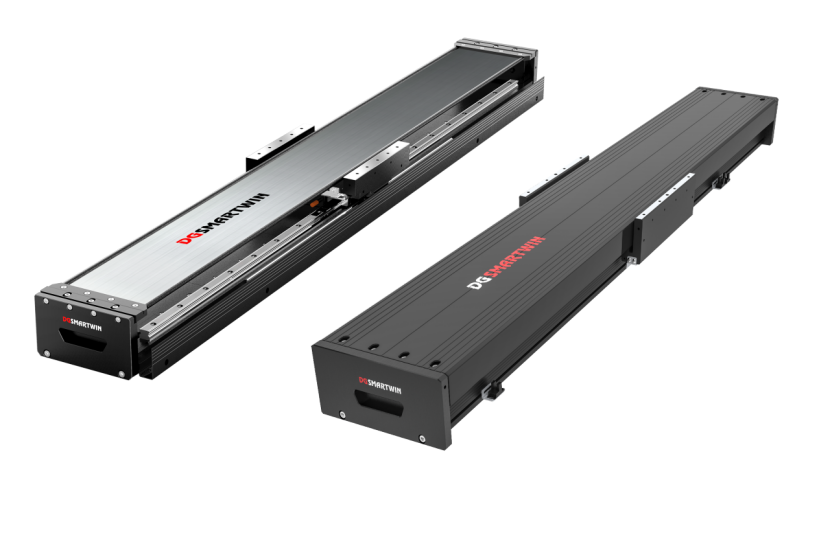
In a cell equipment supporting project for a leading domestic new energy vehicle manufacturer, SMARTWIN linear modules are deployed at cell loading and unloading stations to stably handle cell transport and positioning, supporting continuous high-speed production of the production line. Multi-axis synchronization, vibration suppression and settling time are integrated into one unified framework, solving the dilemma of "can move but cannot stop accurately" for long-distance reciprocating motion.
II. The Biggest Challenge of Long-Distance Reciprocating Motion Is Not Insufficient Speed, but Performance Fatigue After Long Hours of Operation
Lithium battery production lines have stricter handling tact requirements than 3C lines. For stations such as cell loading/unloading and pole piece transfer, thousands of reciprocating cycles per day are normal. Lines keep running through weekends, with maintenance windows further shortened during holidays.
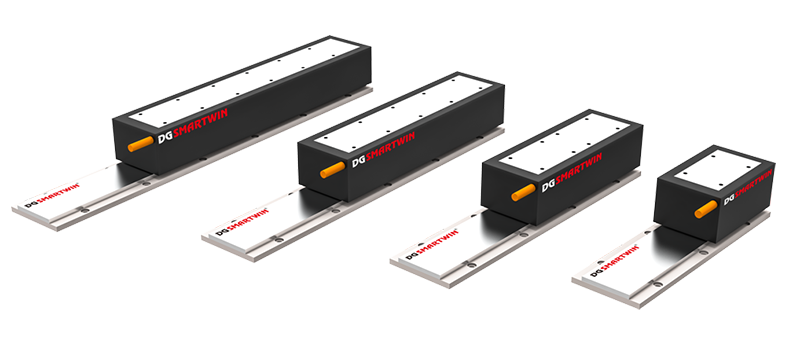
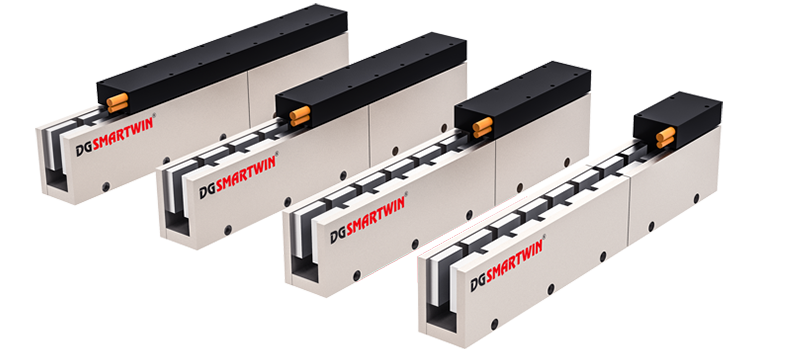
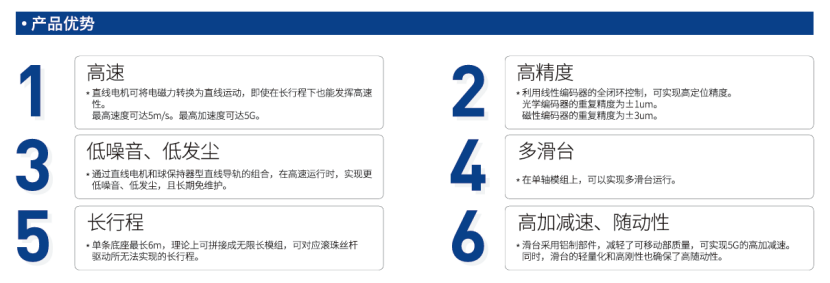
Smartwin Intelligent Equipment linear modules adopt a "rigidity-first, low-maintenance" design philosophy for long-travel applications. The linear motor variant features full closed-loop control and non-contact wear-free operation. For lithium battery processes, long-travel high speed is required for front-end pole piece transfer, stable positioning for mid-stage cell handling, and sustained repeat accuracy for back-end inspection.
III. Diverse Module Portfolio Covering Full Lithium Battery Process
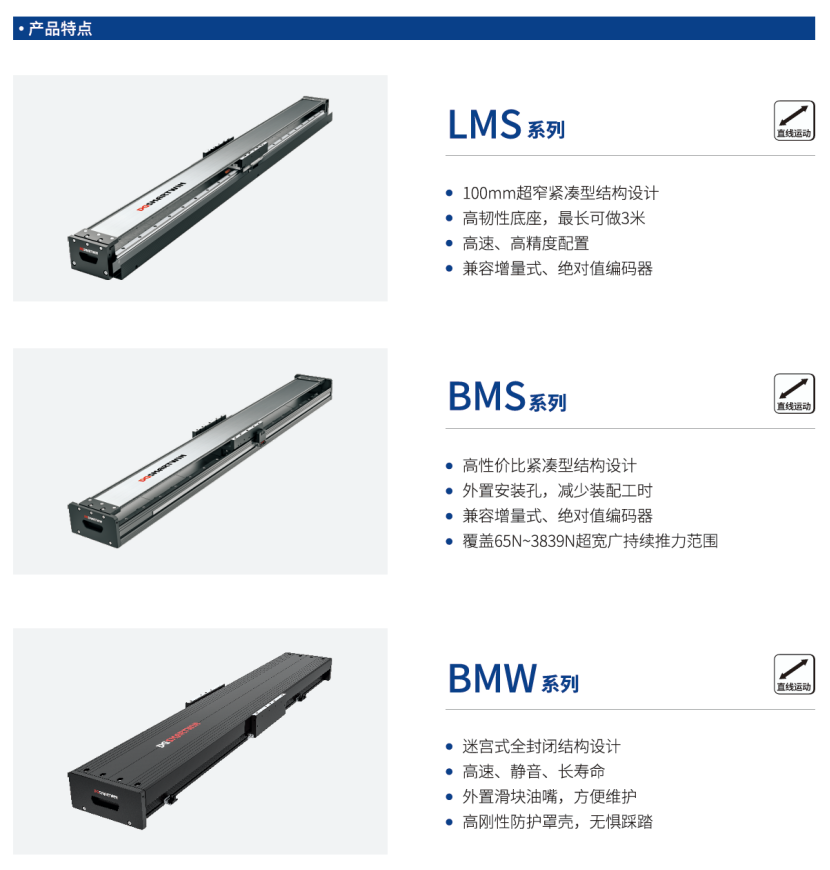
Load and travel requirements differ significantly across the front, middle and back-end lithium battery processes. In the front section, pole pieces are thin, light and brittle; transfer must be fast and vibration-free. Mid-section cells are heavy and bulky, requiring high rigidity for handling. The back-end inspection phase demands high precision and repeatable positioning.
Smartwin Intelligent Equipment offers light-load long-travel linear modules for material transfer, and supports multi-axis combination to build gantry mechanisms for various lithium-battery-specialized equipment. The selection principle remains consistent with that for the 3C industry: avoid deploying a single model across the whole line. Each workstation is selected separately according to load, travel, tact and cleanliness class.
IV. One-Stop Supporting Services to Accelerate Project Implementation
SMARTWIN Intelligent Equipment is equipped with a fully functional test workshop. Before shipment, linear modules undergo load, service life and precision aging tests. For lithium battery equipment integrators, motion scheme simulation is available to predict vibration issues under high-speed working conditions in advance and cut on-site commissioning time.
Lithium battery equipment features tight delivery schedules and short prototype validation windows. Simulation saves time spent on on-site mechanical modification: reference values for axis speed, acceleration/deceleration settings and resonance points can be obtained during simulation, requiring only minor adjustments and verification on site.
SMARTWIN’ s supporting commissioning tools are also designed for post-delivery maintenance scenarios: parameter backup, fault diagnosis and remote monitoring, which meet the practical needs of equipment manufacturers after delivery.
The biggest concern is not high equipment cost, but penalties for delayed delivery, three weeks of drawn-out on-site commissioning, or axis vibration during customer factory audits. SMARTWIN Intelligent Equipment manufactures robust modules with refined motion control and diagnostic functions. Lithium battery equipment manufacturers receive solutions that can be delivered on schedule and withstand customer factory audits. Production lines can run continuously, equipment vendors can confidently sign acceptance documents, and end-users can raise their capacity plans. Linear modules may seem inconspicuous in this value chain, yet without this component, the tact of the entire lithium battery production line has to be reduced.