

 En
En



High-Speed Feeding Without Precision Loss: SMARTWIN Linear Modules Address Jitter and Trajectory Deviation Pain Points for Laser Processing Equipment
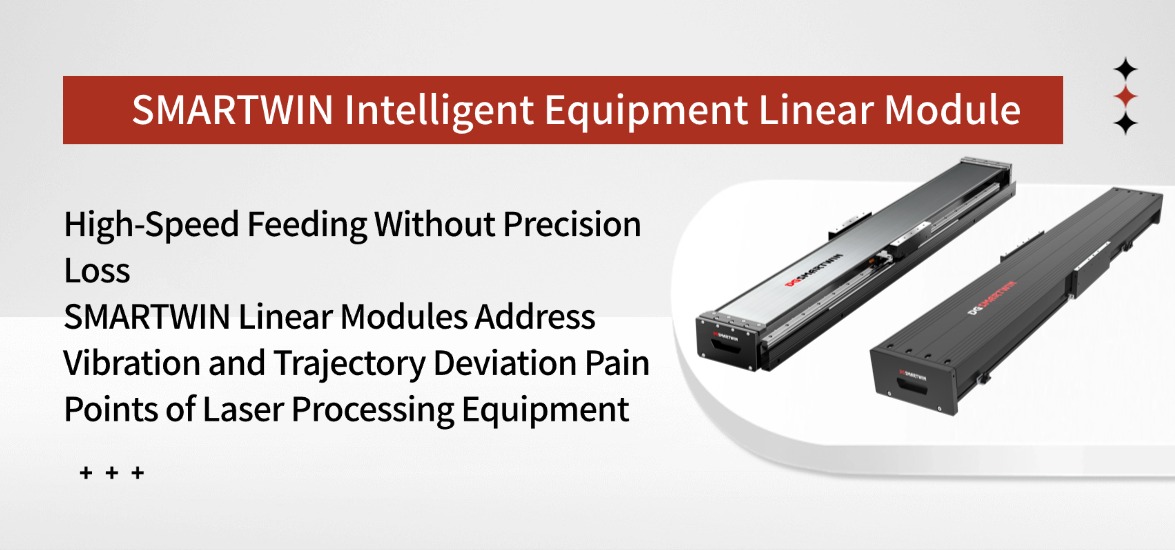
High-Speed Feeding Without Precision Loss: SMARTWIN Linear Modules Address Jitter and Trajectory Deviation Pain Points for Laser Processing Equipment
I. Core Requirements of Linear Modules for Laser Processing Equipment
Laser cutting, marking, welding and cleaning equipment use linear modules to drive laser head movement. Motion trajectory directly determines workpiece dimensional accuracy and cut surface quality. Dynamic response under high-speed motion, repeat positioning accuracy and anti-vibration performance are key indicators for laser equipment selection. Insufficient module rigidity causes jitter during high-speed processing, which directly degrades finished product quality.
Many laser equipment manufacturers encounter this scenario during prototype testing: all parameters, laser focus and gas pressure are properly tuned, yet cut surfaces still show texture, circular holes become elliptical, and straight lines turn curved. Upon inspection, the root cause lies not in the laser source, but in transient oscillation of the motion axis during high-speed direction reversal. Laser heads have zero tolerance for trajectory errors — the laser beam cannot self-correct; if the axis deviates, the beam deviates accordingly.
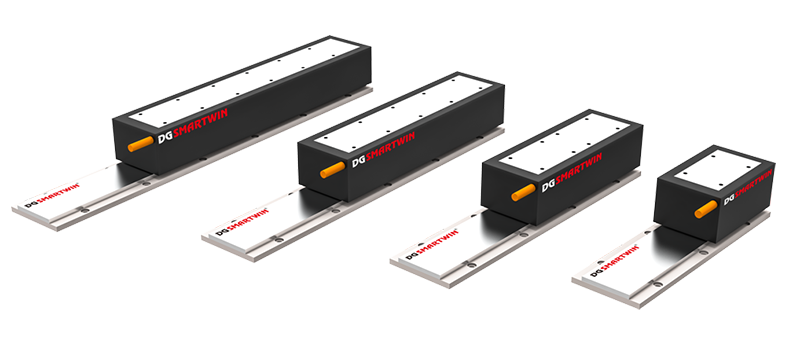
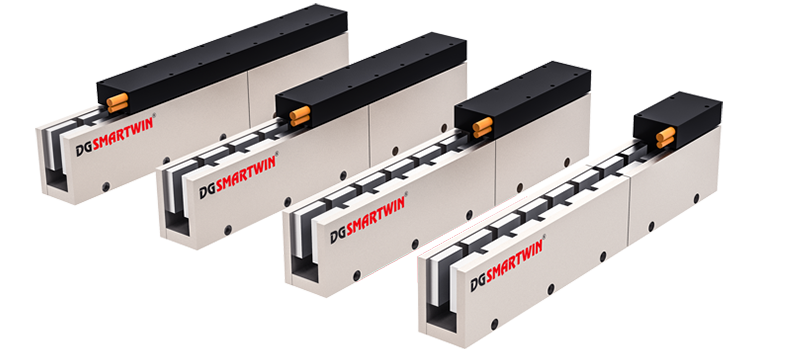
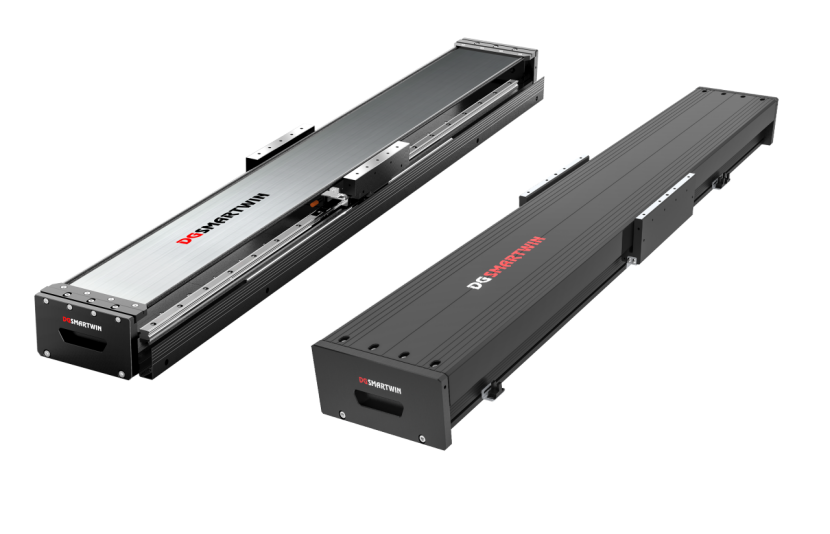
SMARTWIN refines linear modules for the demands of the laser processing industry. The profile base features enhanced rigidity, transmission backlash is tightly controlled, and outstanding dynamic response is achieved. Rather than retrofitting general-purpose modules with modified mounting surfaces for laser machines, we re-match performance according to the dynamic characteristics of laser equipment, starting from underlying parameters including base wall thickness, guide rail span, slide rigidity and transmission preload.
II. Jitter Originates Not From Speed, but Rigidity Matching
The primary concern in laser processing is not insufficient travel speed, but resonance occurring on the slide table during high-speed operation. If the base of a linear motor module lacks adequate rigidity, it may couple with the machine frame and generate vibration marks. Such vibration propagates to the laser head, resulting i wider kerf and blurry marking.
SMARTWIN linear modules adopt a clear design logic: eliminate base resonance first, remove transmission backlash secondly, and ensure stable slide stopping lastly. Finite element analysis (FEA) is performed on the profile base to identify weak vibration modes and reinforce the structure with ribs and thicker sections. The slide table adopts lightweight design without compromising rigidity, so that inertia and thrust are matched within a reasonable range. The velocity profile for transition segments during direction reversal is finely tuned to achieve continuous acceleration when the laser head follows rounded or sharp corners, avoiding step shocks. The stability of front-end modules and following accuracy of back-end control are fully inspected via laser interferometer across the full stroke for positioning accuracy and backlash in the test workshop before delivery. Equipment manufacturers can proceed directly with tool setting without additional running-in.
III. Strict Pre-Delivery Inspection to Guarantee Quality
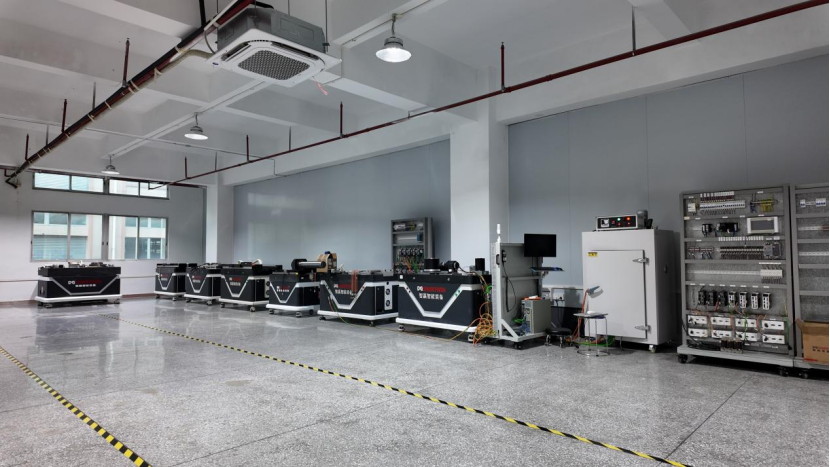
Every SMARTWIN Intelligent Equipment linear module undergoes precision, load and reciprocating life tests and is delivered with an inspection report. Instead of sampling inspection as a mere formality, every unit is tested on the inspection bench. Positioning accuracy, repeat positioning accuracy and backlash are scanned across the full stroke, with data archived for traceability.
After laser equipment is delivered to end users, the most troublesome issue is gradual precision degradation during operation. When end customers report "inaccurate cutting", equipment manufacturers may find enlarged backlash inside the module after on-site investigation. SMARTWIN addresses this risk from two aspects. On the hardware side, high-quality batches of transmission components are selected, and preload is configured according to the service life curve. On the testing side, burn-in running is performed before shipment so that transmission pairs complete initial wear in-house and maintain steady-state accuracy once deployed on site. The supporting commissioning tools are also designed for post-delivery maintenance scenarios, covering parameter backup, fault diagnosis and precision trend monitoring, which satisfy practical requirements of equipment manufacturers after product handover.
The bigger concern is not a several-thousand cost premium for the module, but out-of-round circular cuts and burrs on character edges during customer machine acceptance tests. SMARTWIN Intelligent Equipment manufactures robust module hardware and delivers refined motion control and diagnostic functions. Laser equipment manufacturers obtain solutions that can pass acceptance inspection and support reliable warranty commitments.