

 En
En



Why Linear Encoder Feedback Is Critical for Direct Drive Systems
This article explains why linear encoder feedback is critical for direct drive systems, how it improves positioning performance, and what factors should be considered when selecting a feedback solution for precision motion applications.
How Direct Drive Systems Work Without Mechanical Transmission
In conventional motion systems, power is transferred from the motor to the moving load through mechanical components such as couplings, ball screws, or gears. These transmission elements make it possible to convert and deliver motion, but they can also introduce factors that affect positioning performance, including backlash, friction, mechanical deformation, and accumulated transmission errors.
Direct drive technology takes a different approach by eliminating these intermediate transmission components and connecting the motor directly to the load. For a linear motion system, the basic structure becomes:
Linear Motor → Moving Load
This simplified mechanical structure reduces sources of motion loss and allows the system to achieve faster response, higher acceleration, and smoother operation. At the same time, since the motor directly controls the movement of the load, the accuracy of the final position depends more heavily on the quality of the motion feedback.
For this reason, precise feedback measurement is essential in direct drive applications. A reliable feedback system provides the controller with real-time information about the actual position of the moving stage, allowing it to correct deviations and maintain stable motion accuracy throughout operation.
Why Linear Encoder Feedback Is Essential for Direct Drive Motion
1.Direct Position Measurement Improves Motion Accuracy
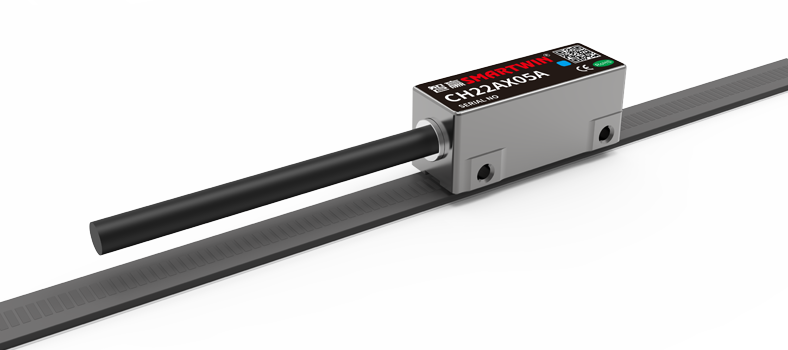
In a direct drive system, the moving load is directly driven by the motor, which makes the accuracy of position feedback a decisive factor in overall motion performance. A linear encoder feedback system measures the actual position of the moving stage rather than relying on motor rotation to estimate where the load is located.
With motor-mounted feedback, the control system can only infer the load position based on the accuracy of mechanical transmission components. Variations caused by screw pitch errors, thermal expansion, structural deformation, or coupling tolerance may create differences between the motor position and the actual movement of the stage.
By capturing the real position directly on the motion axis, a linear encoder reduces these uncertainties and provides a more reliable reference for precision positioning tasks. This is particularly important in applications where alignment accuracy, repeatability, and process consistency directly affect the final result.
2.High-Resolution Feedback Supports Servo System Performance
The performance of a direct drive system depends on how effectively the servo loop can respond to changes during operation. As the load moves, the encoder provides continuous position information that allows the control system to compare actual movement with the target trajectory and make necessary adjustments.
Higher-resolution feedback enables the system to detect smaller deviations during motion, which is valuable for applications involving fine positioning, rapid acceleration, or frequent movement changes. Instead of simply improving measurement detail, better feedback allows the entire motion system to operate with greater control precision.
3.Encoder Signal Quality Influences Dynamic Motion Performance
For high-speed direct drive applications, encoder performance depends on more than resolution alone. The quality and stability of the feedback signal also affect how smoothly the system responds during acceleration, deceleration, and continuous movement.
Since the servo system derives speed information from position changes over time, unstable signals or interpolation errors can influence velocity control and create motion fluctuations. A consistent encoder signal helps maintain smoother operation, reduce vibration, and shorten settling time after positioning.
The Role of Linear Encoders in High-Performance Motion Applications
Direct drive technology is widely adopted in applications where motion systems must combine high speed, precise positioning, and fast response. In many high-performance machines, the challenge is not only achieving movement speed but also maintaining consistent accuracy throughout continuous operation.
For precision stages, positioning requirements can reach the sub-micron level, while high-speed systems may need to complete thousands of positioning cycles without significant deviation. Under these conditions, accurate measurement of the actual load position becomes essential. By providing real-time position information, linear encoders help direct drive systems maintain stable motion performance in applications where repeatability and accuracy are critical.
1.Semiconductor Equipment
Semiconductor manufacturing is one of the most demanding fields for precision motion control. Processes such as wafer inspection, alignment, and handling often require motion stages to achieve extremely fine positioning while operating at high speed.
In advanced semiconductor equipment, even small positioning deviations can influence alignment accuracy and inspection results. Motion stages may perform repeated movements over long production cycles, requiring feedback systems capable of maintaining consistent performance over time.
Direct drive linear motors provide the rapid response needed for high-speed stage movement, while linear encoder feedback measures the actual position of the moving axis with high accuracy. This combination helps reduce positioning errors and supports stable operation in precision semiconductor applications.
2.Precision Automation and Manufacturing
Modern manufacturing equipment increasingly depends on fast and repeatable motion to improve production efficiency. Applications such as electronic assembly, optical inspection, and precision handling may involve thousands of positioning operations per day, where small variations can accumulate and affect product consistency.
Compared with systems that rely only on motor position feedback, linear encoders directly measure the movement of the working platform. This allows the control system to maintain closer alignment between the programmed trajectory and the actual motion, especially during frequent acceleration, deceleration, and rapid positioning cycles.
For automated production environments, this direct feedback approach helps improve process stability while supporting higher throughput requirements.
3.Laser Processing and Inspection Systems
Laser processing and optical inspection systems require accurate trajectory control because the position of the moving axis directly affects machining quality and measurement reliability. In applications such as laser cutting, marking, and precision inspection, motion errors at the micron level may influence the final result.
Direct drive systems provide the dynamic response required for fast and smooth movement, while linear encoder feedback ensures that the actual axis position remains accurately synchronized with the programmed path. This enables stable motion control during complex trajectories, high-speed scanning, and precision processing tasks.
By combining direct drive technology with accurate position feedback, these systems can achieve the speed, consistency, and precision required for advanced manufacturing applications.
Key Factors When Selecting a Linear Encoder for Direct Drive Systems
Selecting a linear encoder for a direct drive system requires considering the overall motion requirements rather than a single specification. Factors such as positioning accuracy, operating speed, signal performance, and system compatibility all influence the final motion performance.
Linear Encoder Feedback vs Motor-Mounted Feedback: What Is the Difference?
The main difference between linear encoder feedback and motor-mounted feedback is the measurement location. A motor encoder detects motor rotation and calculates the estimated load position, while a linear encoder measures the actual movement of the stage directly.
For applications where mechanical transmission errors or high positioning requirements are important, the difference between estimated position and actual load position can significantly affect motion performance.
For direct drive systems, where the motor directly controls the movement of the load, accurate load-side feedback becomes especially important. A linear encoder provides the control system with a more direct reference of actual motion, helping achieve higher consistency and stability in precision applications.
Conclusion
In direct drive applications, the feedback system plays an essential role in achieving reliable precision motion. By directly measuring the actual position of the moving stage, linear encoders provide the accurate information required for effective servo control, stable operation, and repeatable performance.
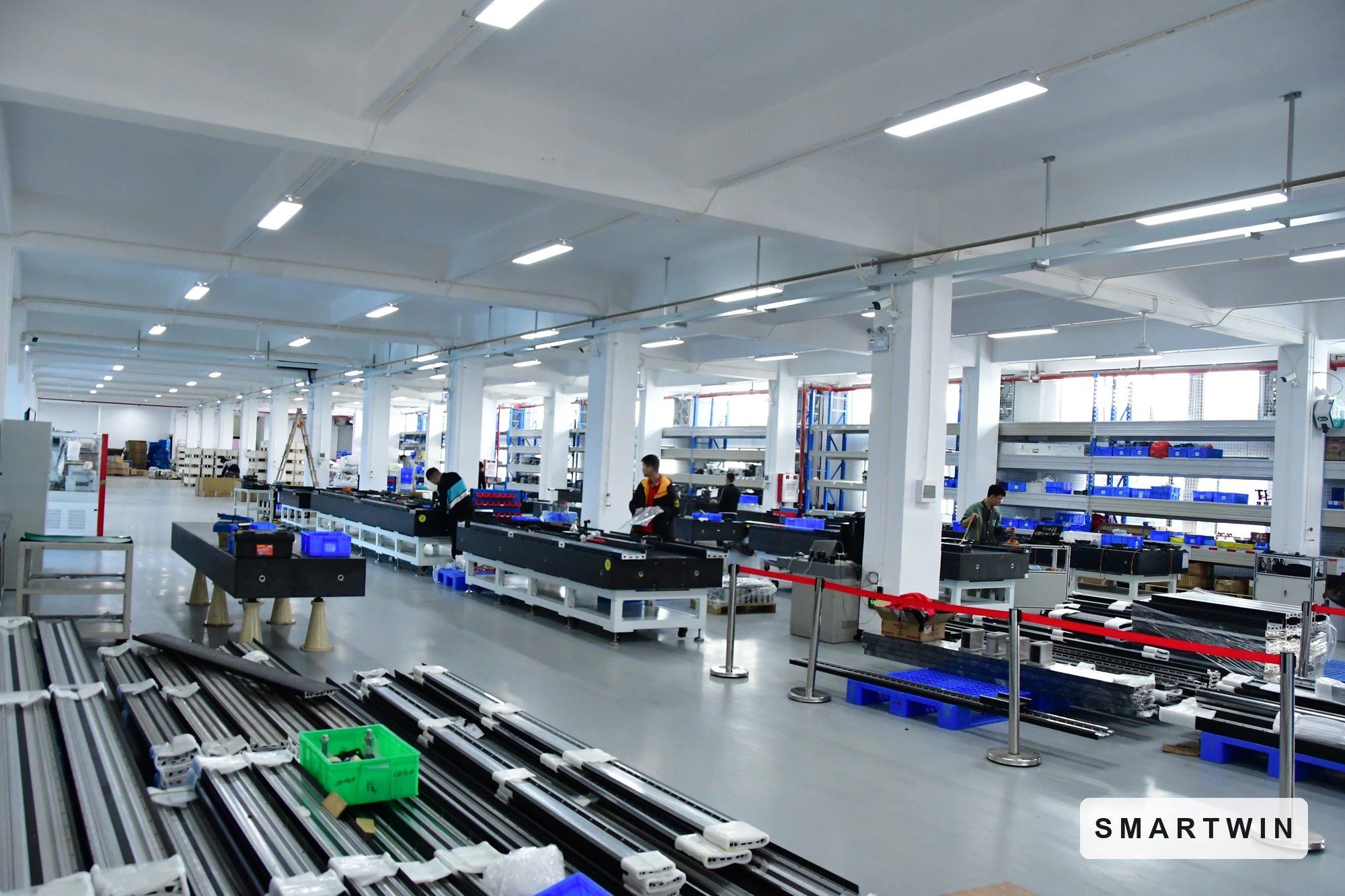
From semiconductor equipment to precision automation and laser processing systems, the combination of direct drive technology and accurate linear encoder feedback helps manufacturers achieve higher motion performance. Selecting the right feedback solution based on accuracy, speed, and system requirements is key to building a reliable precision motion system.
Contact Smartwin to discuss your application requirements and develop a suitable precision motion solution.
FAQs
1. Why is linear encoder feedback important for direct drive systems?
Direct drive systems connect the motor directly to the moving load, which improves responsiveness but also makes accurate position measurement more important. A linear encoder measures the actual position of the moving stage and provides real-time feedback for motion control, helping the system maintain positioning accuracy and stable operation.
2. What is the difference between a linear encoder and a motor encoder?
A motor encoder measures the rotation position of the motor shaft, while a linear encoder measures the actual position of the moving load. Because mechanical components can introduce transmission errors, linear encoder feedback provides more direct position information, making it suitable for applications requiring high precision and repeatability.
3. Can a direct drive system work without a linear encoder?
Some direct drive systems can operate without a linear encoder, but they may not achieve the same level of positioning accuracy and repeatability required by precision applications. For high-performance motion systems, direct position feedback helps the controller respond more accurately to movement changes.
4. How does linear encoder resolution affect motion performance?
Linear encoder resolution determines how finely the system can detect position changes. Higher-resolution feedback allows the controller to identify smaller deviations and make more precise adjustments, which is especially valuable for applications involving fine positioning, rapid acceleration, and repeated motion cycles.
5. What factors should be considered when selecting a linear encoder?
Linear encoder selection should consider several factors, including resolution, accuracy, response speed, signal quality, encoder type, and compatibility with the motion controller. The best choice depends on the complete system requirements and operating environment.
6. Why are linear encoders commonly used in semiconductor equipment?
Semiconductor equipment requires highly repeatable positioning for processes such as wafer inspection, alignment, and precision handling. Linear encoders provide direct position measurement and stable feedback, helping motion systems maintain accuracy during high-speed and continuous operation.
Back To List