

 En
En



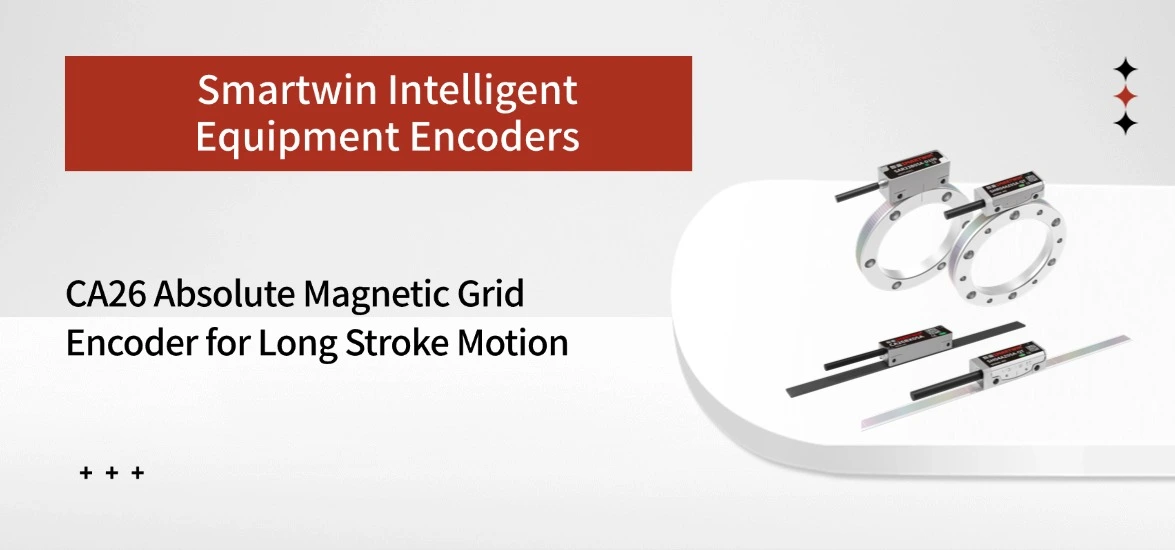
CA26 Absolute Magnetic Grid Encoder for Long Stroke Motion
What Makes CA26 Different from Traditional Incremental Encoders
Traditional incremental encoders calculate position by tracking the number of pulses generated during motion. In the event of a power interruption, the system may lose its position reference and require a homing procedure before normal operation can resume.
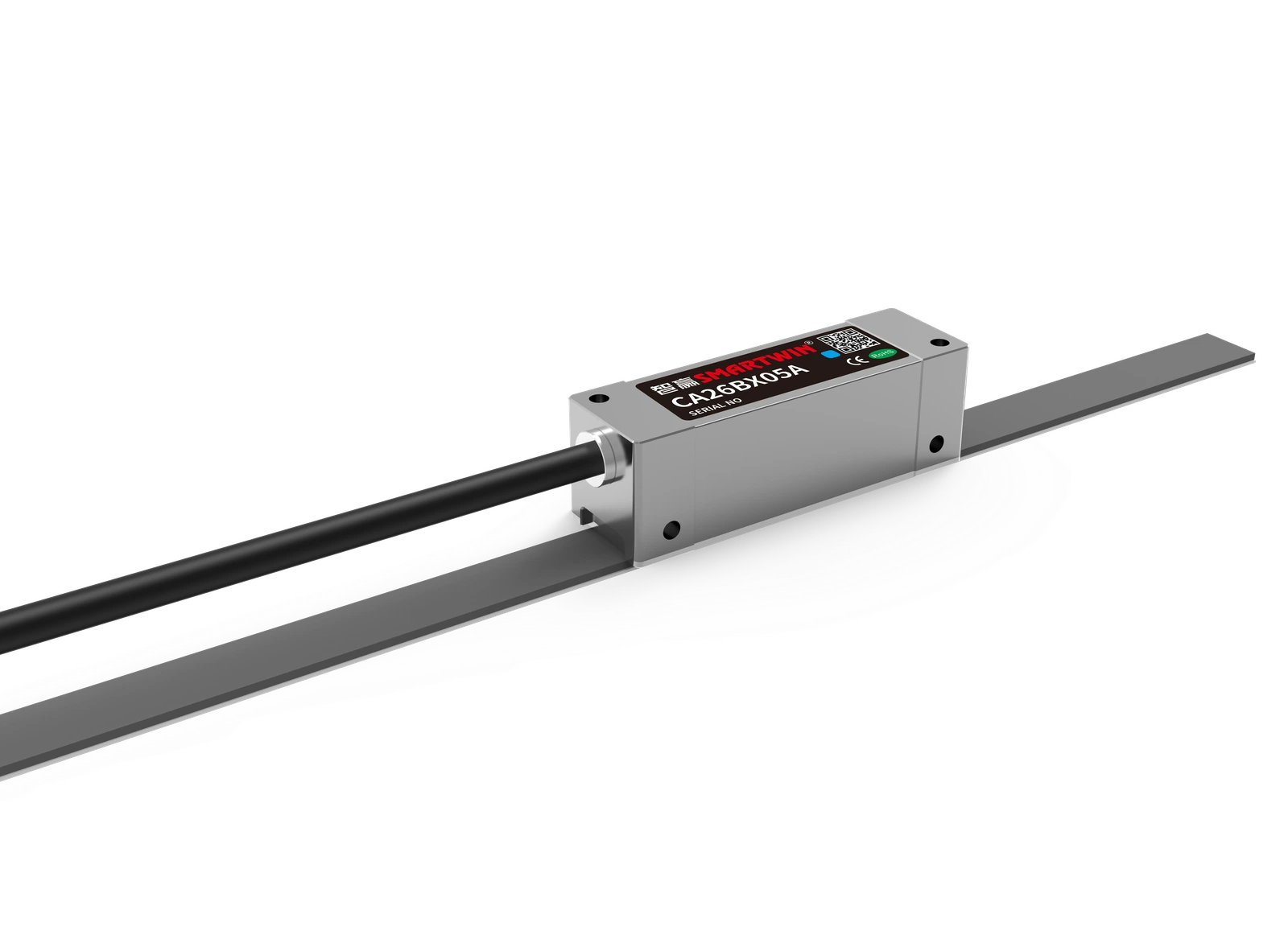
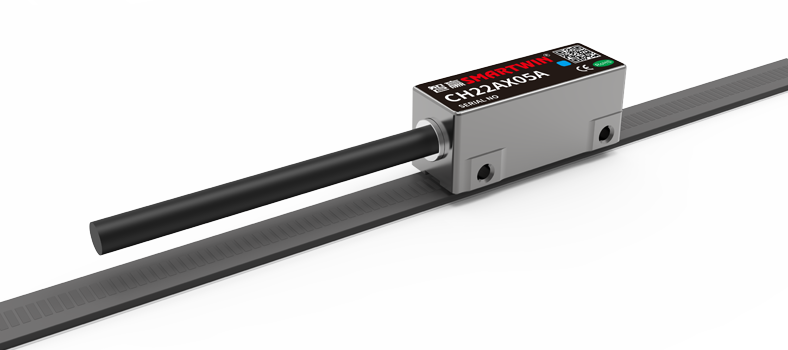
The CA26 absolute magnetic grid encoder uses absolute position feedback to provide the current position directly to the control system. This allows the equipment to restart without returning to a reference point, simplifying the recovery process and improving motion continuity.
How CA26 Absolute Magnetic Grid Technology Supports Long Stroke Motion
Maintaining accurate position feedback becomes more challenging as motion systems extend to longer travel distances. Factors such as mechanical tolerance, thermal expansion, and installation deviation can gradually influence positioning consistency, especially in precision automation equipment.
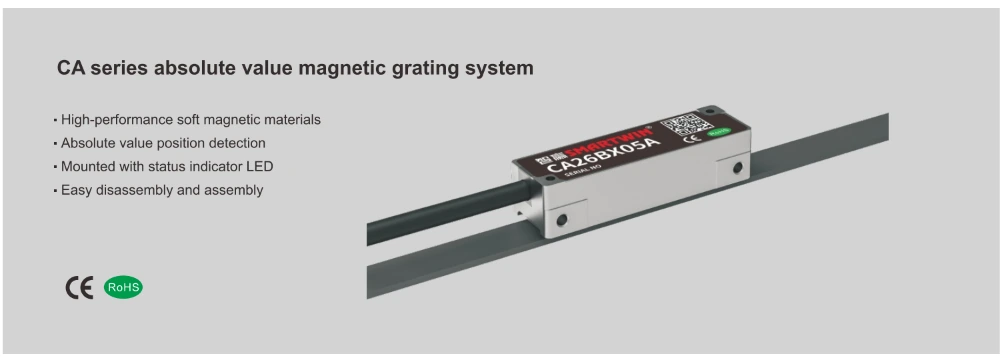
The CA26 absolute magnetic grid encoder integrates absolute position detection with magnetic grid technology to deliver reliable measurement across long-stroke applications. With an effective measurement length of up to 8m, it enables continuous position tracking for systems where travel distance and feedback reliability are critical considerations.
Beyond its long measurement range, the magnetic grid structure is designed for industrial environments where dust, vibration, and other operating conditions may affect measurement performance. Together with 1.0μm resolution, CA26 offers a practical feedback solution for precision motion systems requiring stable and repeatable positioning.
CA26 Performance Parameters for Reliable Motion Feedback
For precision motion systems, encoder selection involves more than resolution alone. Accuracy, repeatability, response speed, and communication compatibility all influence how effectively the feedback system performs in real applications.
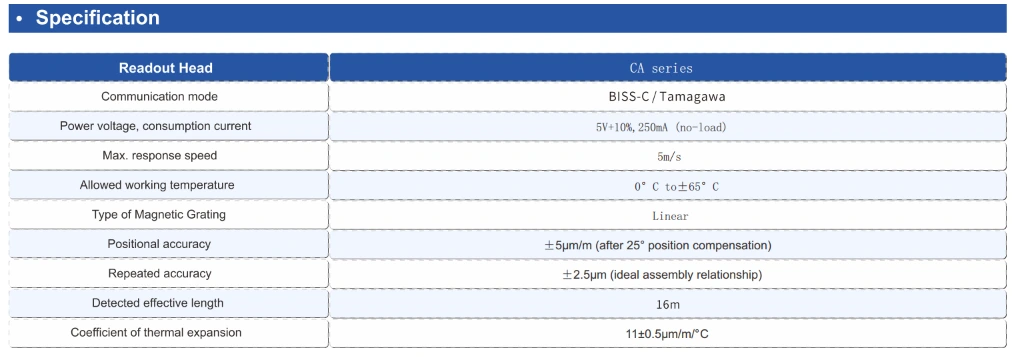
The key specifications of the CA26 absolute magnetic grid encoder include:
The ±5μm/m positioning accuracy and ±2.5μm repeatability help the system maintain consistent positioning results during repeated motion cycles. Meanwhile, the response speed of up to 5m/s supports applications where fast movement and accurate feedback need to work together.
With BiSS-C communication, CA26 can be integrated into motion control architectures that require stable data transmission and precise position feedback.
Why CA26 Fits Continuous Production Equipment
In continuous manufacturing environments, motion systems are expected to deliver consistent performance over long operating periods. Beyond basic positioning accuracy, equipment engineers also need to consider factors such as position recovery after interruption, motion repeatability, and feedback stability during frequent cycles. The CA26 absolute magnetic grid encoder is developed for automation systems where reliable position information is essential for maintaining production consistency.
1.Display Panel Equipment
Display manufacturing equipment often involves large work areas and extended axis travel for processes such as panel transfer, alignment, and inspection. As travel distances increase, maintaining accurate position control across the entire working range becomes more demanding. With an effective measurement length of up to 8m, CA26 helps support large-format motion platforms that require consistent position detection throughout repeated production movements.
2.SMT Equipment
SMT machines perform rapid and repetitive movements during component placement, where response time and motion consistency directly influence throughput and process stability. The CA26 supports high-speed applications with a response speed of up to 5m/s, while its absolute position detection helps the system quickly recover the current position when restarting after an interruption.
3.Precision Inspection Equipment
For inspection equipment, positioning accuracy directly affects measurement reliability. Small deviations in axis movement can influence inspection results, especially in applications requiring repeated measurements at precise locations. With ±5μm/m positioning accuracy and ±2.5μm repeatability, CA26 provides consistent motion feedback for inspection systems that depend on repeatable positioning performance.
4.Dispensing Equipment
Dispensing processes require accurate path control to ensure uniform material application across different workpieces. Variations in motion positioning may affect dispensing consistency and product quality. By combining absolute measurement capability with magnetic grid technology, CA26 supports precise and repeatable movement control for automated dispensing systems.
How to Select the Right Absolute Magnetic Grid Encoder
Choosing an absolute magnetic grid encoder depends on how the encoder will be used within the entire motion system. Beyond basic specifications, factors such as machine operation, travel range, accuracy requirements, and control integration determine whether a solution can meet the needs of a specific application.
1.Understand the Machine Operating Conditions
The operating process is an important factor when selecting an encoder. Equipment that runs continuously, performs frequent cycles, or needs fast recovery after interruption can benefit from absolute position technology, as it helps reduce unnecessary referencing procedures during operation.
2.Match the Encoder Length with the Actual Travel Range
The measurement length should correspond to the full stroke of the moving axis. For large-format equipment or long-travel applications, insufficient measuring coverage may limit positioning performance across the working area. Selecting an encoder with an appropriate measurement range helps maintain consistent feedback throughout the complete movement path.
3.Select Performance Based on Application Requirements
Different machines prioritize different motion characteristics. Inspection equipment may place greater emphasis on repeatability and positioning consistency, while high-speed automation systems may require a balance between response speed and accuracy. The encoder specification should be matched to the actual process requirements rather than selected only by individual parameters.
4.Confirm Integration with the Control Architecture
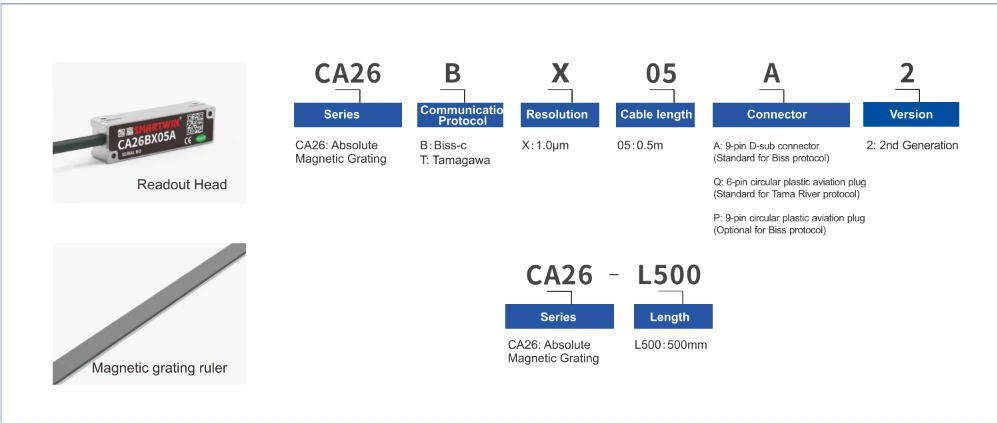
A suitable encoder must also work seamlessly with the existing motion control system. Communication protocol, controller compatibility, and signal processing requirements should be evaluated during system design. With BiSS-C communication, CA26 can integrate into motion platforms that require fast and dependable position data transmission.
Conclusion
For long-stroke automation systems, choosing the right encoder involves more than comparing resolution values. Position recovery capability, measurement range, accuracy, and system integration all influence the overall motion performance.

The CA26 absolute magnetic grid encoder combines absolute feedback technology and magnetic grid reliability to support precision equipment requiring stable operation, accurate positioning, and continuous production performance. Contact Smartwin to explore customized linear motion feedback solutions for your application requirements.
FAQs
1. Does CA26 require homing after power interruption?
No. The CA26 absolute magnetic grid encoder provides direct absolute position information, allowing the motion system to recognize the current position after startup without performing a traditional homing procedure. This helps reduce recovery time and improves operational continuity for equipment that requires frequent restart or continuous production.
2. What makes CA26 different from an incremental magnetic grid encoder?
The main difference is how position information is handled. Incremental encoders calculate position by counting signal changes, while CA26 stores absolute position information through its measurement system. This allows CA26 to maintain position awareness after power loss, making it suitable for automation equipment where quick recovery and reliable operation are important.
3. Is CA26 suitable for long-stroke motion systems?
Yes. CA26 is designed for long-stroke applications that require consistent position feedback over extended travel distances. With an effective measurement length of up to 8m, it can support large working areas such as display panel equipment and precision automation platforms where maintaining position accuracy across the full stroke is essential.
4. How accurate is the CA26 absolute magnetic grid encoder?
CA26 provides 1.0μm resolution, ±5μm/m positioning accuracy, and ±2.5μm repeatability. These performance characteristics help ensure consistent motion results in applications that require precise axis positioning, including inspection equipment and automated manufacturing systems.
5. What communication interface does CA26 use?
CA26 supports BiSS-C communication, a widely used interface for high-performance motion feedback systems. When selecting an encoder, engineers should confirm compatibility between the encoder interface, controller, and overall motion architecture to ensure smooth system integration.
6. Which automation applications are suitable for CA26?
CA26 is suitable for applications that require accurate and reliable position feedback during repeated motion cycles, including display panel equipment, SMT machines, precision inspection systems, and dispensing equipment. These systems typically benefit from absolute position detection, long measurement capability, and stable operation in industrial environments.
Contact us to learn more about the CA26 absolute magnetic grid encoder for your long-stroke application.
Back To List