

 En
En



When Should You Choose a Magnetic Linear Encoder?
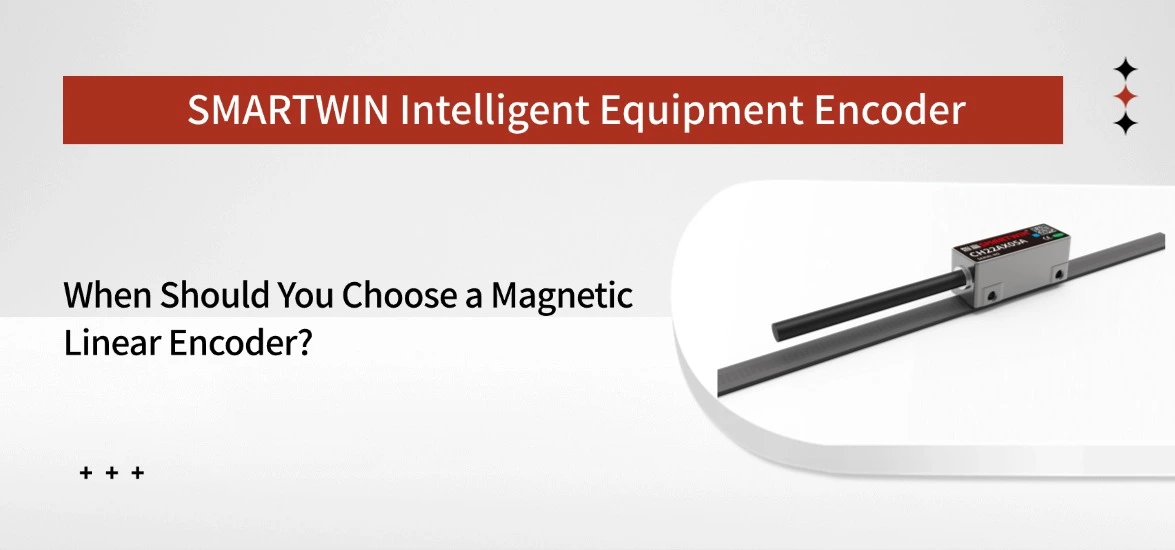
A magnetic linear encoder is a practical choice when position feedback must remain stable under dust, oil, vibration, long travel, or demanding installation conditions. But environmental resistance is only part of the decision. Accuracy, resolution, speed, measuring length, and controller compatibility must also match the motion system.
This guide explains when a linear magnetic encoder is the right choice and which factors should be evaluated before selection.
What Is a Magnetic Linear Encoder?
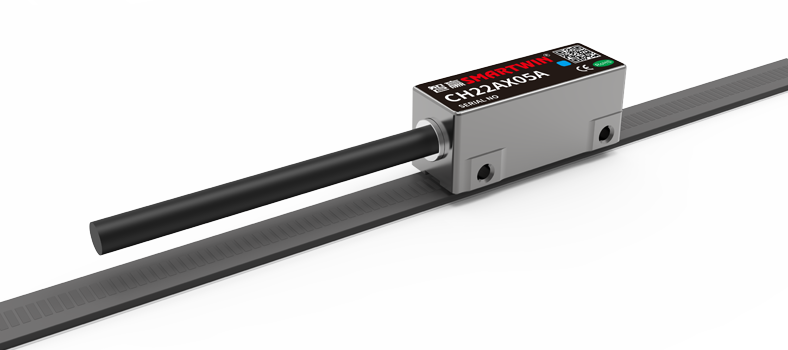
A magnetic linear encoder uses a readhead and magnetic scale to measure linear position without physical contact. As the readhead moves along the scale, it detects the magnetic pattern and sends position feedback to the motion controller. Available in incremental and absolute configurations, magnetic linear encoders are widely used where reliable position measurement is required under demanding industrial conditions.
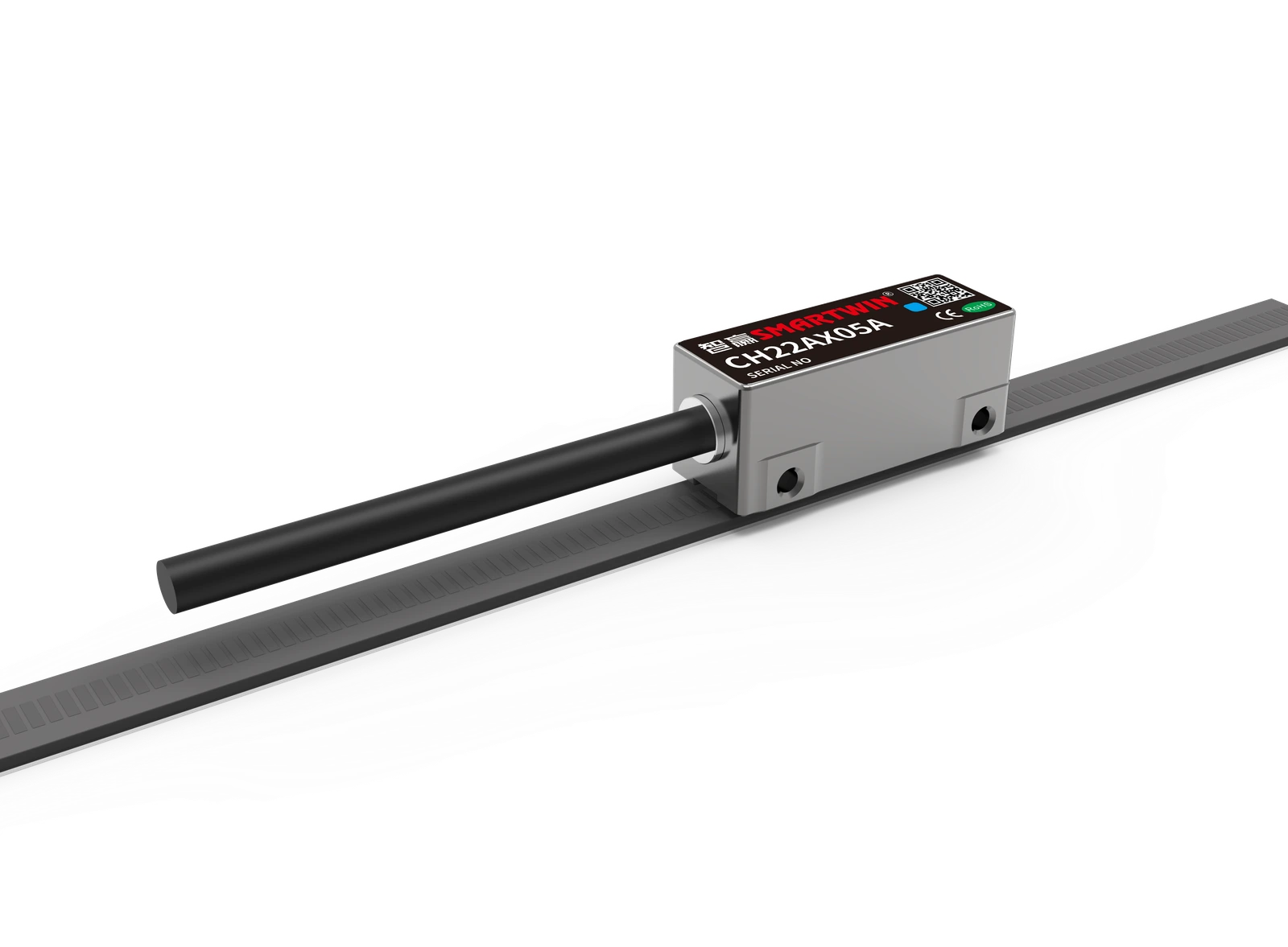 CH22AX05A readhead with magnetic grating ruler"/>
Why Choose a Magnetic Linear Encoder for Harsh Environments?
Industrial equipment may expose position feedback systems to dust, oil, moisture, vibration, and other conditions that are difficult to control. A magnetic linear encoder uses non-contact magnetic sensing, making it a practical option when maintaining a clean and stable measuring environment is difficult. The key consideration is whether these operating conditions could interfere with reliable position detection over time.
1.Dust and Industrial Contamination
Dust, debris, and process residue can accumulate around guide rails and moving axes, especially in equipment that operates continuously. Because a magnetic encoder reads an encoded magnetic scale rather than relying on an exposed optical path, many non-magnetic contaminants have less direct influence on position detection. This makes magnetic sensing particularly useful when keeping the measuring area consistently clean would require additional protection or maintenance.
However, contamination resistance depends on the complete encoder design. Scale protection, readhead clearance, sealing, and the type of contaminant should still be checked against the actual operating environment.
2.Oil, Grease, and Moisture
Oil and grease are common around guideways, bearings, and other lubricated machine components. A linear magnetic encoder can be advantageous in these areas because small amounts of oil or process residue do not necessarily interrupt the magnetic sensing principle in the same way contamination can interfere with an exposed optical reading path.
The encoder should still be selected according to its specified environmental protection. Magnetic sensing alone does not guarantee that the readhead, connectors, cables, and scale installation can tolerate direct or continuous exposure to coolant, water, or other liquids.
3.Vibration and Mechanical Shock
Vibration and shock can change the relative position between the readhead and scale, making mechanical tolerance an important part of encoder selection. Magnetic encoders are often well suited to industrial machinery because their non-contact sensing and practical readhead-to-scale gap can provide more tolerance for mechanical movement than measurement systems requiring very tight alignment.
This does not eliminate installation limits. The readhead must remain within the specified gap and alignment range during acceleration, vibration, and normal machine operation. For equipment exposed to continuous mechanical disturbance, both environmental robustness and mounting stability should therefore be considered together.
When Is a Linear Magnetic Encoder Better for Long-Travel Motion?
Long-travel motion places different demands on position feedback than a short positioning axis. As the travel extends to several meters, factors such as scale length, installation alignment, thermal expansion, and accuracy over distance become more important. A linear magnetic encoder is particularly practical in this situation because the magnetic scale can extend along the motion path while the non-contact readhead measures the actual position directly.
For example, Smartwin's CH22 supports an effective detection length of up to 50 m, making it suitable for long-stroke industrial motion where a conventional short measuring scale cannot cover the complete axis. Its 1.0 μm resolution is combined with ±5 μm/m positioning accuracy after 25°C compensation, so engineers can evaluate both the detectable position increment and the expected accuracy over an extended measuring distance.
For long-travel applications, these specifications should always be considered together. A small resolution value alone does not guarantee the same positioning accuracy across a multi-meter axis; the measuring length and accuracy per meter are equally important when determining whether the encoder can maintain the required feedback performance over the full travel.
How Installation Tolerance Affects Linear Encoder Selection
Installation tolerance affects whether an encoder can maintain consistent signal quality and position measurement under actual machine conditions. The critical issue is not simply whether the readhead can be mounted above the scale, but whether their required geometry can be maintained while the axis moves. On long-travel systems, guideway straightness, assembly error, structural deflection, and temperature change can make this more difficult, so installation requirements should be evaluated during encoder selection rather than after the mechanical design is finalized.
1.Readhead-to-Scale Gap
Every encoder operates within a defined sensing gap. If the distance becomes too large or varies beyond the permitted range, signal quality and measurement reliability may be affected. This is particularly important on long axes, where small changes in guideway height, mounting surfaces, or structural straightness can produce different clearances at different positions.
A magnetic linear encoder can provide useful flexibility in this respect because magnetic sensing generally allows a practical working distance between the readhead and scale. Smartwin CH22 is designed with good installation-gap tolerance, making it easier to accommodate normal mechanical variation without requiring an extremely tight and uniform clearance along an extended measuring path.
2.Alignment and Mounting Accuracy
Gap is only one part of installation. Pitch, yaw, roll, and lateral alignment determine how consistently the readhead follows the encoded scale. Even when the nominal gap is correct, excessive angular or lateral deviation can move the readhead outside its intended sensing geometry.
For long-stroke equipment, engineers should therefore evaluate encoder alignment together with guideway straightness and mounting-surface accuracy. The important question is whether the mechanical system can keep the readhead correctly oriented relative to the scale from one end of the travel to the other, rather than whether the encoder can be aligned correctly at a single reference position.
3.Mechanical and Thermal Stability
The mounting geometry can also change after installation. Machine frames may deflect under load, vibration can introduce dynamic displacement, and temperature variation can cause the scale, guideway, or supporting structure to expand at different rates. Over a long measuring distance, these effects can become more significant than they are on a compact axis.
Encoder selection should therefore account for both static mounting accuracy and the expected variation during operation. The readhead and scale need to remain within the specified gap and alignment limits across the machine's normal load, speed, vibration, and temperature range. This helps ensure that the encoder's stated measurement performance can be achieved under actual operating conditions rather than only during initial installation.
What Specifications Matter When Choosing a Magnetic Linear Encoder?
Selecting a magnetic linear encoder requires more than checking whether it can operate in the target environment. Resolution, positioning accuracy, repeatability, response speed, measuring length, and interface each describe a different part of encoder performance. These specifications need to match the motion profile and control requirements of the machine rather than being judged by a single headline value.
1.Resolution
Resolution defines the smallest position increment the encoder can distinguish. Finer resolution gives the controller more detailed position information, which supports precise motion control and smaller commanded movements.
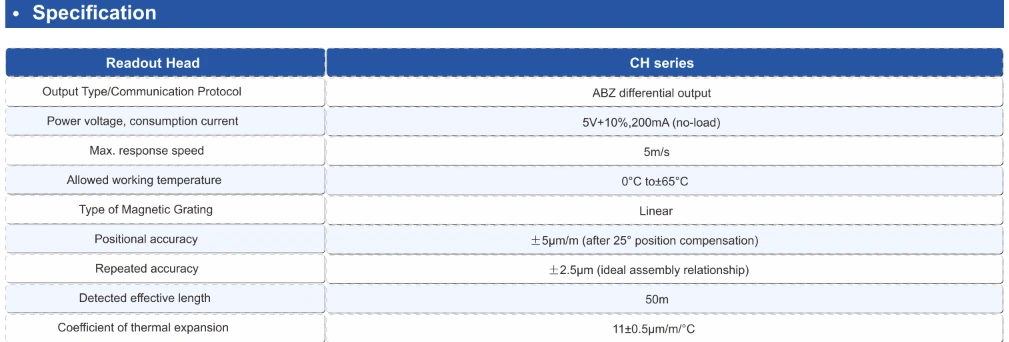
Smartwin CH22 provides 1.0 μm resolution, but this should not be read as ±1.0 μm accuracy. Resolution describes measurement granularity, while accuracy determines how closely the measured value represents the actual position. Keeping these two specifications separate is essential when comparing encoder performance.
2.Positioning Accuracy
Positioning accuracy describes the difference between the measured and actual position across the measuring range. On extended axes, the way this error changes with distance is particularly important.
CH22 specifies ±5 μm/m positioning accuracy after 25°C compensation. The μm/m format shows that accuracy is related to measuring distance rather than simply to the encoder's resolution. For long-stroke systems, this provides a more meaningful basis for estimating position error across the working range.
3.Repeatability
Repeatability measures how consistently the encoder reports a position when the axis returns to the same location under comparable conditions. It is particularly relevant to repetitive processes where the machine repeatedly approaches the same coordinates.
With ±2.5 μm repeatability, CH22 provides a separate measure of positioning consistency. An encoder can be highly repeatable while still showing an offset from the true position, which is why repeatability and positioning accuracy should not be treated as interchangeable specifications.
4.Maximum Response Speed
Response speed determines whether the encoder can track the axis at its required operating velocity. This matters in high-speed motion because fine resolution alone is not useful if the feedback system cannot respond fast enough as the readhead moves along the scale.
CH22 supports speeds up to 5 m/s. In practical selection, this value should be checked against the machine's maximum axis velocity as well as the signal frequency and input capability supported by the controller.
5.Measuring Length
Measuring length defines how much linear travel the encoder can cover. The required range should include the machine's complete working stroke while remaining compatible with the planned scale installation.
CH22 provides an effective detection length of up to 50 m, making it suitable for extended linear axes. For these systems, measuring range and positioning accuracy need to be read together: a scale may physically cover a long distance, but the more important question is whether the required accuracy can be maintained across that distance.
6.Output and Controller Compatibility
The encoder interface must match the servo drive or motion controller receiving the position signal. An otherwise suitable encoder cannot be integrated correctly if its feedback format or electrical output is unsupported by the control system.
CH22 uses incremental ABZ differential output. Absolute magnetic encoders may instead use interfaces such as BiSS-C or Tamagawa when the system needs a unique position value after startup or power recovery. Interface selection therefore depends on the controller architecture and whether the machine requires incremental or absolute position feedback.
Magnetic Linear Encoder vs Optical Linear Encoder: Which Should You Choose?
The choice between a magnetic linear encoder and an optical linear encoder depends on the priorities of the motion system. Magnetic sensing is often preferred when environmental resistance, long measuring distance, and installation flexibility are important, while optical encoders are widely used where very high accuracy and low interpolation error are primary requirements.
| Selection Factor | Magnetic Linear Encoder | Optical Linear Encoder |
|---|---|---|
| Dust, oil, and contamination | Less sensitive to many common industrial contaminants | Cleanliness requirements depend on encoder design and protection |
| Vibration and mechanical variation | Well suited to demanding industrial conditions | Mounting stability and alignment tolerance require closer evaluation |
| Long measuring distance | Magnetic scales can be practical for extended travel | Available range depends on scale and encoder design |
| Installation tolerance | Generally provides more practical readhead-to-scale clearance | High-precision systems may require tighter alignment |
| Resolution and accuracy | Suitable for micron-level industrial feedback; performance varies by model | Strong option for applications requiring very high measurement performance |
| SDE | Depends on scale design and signal processing | High-end optical systems can achieve very low SDE |
| Magnetic interference | External magnetic fields and ferromagnetic particles require consideration | Not based on magnetic sensing |
| Typical selection priority | Environmental robustness and practical machine integration | High-end precision and measurement performance |
The comparison should not be simplified to magnetic for harsh environments and optical for clean environments. Their performance ranges can overlap, and the final choice should reflect the complete motion requirement, including accuracy, measuring length, speed, operating conditions, installation tolerance, and controller compatibility.
Frequently Asked Questions
1. Is a magnetic linear encoder suitable for long-travel motion?
Yes. Magnetic scale systems can support extended measuring distances and are practical for long-stroke industrial axes. Smartwin CH22, for example, provides an effective detection length of up to 50 m, with ±5 μm/m positioning accuracy after 25°C compensation.
2. Can magnetic linear encoders operate around dust and oil?
Magnetic sensing is less sensitive to many common non-magnetic contaminants because it does not rely on an exposed optical reading path. However, the protection level of the readhead, scale, connectors, and cables should still match the actual operating environment.
3. Does higher resolution mean better positioning accuracy?
No. Resolution describes the smallest position increment an encoder can distinguish, while positioning accuracy describes how closely the measured position corresponds to the actual position. These specifications should always be evaluated separately.
4. What is the difference between incremental and absolute magnetic linear encoders?
An incremental encoder tracks position changes through signals such as ABZ outputs and normally requires a reference to establish position after startup. An absolute encoder provides a unique position value, allowing the system to identify its location without relying solely on accumulated pulse counts.
5. What should I check before replacing an optical encoder with a magnetic encoder?
Check the required accuracy, resolution, repeatability, maximum speed, measuring length, installation tolerance, controller interface, and environmental conditions. The replacement should be based on the complete motion requirement rather than contamination resistance alone.
6. Can external magnetic fields affect a magnetic linear encoder?
Strong magnetic fields or ferromagnetic particles can affect the sensing environment. Their influence depends on the encoder design and installation, so nearby magnetic sources, metallic debris, mounting distance, and the manufacturer's installation requirements should be reviewed before selection.
Conclusion
A magnetic linear encoder is especially worth considering when long travel, dust, oil, vibration, or installation tolerance makes reliable position measurement more challenging. The final choice should balance these environmental advantages with the required accuracy, resolution, repeatability, speed, measuring range, and control interface.

For long-travel industrial motion, Smartwin offers magnetic encoder solutions such as the CH22 with up to 50 m effective detection length and micron-level position feedback. Contact Smartwin to discuss your motion requirements and select the right encoder for your equipment.
Back To List