

 En
En



How to Choose a Linear Encoder
This guide explains the main factors to consider when selecting a linear encoder and how to compare different specifications based on the actual requirements of your application.
Define Your Linear Encoder Application Requirements
Start with the motion profile and machine conditions before comparing encoder models or suppliers. The main factors to establish are:
1.Positioning accuracy, resolution, and repeatability
2.Axis speed and travel length
3.Dust, oil, vibration, temperature, and other operating conditions
4.Feedback interface and controller compatibility
5.Mounting space and mechanical constraints
The priorities will vary by machine. A precision stage may depend more heavily on fine position feedback and high-speed response, whereas a long-travel industrial axis may require greater measuring length and tolerance to demanding operating conditions.
With these limits established, unsuitable encoder options can be ruled out early and manufacturers can be compared against the same technical criteria.
Choose the Right Linear Encoder Technology
A linear encoder manufacturer should offer technologies that match different motion and operating conditions rather than relying on a single feedback solution.
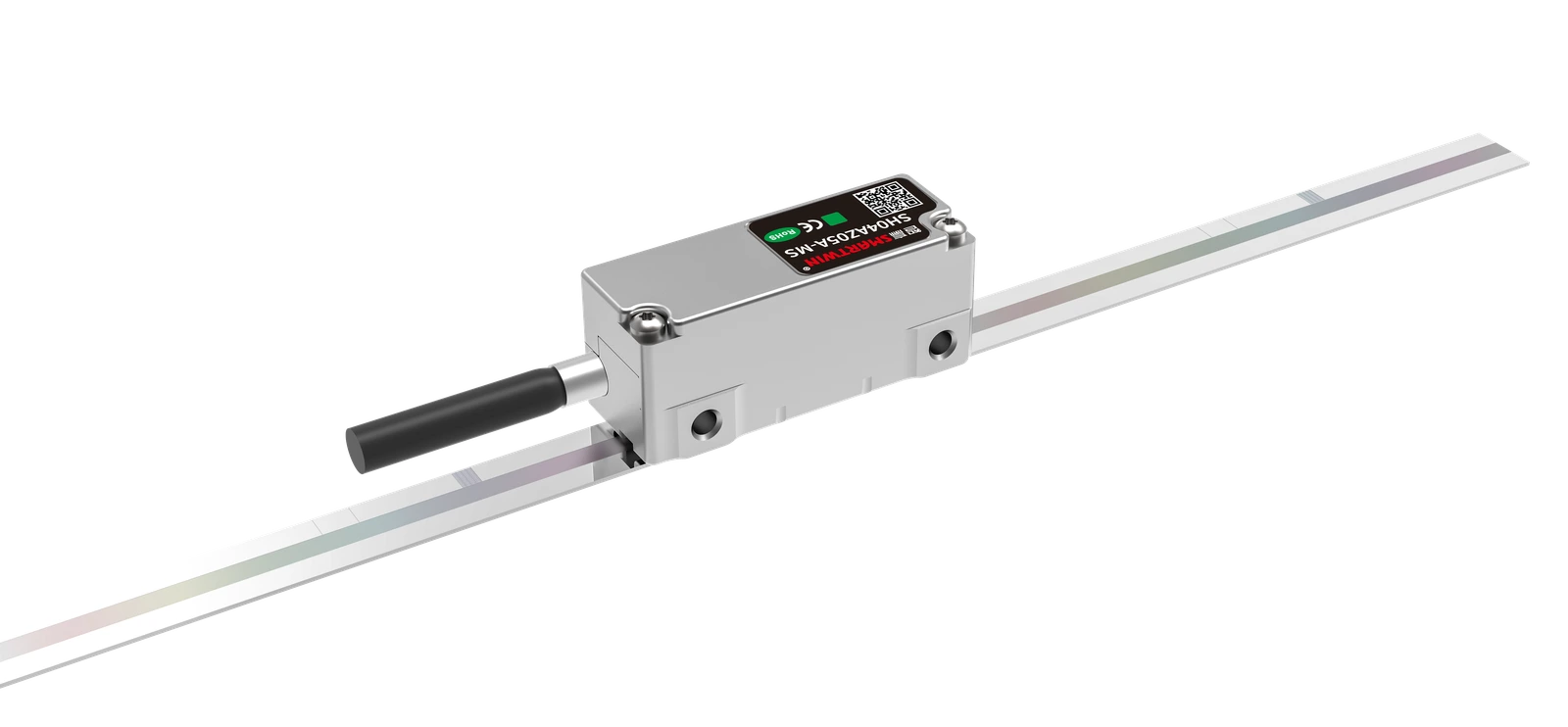
1.Magnetic vs Optical Linear Encoders
Magnetic linear encoders are often considered where dust, oil, vibration, long travel, or practical installation tolerance are important. Optical linear encoders are commonly used when precision motion, fine resolution, and high-quality position feedback take priority.
The purpose of this comparison is not to identify a universally better technology, but to confirm that the manufacturer can support the sensing method appropriate for the machine.
2.Incremental vs Absolute Linear Encoders
The feedback type should also match the control strategy. Incremental linear encoders track position changes from a reference, while absolute linear encoders provide a unique position value and can avoid a complete re-homing process after power recovery.
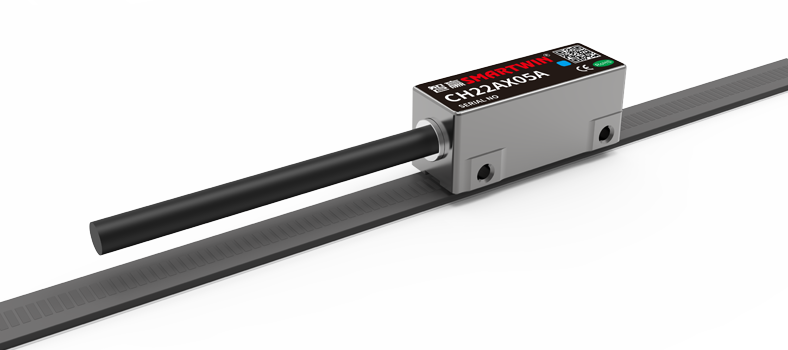
Smartwin covers both requirements: CH22 provides incremental magnetic feedback, while CA26 provides absolute magnetic feedback. This allows the encoder type to be selected according to the motion system rather than forcing different applications into the same feedback architecture.
Compare Linear Encoder Resolution, Accuracy, and Repeatability
Resolution is often the first specification noticed on a linear encoder datasheet, but it only tells part of the story. When comparing linear encoder manufacturers, accuracy and repeatability deserve equal attention because each value represents a different aspect of position feedback.
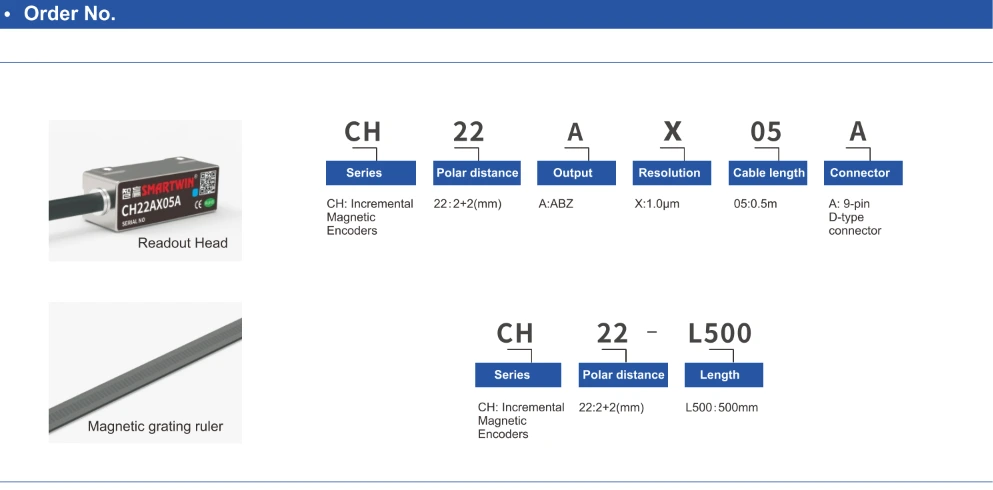
In simple terms, resolution shows how small a movement the encoder can detect, accuracy relates to how closely the measured position matches the actual position, and repeatability shows whether the system can return consistent readings at the same position. A finer resolution, therefore, should not automatically be taken as higher positioning accuracy.
For reference, Smartwin CH22 combines 1.0 μm resolution with ±5 μm/m positioning accuracy after compensation at 25°C and ±2.5 μm repeatability. Looking at these figures together gives a much clearer picture of its feedback performance than resolution alone.
The same approach applies when comparing suppliers. Check whether these specifications are clearly stated and whether the measurement conditions are defined. This makes it easier to judge how well an encoder fits the actual positioning requirements of the machine.
Check Linear Encoder Speed and Measuring Length
Speed and travel distance are important when matching a linear encoder to the motion axis. A suitable encoder needs to keep up with the required movement while covering the full working stroke of the machine.
For high-speed stages, focus on whether the encoder can maintain stable position feedback at the expected operating speed. This matters in equipment such as SMT machines, inspection systems, and dispensing platforms, where frequent rapid movements can place greater demands on the feedback system.
Measuring length becomes more important as the axis travel increases. An encoder designed for a compact stage may meet the required resolution and accuracy but still be unsuitable for a long-stroke machine simply because its available measuring range is too short.
Smartwin CH22, for example, supports a maximum response speed of 5 m/s and an effective detection length of up to 50 m. These figures make it possible to evaluate speed and travel directly against the motion requirements without repeating comparisons based only on resolution.
For longer or faster axes, review these two specifications early in the selection process. This can rule out unsuitable options before moving into controller compatibility, installation, and other integration details.
Check Linear Encoder Interface and Controller Compatibility
The feedback output of a linear encoder needs to match the control architecture of the machine. Accuracy and speed may meet the application target, but the encoder still cannot function properly if its output cannot be processed by the controller.
1.Choose the Right Feedback Interface
Common options include ABZ differential signals, TTL, 1 Vpp, BiSS-C, and Tamagawa. Incremental encoders typically provide pulse or analogue feedback, while absolute encoders may use serial communication to transmit position data.
The choice should follow the controller input and feedback architecture already defined for the machine. Confirming this at the selection stage avoids unnecessary signal conversion or changes to the control design later.
2.Consider Signal Transmission and Connections
The physical connection also matters. Cable length, connector type, wiring, signal frequency, encoder resolution, and axis speed can all influence feedback transmission.
This is especially relevant on fast-moving axes, where high resolution can increase the signal frequency sent to the controller. Reviewing these conditions before installation helps ensure stable feedback once the encoder is integrated into the machine.
Consider the Linear Encoder Operating Environment
The environment around a linear encoder can change what matters most during selection. A specification that looks suitable on paper may not translate directly to the machine if the encoder is exposed to contamination, vibration, temperature changes, or electrical noise.
1.Account for Contamination, Vibration, and Shock
Exposure depends largely on where the measuring system sits inside the equipment. A protected precision stage may operate in a relatively clean space, while an industrial axis can be much closer to lubricated components, moving mechanisms, dust, or process debris.
In the latter case, resolution and accuracy are only part of the decision. The sensing method, protection around the readhead and scale, mounting stability, and resistance to vibration or shock become equally relevant. These factors help determine whether the encoder can continue working reliably under the machine's normal operating conditions.
2.Review Temperature and Electrical Conditions
Temperature becomes more significant when high positioning accuracy or long measuring distances are involved. Thermal changes can affect both the scale and the surrounding machine structure, so the stated accuracy should be considered together with the temperature conditions under which it applies.
Electrical noise requires a different approach. Motors, servo drives, and power cables can disturb encoder signals, particularly when cable runs are long or feedback frequencies are high. Proper shielding, grounding, and cable routing therefore need to be considered as part of the installation rather than treated as an afterthought.
The practical choice is an encoder that can deliver the required positioning performance in the machine itself, not simply one with the strongest specifications under controlled test conditions.
Review Linear Encoder Installation and Mechanical Integration
A linear encoder must work within the physical layout of the motion axis. Check the available space, readhead position, scale alignment, scanning gap, and mounting direction before making a final choice. For long-travel systems, the readhead and scale also need to maintain the correct geometry across the entire stroke, as alignment changes can influence measurement performance.
Practical details such as cable movement, bend radius, adjustment space, and access for maintenance should also be considered. Reviewing the encoder dimensions, allowable tolerances, and technical drawings early makes it easier to identify potential fit or access issues before they require changes to the machine design.
Put the Linear Encoder Selection Criteria Into Practice
The factors discussed above—feedback type, resolution, accuracy, speed, measuring length, interface, operating environment, and installation—do not work independently. The final choice comes from finding the combination that best matches the motion system.
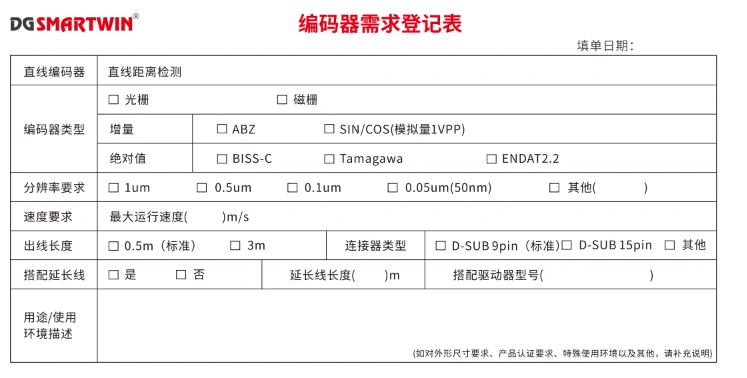
A practical way to apply these criteria is to compare several encoder configurations side by side. The Smartwin examples below show how different specifications can lead to different application directions.
| Specification | CH22 | CA26 | SH04 MC |
|---|---|---|---|
| Technology | Incremental Magnetic | Absolute Magnetic | Incremental Optical |
| Resolution | 1.0 μm | 1.0 μm | 0.1 / 0.5 / 1 μm |
| Positioning Accuracy | ±5 μm/m after 25°C compensation | ±5 μm/m | — |
| Repeatability | ±2.5 μm | ±2.5 μm | — |
| Max. Response Speed | 5 m/s | 5 m/s | Up to 32 m/s at 1 μm |
| Effective Length | 50 m | 8 m | — |
| Interface | ABZ differential | BiSS-C / Tamagawa | — |
The same method can be used when comparing any linear encoders: begin with the machine requirements, identify which specifications are critical, and then compare products around those priorities. This avoids selecting an encoder because one number looks stronger while overlooking a limitation elsewhere in the motion system.
Conclusion
The right linear encoder is not necessarily the one with the highest resolution or fastest response speed. Selection should be based on how well the encoder matches the complete motion system, including positioning requirements, travel length, controller compatibility, operating conditions, and mechanical design.
By evaluating these factors together, engineers can narrow down suitable encoder options and avoid problems that only become apparent during integration. If you need help selecting a linear encoder for your motion system, contact Smartwin to discuss your application requirements and suitable encoder options.
FAQs
1. What should I consider when choosing a linear encoder?
Start with the positioning requirements of the machine, including accuracy, resolution, repeatability, axis speed, and travel length. Then consider whether incremental or absolute feedback is required, which sensing technology suits the operating environment, whether the interface matches the controller, and whether the encoder can be integrated into the available mechanical space.
2. Does higher linear encoder resolution mean higher accuracy?
No. Resolution describes the smallest position increment the encoder can report, while accuracy describes how closely the measured position corresponds to the actual position. An encoder can provide very fine resolution without offering the same level of positioning accuracy, so the two specifications should always be evaluated separately.
3. When should I choose an absolute linear encoder?
An absolute linear encoder is useful when the system needs to know its position immediately after startup or power recovery. Because each measured position has a unique value, the machine does not normally need to establish its position through the same reference procedure required by an incremental feedback system.
4. How do I choose between a magnetic and optical linear encoder?
The choice depends on the application. Magnetic linear encoders are commonly considered for industrial environments involving contamination, vibration, or long measuring distances. Optical linear encoders are often selected where fine resolution, precision feedback, or high-speed measurement is a greater priority. Actual product specifications should still be checked before making the final decision.
5. Why is measuring length important when selecting a linear encoder?
The encoder must cover the complete working stroke of the axis. An encoder may meet the required accuracy and resolution but still be unsuitable if its available measuring length is shorter than the machine travel. Measuring range should therefore be confirmed early, particularly for long-stroke automation and industrial motion systems.
6. What information should I provide when selecting a linear encoder?
Useful information includes the required resolution and accuracy, maximum axis speed, travel length, incremental or absolute feedback requirement, controller interface, operating environment, and available mounting space. Providing these details makes it easier to narrow down encoder options that match the actual motion system.
Back To List