

 En
En



Reconstructing Motion Control Technology: The Profound Transformation of SMARTWIN Intelligent Equipment Linear Motor Modules Driven by AI Technology
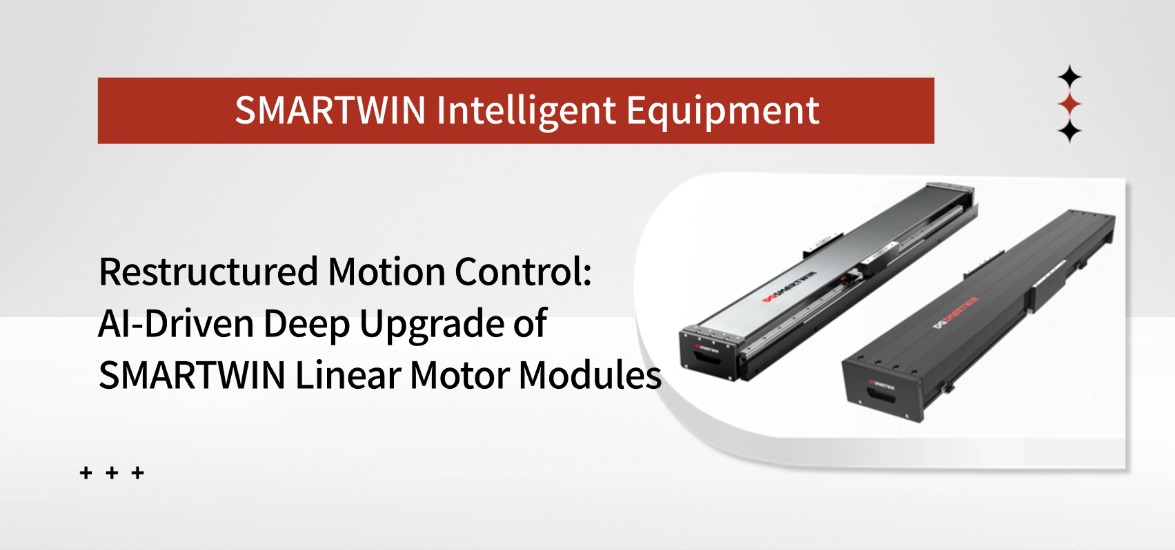
Reconstructing Motion Control Technology: The Profound Transformation of SMARTWIN Intelligent Equipment Linear Motor Modules Driven by AI Technology
Full penetration of industrial AI and digital twin technologies is thoroughly reshaping the full-lifecycle application mode of linear motor modules, covering design, commissioning and on-site operation & maintenance. These motion components are no longer mere hardware actuators that simply execute position commands. As a domestic R&D and manufacturer of linear motor modules, SMARTWIN Intelligent Equipment keeps pace with intelligent upgrading trends. The company deeply integrates AI algorithms into three core links: product R&D, servo control and equipment operation & maintenance. This empowers conventional direct-drive hardware with intelligent capabilities of self-perception, self-optimization and self-diagnosis, redefining the core value of linear motor modules in smart manufacturing scenarios.
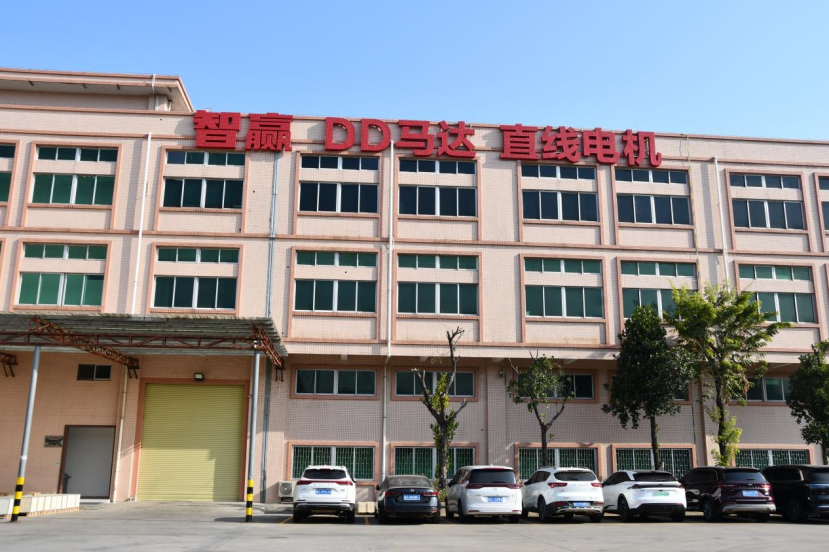
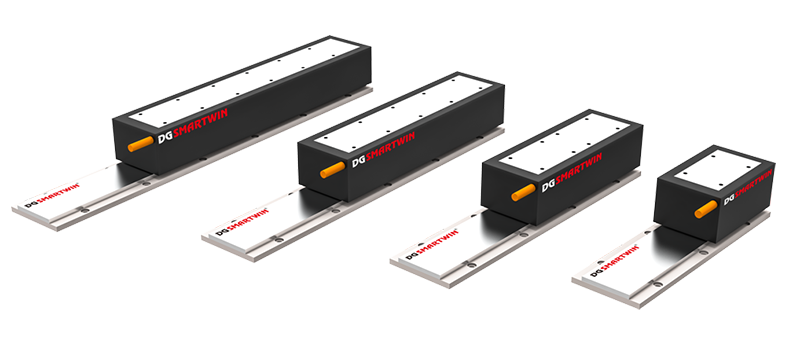
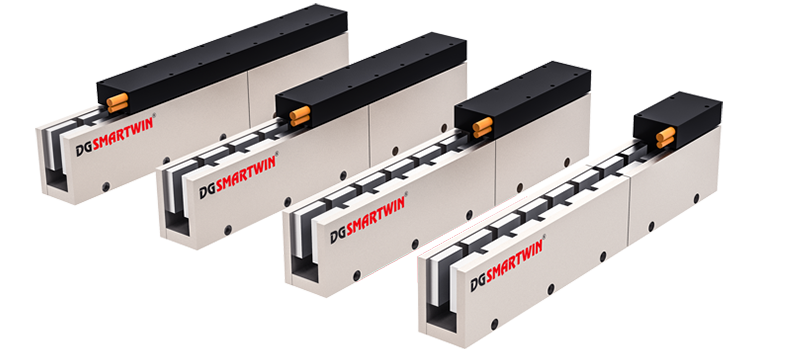
To begin with, at the product R&D and design stage, AI simulation algorithms greatly boost the R&D efficiency and performance ceiling of SMARTWIN linear motor modules. In the past, suppressing cogging force of the iron-core CFS series linear motors, compensating thermal deformation during high-speed operation, and verifying the rigidity of long-stroke modules all relied on repeated physical tests and iterations of numerous prototypes. Nowadays, the AI finite element simulation model can conduct tens of thousands of virtual iterations on magnet arrangement, laminated core structure, and bending resistance of base profiles. It can predict risks such as thrust ripple, temperature drift, and high-speed resonance in advance. The model directly optimizes high-speed jitter of the slim LMS modules and deflection deformation of long-stroke BMS modules, drastically shortening the new product development cycle. Meanwhile, key indicators including cogging force suppression and thrust ;smoothness achieve quantifiable improvements. For customer’s customized demands such as non-standard strokes, special thrust outputs, clean and vacuum working conditions, the AI parametric model can rapidly output schemes covering winding specifications, guide rail configurations and protective structures, substantially lifting the delivery efficiency of customizes non-stand products.
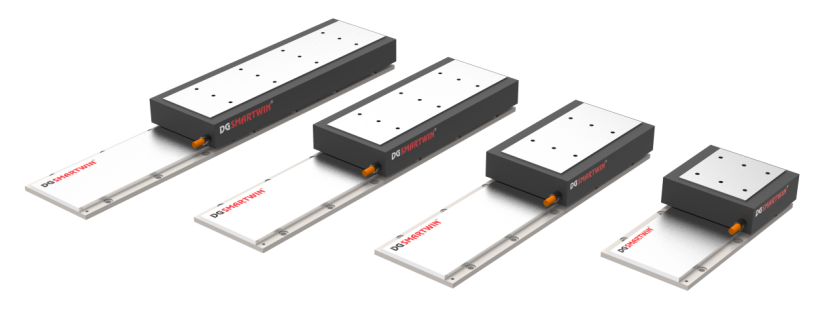
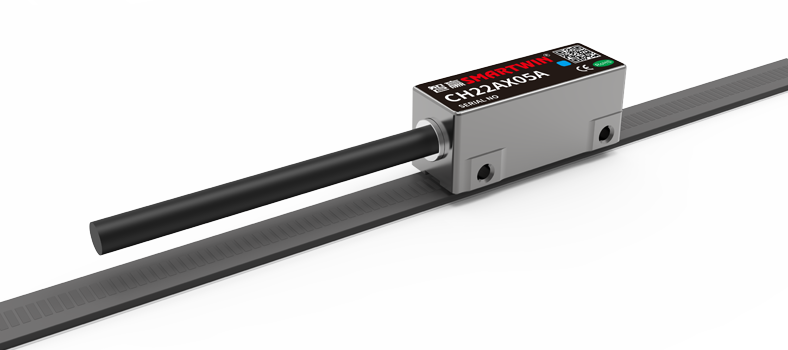
Secondly, the AI adaptive closed-loop control during equipment operation delivers the most intuitive capability upgrade for linear motor modules. The AKS servo drives matched with SMARTWIN linear motor modules embed AI adaptive tuning algorithms. While the module is running, multi-dimensional data such as linear encoder position feedback, output current, mover temperature and guide rail vibration are collected in real time. The AI system automatically calibrates three-loop PID parameters and feedforward compensation coefficients according to load variation, operating speed and ambient temperature. For instance, when switching between full-load and no-load states of long-stroke linear handling modules for lithium battery equipment, the AI automatically adjusts stiffness gain to eliminate impact during high-speed start and stop. At micro-feeding stations for semiconductors, thermal drift errors are compensated in real time to guarantee stable positioning accuracy during long-duration machining. Meanwhile, combined with an AI visual deviation correction system, once tiny workpiece offset is detected via visual inspection, the algorithm instantly calculates the compensation quantity, and the linear motor module completes trajectory correction within milliseconds. This drastically reduces defective product rates and truly realize automatic operational error correction by the equipment itself.
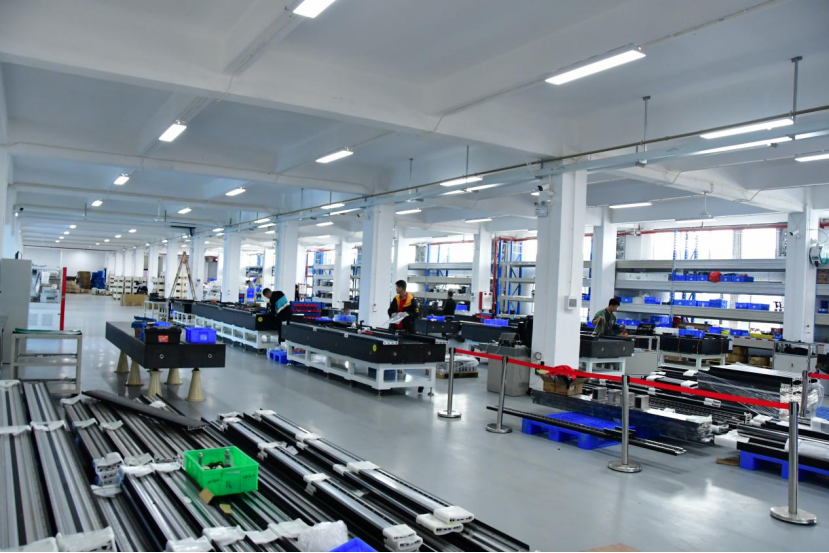
Last but not least, an AI-driven predictive maintenance system thoroughly addresses the long-standing pain point of linear motor modules: reactive breakdown reporting and production halts for overhaul. SMARTWIN reserves multi-dimensional data acquisition interfaces on integrated linear motor modules. After operational data is uploaded to the industrial internet platform via fieldbus, the AI fault diagnosis model continuously analyzes current fluctuations, vibration amplitudes and lubrication degradation trends. It can predict potential faults in advance, including guide rail wear, encoder signal attenuation and magnetic circuit demagnetization of the mover, and push precise maintenance reminders, cutting unplanned downtime by over 40%. For mass-deployed modules on production lines, AI also supports cluster energy consumption analysis. It optimizes acceleration and deceleration curves to realize energy conservation and consumption reduction, and lifts the overall equipment utilization rate of production lines.
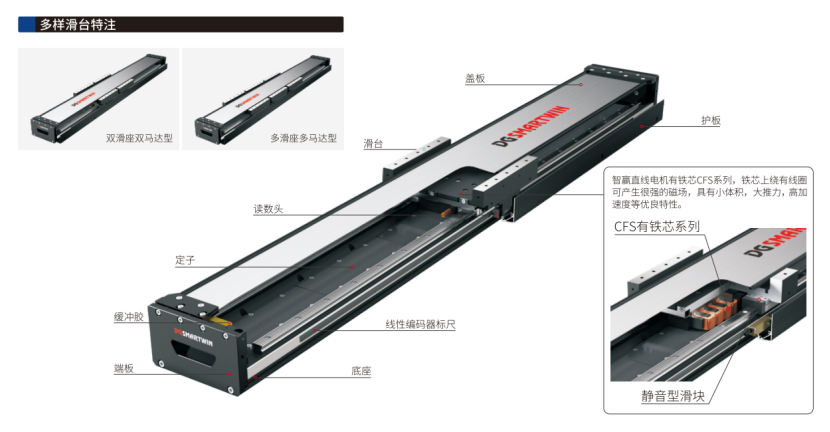
Objectively speaking, AI technology does not replace the inherent hardware performance of linear motor modules. Instead, it amplifies the fundamental strengths of direct solutions, namely zero mechanical backlash and ultra-fast dynamic response. While consolidating core hardware capabilities covering mechanical body structure, magnetic circuit design and linear encoder closed-loop control, SMARTWIN Intelligent Equipment has built an integrated link between AI algorithms and motion control systems. This upgrade transforms linear motor modules from simple actuators into intelligent motion units capable of perception, real-time computation and autonomous optimization, perfectly matching the long-term development demands of flexible intelligent manufacturing and digital factories.