

 En
En



Linear Encoders in Semiconductor Equipment: Why Precision Feedback Matters
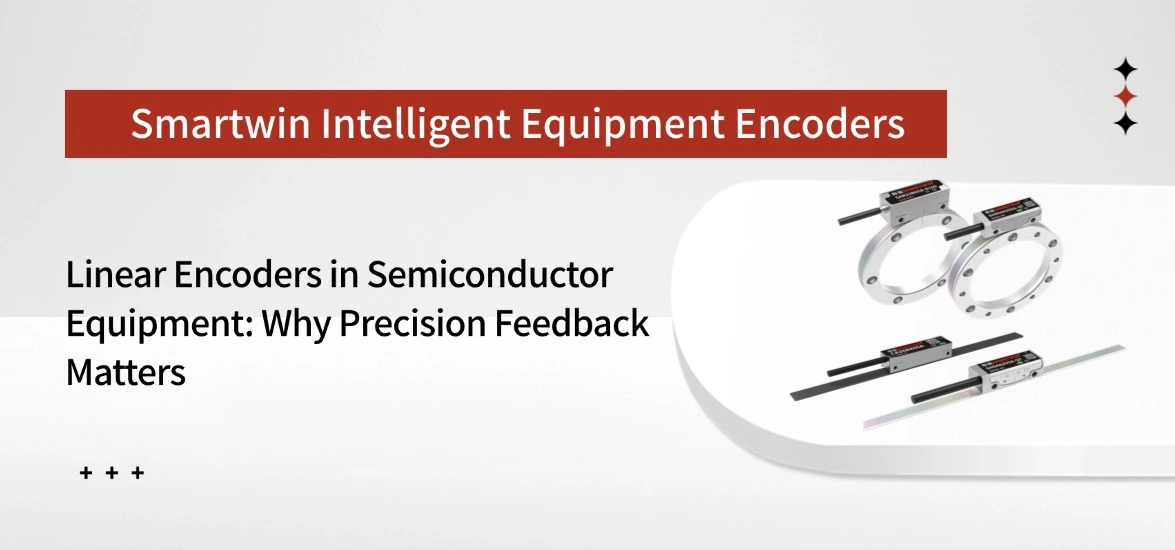
This article explains how linear encoder applications support semiconductor equipment and what factors should be considered when selecting a precision linear encoder for advanced motion systems.
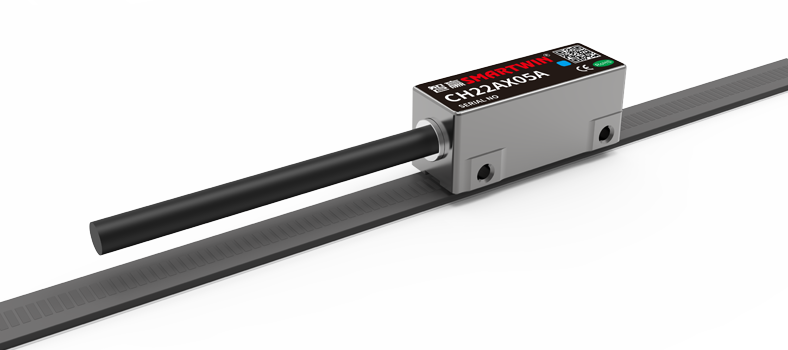
A linear encoder provides direct position feedback by measuring actual linear movement, helping motion systems improve accuracy, repeatability, and control stability. Compared with relying only on motor feedback, a precision linear encoder can better reflect the real position of the moving platform and support more reliable closed-loop motion control.
For semiconductor equipment manufacturers, selecting the right feedback system is not only about resolution. Factors such as accuracy, response speed, installation conditions, and system integration all influence the final machine performance.
Why Semiconductor Equipment Requires Precision Feedback
Semiconductor equipment involves repeated positioning tasks where motion accuracy directly affects process quality. Wafer stages, inspection platforms, and packaging systems often require smooth movement, stable positioning, and consistent operation over long production cycles.
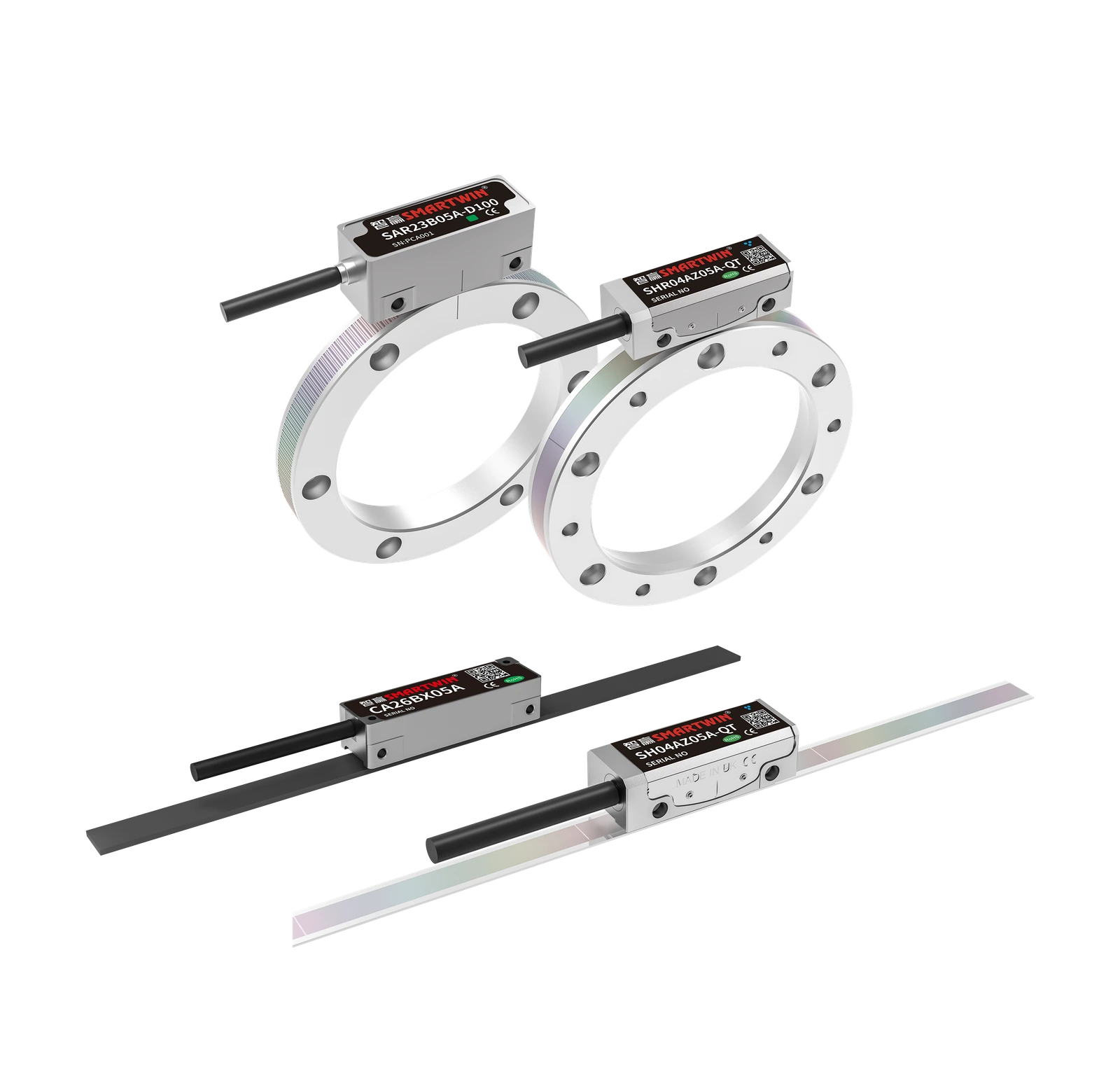
Traditional motor feedback only monitors the motor position and may not fully represent the actual position of the moving load. Mechanical factors such as guideway error, thermal expansion, vibration, and structural deformation can introduce additional positioning deviation.
A linear encoder solves this limitation by measuring the actual linear displacement of the axis. By providing real-time position information to the controller, it helps the system compensate for motion errors and maintain more stable positioning performance.
Linear Encoder Applications in Semiconductor Equipment
Semiconductor equipment covers a wide range of motion processes, but the common requirement is maintaining accurate positioning during repeated and highly controlled movements. Whether a system is scanning a wafer surface, aligning components, or transferring wafers between processes, even small deviations can affect process consistency.
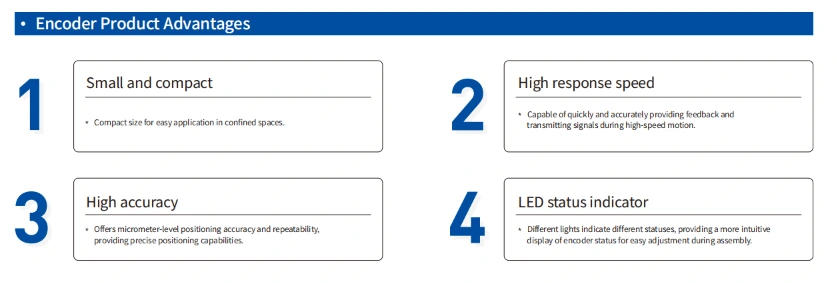
This is why linear encoder applications are widely found in semiconductor equipment. By measuring the actual position of the moving axis, linear encoders provide feedback that helps the control system maintain stable motion performance under different operating conditions.
1.Wafer Inspection and Metrology Systems
Wafer inspection systems rely on precise and repeatable movement to scan surfaces and capture detailed process information. The motion stage often needs to move continuously while maintaining a consistent position relationship between the inspection tool and the wafer.
In these systems, a precision linear encoder provides direct feedback from the moving stage, helping reduce positioning variation during scanning operations. Stable feedback is especially important when equipment needs to repeat the same inspection path thousands of times with consistent results.
2.Wafer Assembly and Packaging Equipment
In semiconductor assembly and packaging processes, positioning accuracy directly affects the alignment between components. Applications such as die bonding and wafer assembly require smooth motion control to place components accurately during high-speed production.
Linear encoders help these systems achieve more reliable closed-loop control by detecting the actual movement of the axis rather than relying only on motor feedback. This allows the controller to respond to position changes more accurately and maintain better repeatability throughout the production cycle.
Smartwin develops semiconductor motion solutions that integrate linear motors, linear encoders, precision rails, and drivers for applications such as wafer assembly and inspection equipment, helping manufacturers build motion systems with higher accuracy and stability.
3.Wafer Handling and Automated Semiconductor Systems
Wafer handling equipment focuses on balancing throughput and positioning reliability. The movement process may include rapid acceleration, deceleration, and frequent positioning cycles, which places higher demands on motion feedback.
A linear encoder helps monitor the actual travel position during these movements, allowing the control system to maintain smoother operation and reduce positioning deviation caused by mechanical factors.
For automated semiconductor production lines, selecting the right feedback system is not only about achieving higher resolution. The encoder must also match the machine speed, controller capability, installation conditions, and overall motion requirements.
How Precision Linear Encoders Improve Semiconductor Motion Control
1.Direct Position Feedback Improves Positioning Accuracy
In many semiconductor motion systems, the position calculated from motor rotation does not always represent the actual position of the moving stage. Mechanical elements such as couplings, bearings, guideways, and structural deformation can introduce small deviations between motor movement and load movement.
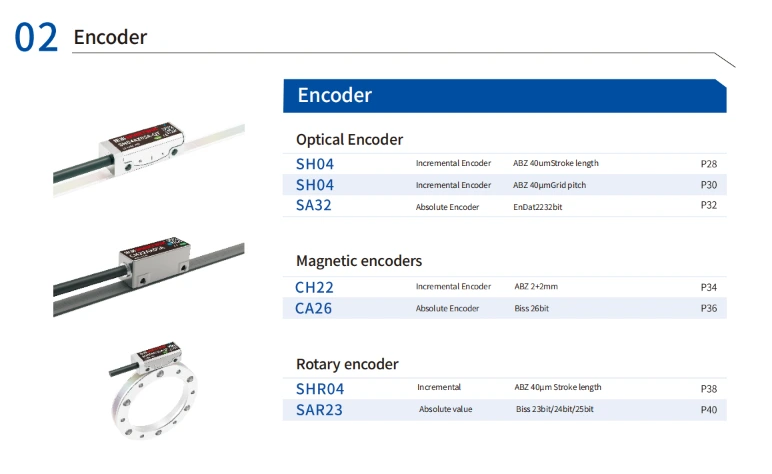
A linear encoder measures the position directly along the motion axis and sends real-time feedback to the controller. This allows the control system to detect the actual location of the stage and make corrections based on real movement conditions rather than estimated values.
For semiconductor equipment, where processes often depend on precise alignment and repeatable trajectories, direct position measurement provides a more reliable foundation for maintaining stable motion performance.
2.Improved Repeatability Supports Process Consistency
Semiconductor manufacturing requires equipment to perform the same motion sequence repeatedly with minimal variation. While accuracy defines how close a system reaches the intended position, repeatability determines whether the system can return to that position consistently over multiple cycles.
A stable feedback signal from a precision linear encoder allows the motion controller to monitor position changes more effectively during repeated operations. This is particularly important for processes such as wafer inspection, alignment, and packaging, where small positioning differences can accumulate and affect production consistency.
By providing continuous position information, linear encoders help the entire motion system achieve more predictable performance over long operating periods.
3.Maintaining Precision During High-Speed Motion
As semiconductor equipment continues to increase throughput, motion systems must achieve faster movement without sacrificing positioning stability. Higher speed introduces additional challenges, including vibration, dynamic errors, and increased control demands.
The encoder selection therefore needs to consider more than resolution alone. Response capability, signal processing requirements, controller compatibility, and the actual motion profile of the equipment all influence whether the feedback system can perform effectively.
A suitable precision linear encoder provides the right balance between measurement detail and dynamic performance, allowing semiconductor equipment to maintain accurate control during both high-speed movement and precision positioning tasks.
How to Select a Precision Linear Encoder for Semiconductor Equipment
Selecting a precision linear encoder for semiconductor equipment requires understanding how the feedback system fits into the complete motion architecture. Resolution, speed, controller capability, and installation conditions all influence whether the encoder can meet the actual process requirements.
1.Understand the Difference Between Resolution and Accuracy
Resolution defines the smallest position increment that an encoder can detect, while accuracy refers to the difference between the measured position and the actual position. These two specifications describe different characteristics and should not be used interchangeably during encoder selection.
A higher-resolution encoder can provide more detailed position information, but the final machine accuracy is also affected by factors such as mechanical tolerance, thermal expansion, guideway performance, and calibration. The required encoder specification should be determined based on the accuracy target of the complete equipment.
2.Match Encoder Performance with Motion Requirements
Different semiconductor processes have different motion demands. Wafer inspection and alignment systems may require finer position feedback, while wafer handling systems often place more emphasis on response speed and stable operation during frequent movement cycles.
Encoder selection should consider the actual motion conditions, including travel distance, acceleration, operating speed, and cycle frequency. The selected configuration needs to provide suitable feedback performance without creating unnecessary requirements for the controller or motion system.
3.Check Controller and Signal Compatibility
A linear encoder operates as part of the closed-loop control system, which means the feedback signal must match the requirements of the servo drive and motion controller. Signal type, processing capability, input frequency, and system architecture all need to be considered before integration.
For semiconductor equipment, where motion commands and feedback signals are processed continuously, insufficient controller capability can limit the practical performance of the encoder. The encoder specification should be evaluated together with the complete control system rather than separately.
4.Consider Installation and Operating Conditions
The installation environment can directly influence encoder performance. Mounting accuracy, alignment between the scale and readhead, machine vibration, and structural stability may introduce additional positioning variation during operation.
Temperature changes are another important factor in semiconductor equipment. Thermal expansion of machine components can affect the relationship between the encoder measurement position and the actual process point, especially in long-travel or high-precision motion stages.
Smartwin Linear Motion Solutions for Semiconductor Equipment
Smartwin provides precision linear motion solutions for semiconductor equipment, integrating linear motors, encoder feedback systems, motion controllers, and mechanical components into complete motion platforms designed for demanding automation applications.
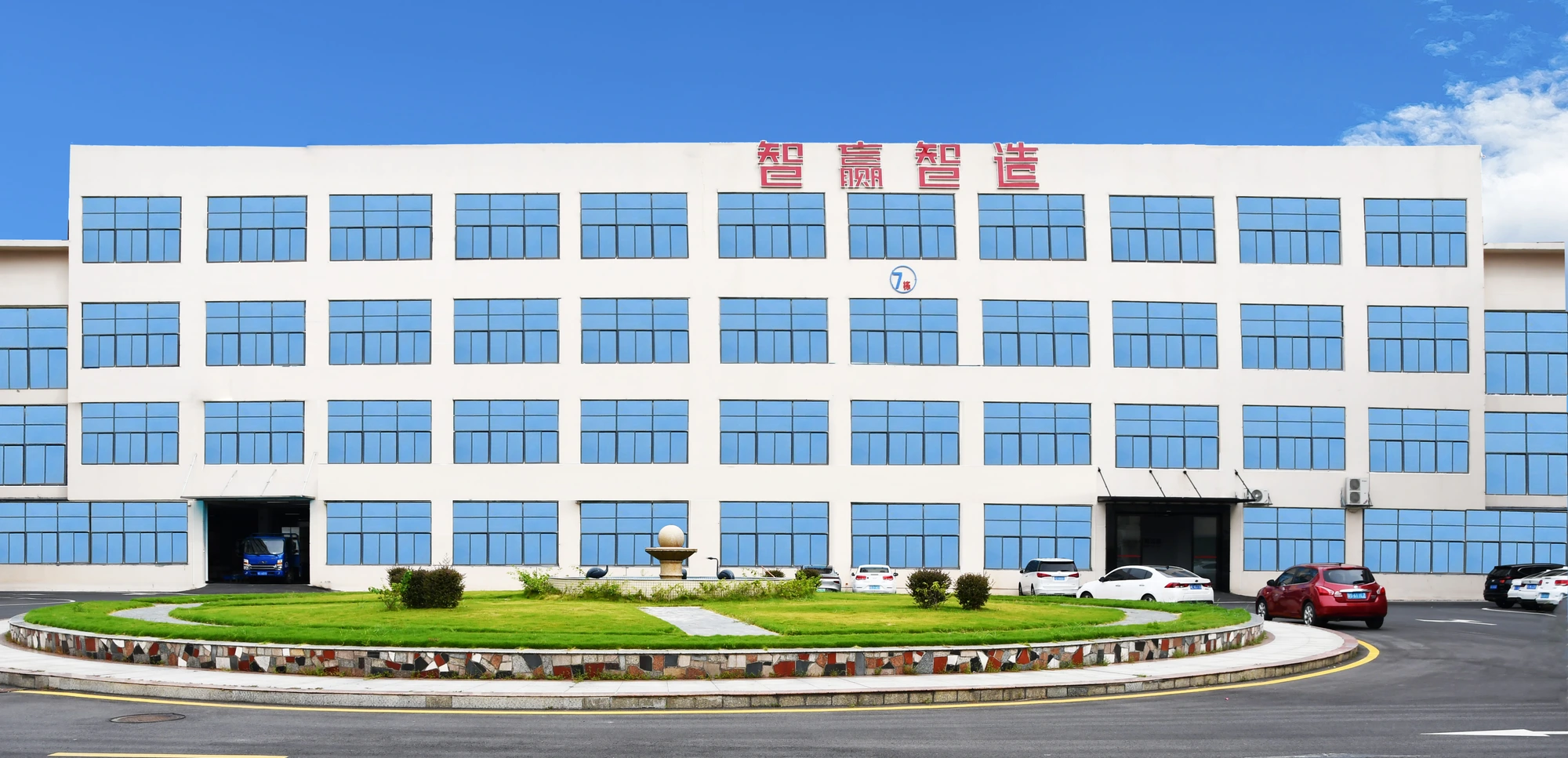
In semiconductor manufacturing, achieving stable motion requires the entire system to work together. The performance of the motor, feedback device, control system, and mechanical structure all influence positioning accuracy, repeatability, and long-term operational stability.
Smartwin supports various semiconductor applications, including LDI exposure systems, wafer assembly and inspection equipment, and wafer bottom filling spray adhesive equipment. Through direct-drive motion technology and optimized feedback integration, Smartwin helps equipment manufacturers develop motion systems that meet the requirements of high-speed operation, precise alignment, and continuous production environments.
Conclusion
Selecting the right precision linear encoder requires more than comparing resolution specifications. Accuracy requirements, motion speed, controller compatibility, installation conditions, and system integration all influence the final performance of the equipment.
If you are developing semiconductor equipment that requires precise motion control, contact Smartwin to discuss your application requirements and explore suitable linear motion solutions for your system.
Frequently Asked Questions
1.Why are linear encoders important in semiconductor equipment?
Semiconductor equipment requires highly repeatable motion for processes such as wafer inspection, alignment, packaging, and automated handling. Small positioning variations can affect process consistency, especially when equipment performs repeated movements over long production cycles.
A linear encoder provides direct position feedback from the moving axis, allowing the control system to respond to the actual position rather than relying only on motor feedback.
2.What are the main linear encoder applications in semiconductor manufacturing?
Linear encoder applications in semiconductor equipment include wafer inspection stages, metrology systems, wafer assembly equipment, packaging machines, and automated wafer handling platforms.
Each application has different motion requirements. Inspection and alignment systems usually focus on positioning stability and repeatability, while handling systems often require a balance between movement speed and feedback accuracy.
3.Does higher encoder resolution always mean better machine accuracy?
No. Resolution and accuracy represent different performance characteristics.
Resolution refers to the smallest position increment detected by the encoder, while accuracy describes how closely the measured position matches the actual position. A higher-resolution encoder can provide more detailed feedback information, but the final machine accuracy is also influenced by mechanical structure, thermal changes, installation quality, and calibration.
4.How does a precision linear encoder improve motion control?
A precision linear encoder improves motion control by measuring the actual linear position of the moving stage and providing real-time feedback to the controller.
Compared with systems that estimate position from motor rotation, direct measurement helps the controller identify motion deviations caused by mechanical transmission errors, vibration, or structural factors.
5.What factors should be considered when selecting a linear encoder for semiconductor equipment?
Encoder selection should consider more than resolution specifications. Key factors include required accuracy, motion speed, signal compatibility, controller processing capability, installation conditions, and operating environment.
The encoder should match the complete motion system, including the motor, drive, controller, and mechanical structure.
6.Can linear encoders work with direct-drive linear motor systems?
Yes. Linear encoders are commonly integrated with direct-drive linear motor systems to create closed-loop motion platforms.
The linear motor provides smooth direct movement, while the encoder continuously measures axis position and provides feedback for precise control. This combination is suitable for semiconductor applications that require fast response, stable positioning, and repeatable motion.
Back To List