

 En
En



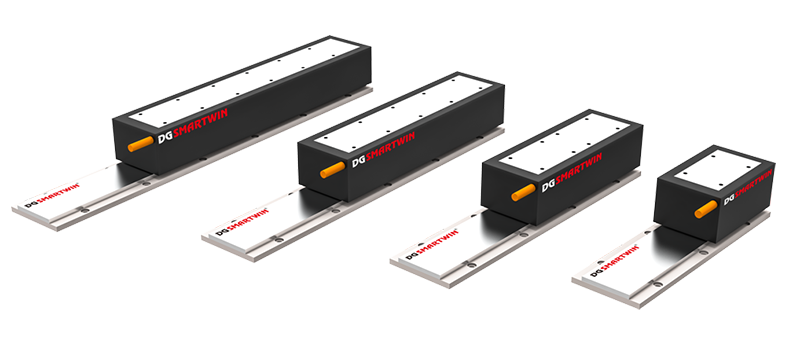
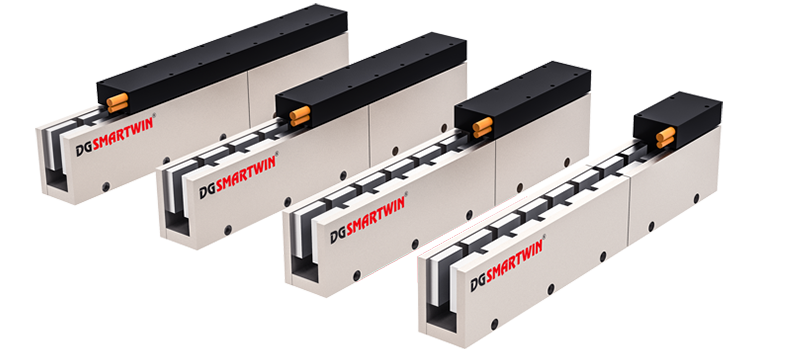
Iron Core Linear Motor Manufacturer: What Buyers Should Check
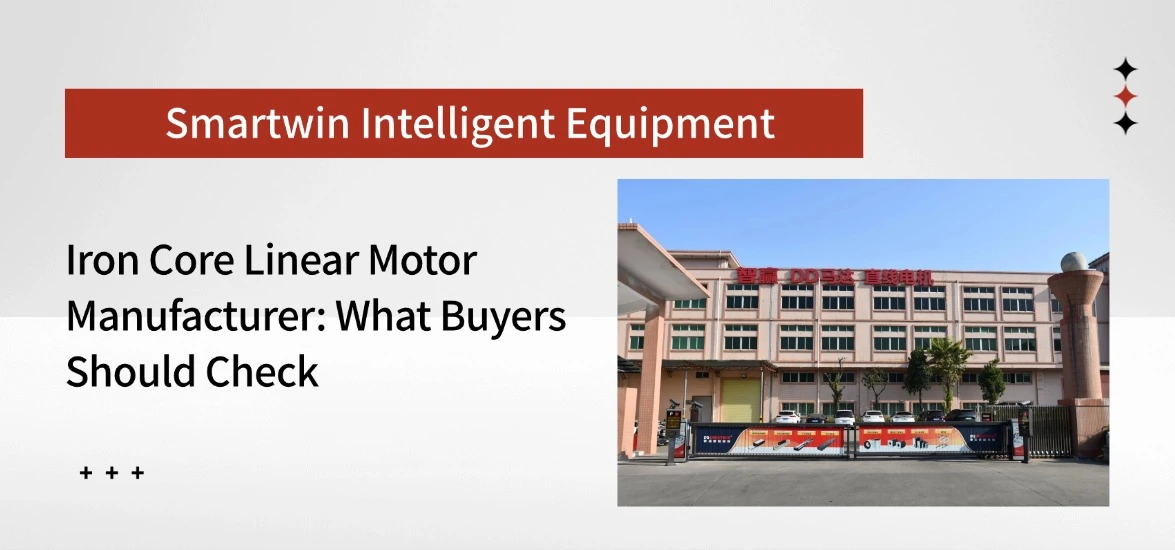
This article looks at five areas buyers should check before moving from supplier evaluation to sampling, customization and volume purchasing.
Why a Datasheet Is Not Enough to Qualify an Iron Core Linear Motor Manufacturer
A datasheet is a good place to start, but it only tells you part of what you need to know.

Figures such as continuous thrust, peak thrust and speed can look similar across different products, yet the actual result still depends on how the motor was tested, cooled and assembled.
For buyers, it is more useful to ask how those numbers were obtained and whether the same level of performance can be maintained from one batch to the next. A reliable iron core linear motor manufacturer should be able to explain this clearly instead of only pointing back to the catalog.
The real test is whether the motor performs consistently in production, not just whether one sample looks good.
How an Iron Core Linear Motor Manufacturer Controls Critical Production
Good motor performance depends on more than the design itself. The way the coil, magnetic track and motor structure are produced has a direct effect on how consistently the motor performs after installation.
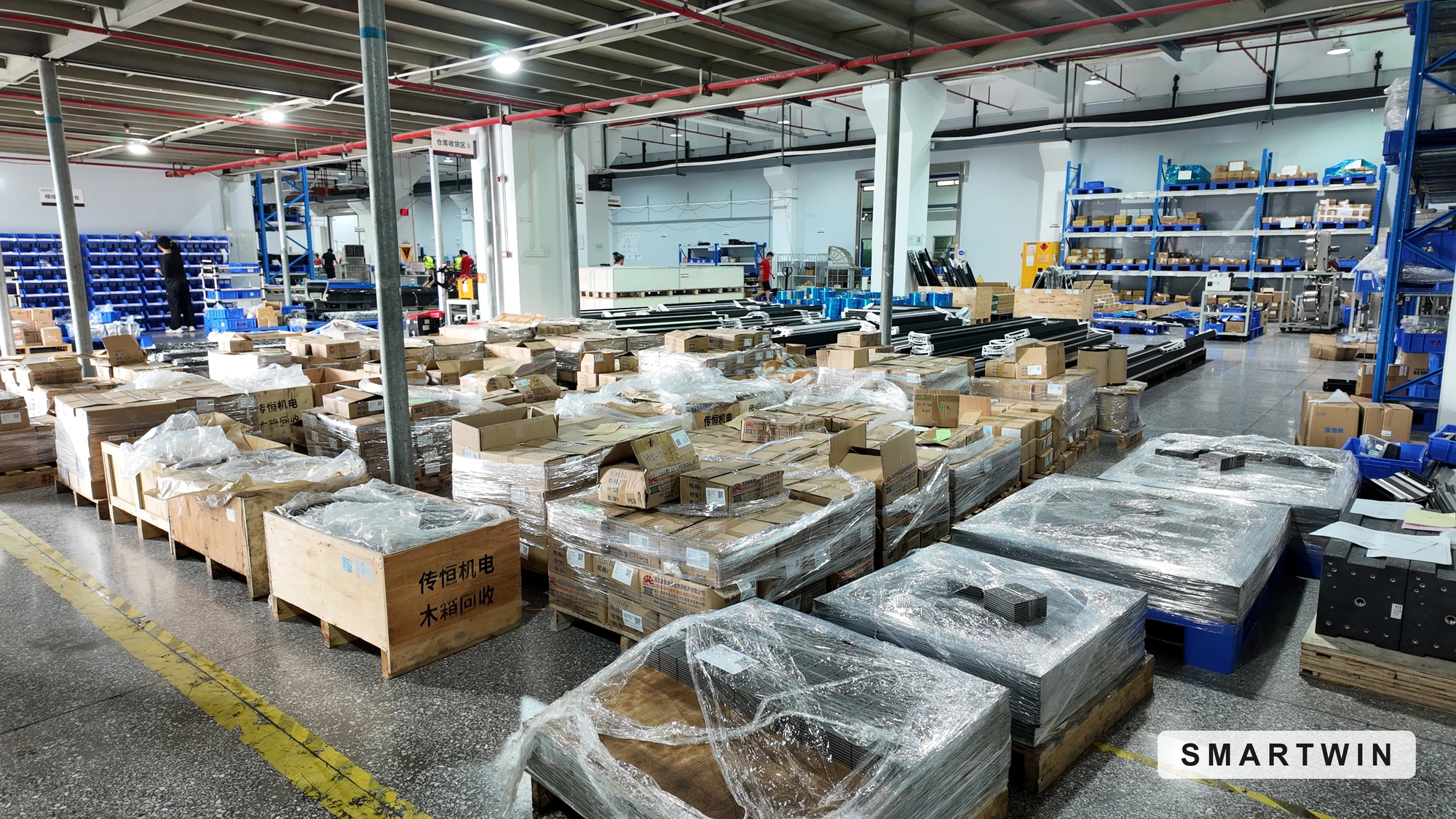
For an iron core linear motor manufacturer, the real challenge is keeping these key steps stable from one motor to the next. Differences in winding quality, magnet positioning or assembly accuracy can change thrust output, temperature rise and installation fit, even when the model and specifications are the same.
This is also why manufacturing experience matters. At Smartwin, motor design, production and application matching are handled as part of the same development process, which makes it easier to control the parts of production that have the greatest influence on performance.
When you compare manufacturers, it is worth looking at whether they can keep these critical processes consistent over time. A motor that performs well once is useful, but stable production is what makes it suitable for repeat orders and long-term machine projects.
Test an Iron Core Linear Motor Supplier with a Real Machine Requirement
The best way to test technical capability is to talk about the machine itself, not just a target thrust value.
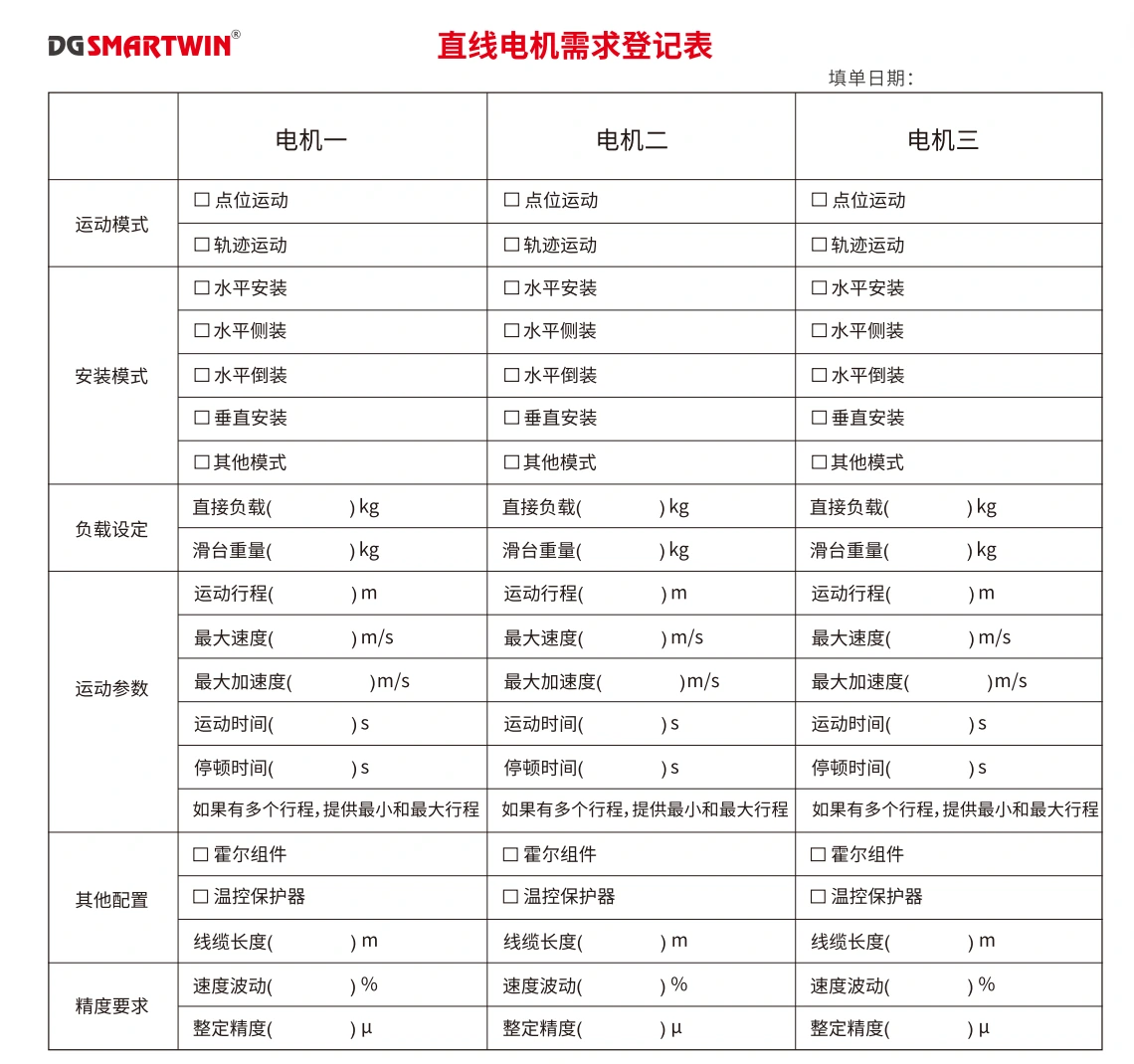
Share the actual working conditions: moving mass, stroke, speed, acceleration, cycle time and installation direction. From there, the discussion should naturally move into the details that can change motor selection, such as duty cycle, cooling, encoder setup, guideway design or external process forces.
This is important because the same payload can lead to very different force demands. A transfer axis moving at a moderate pace does not place the same load on the motor as a high-cycle positioning stage with rapid acceleration and short settling time.
At Smartwin, we normally start from these operating conditions and then match the motor to the real motion profile. That helps avoid selecting a model that looks suitable on paper but leaves too little force or thermal margin in actual use.
You can learn a lot from this conversation alone. If the supplier understands the machine well enough to ask the right questions before recommending a motor, that usually says more than a simple product list or quotation.
How a Linear Motor Manufacturer Maintains Stable Production
Stable production depends on how consistently the key manufacturing steps are controlled, not just on the final inspection.
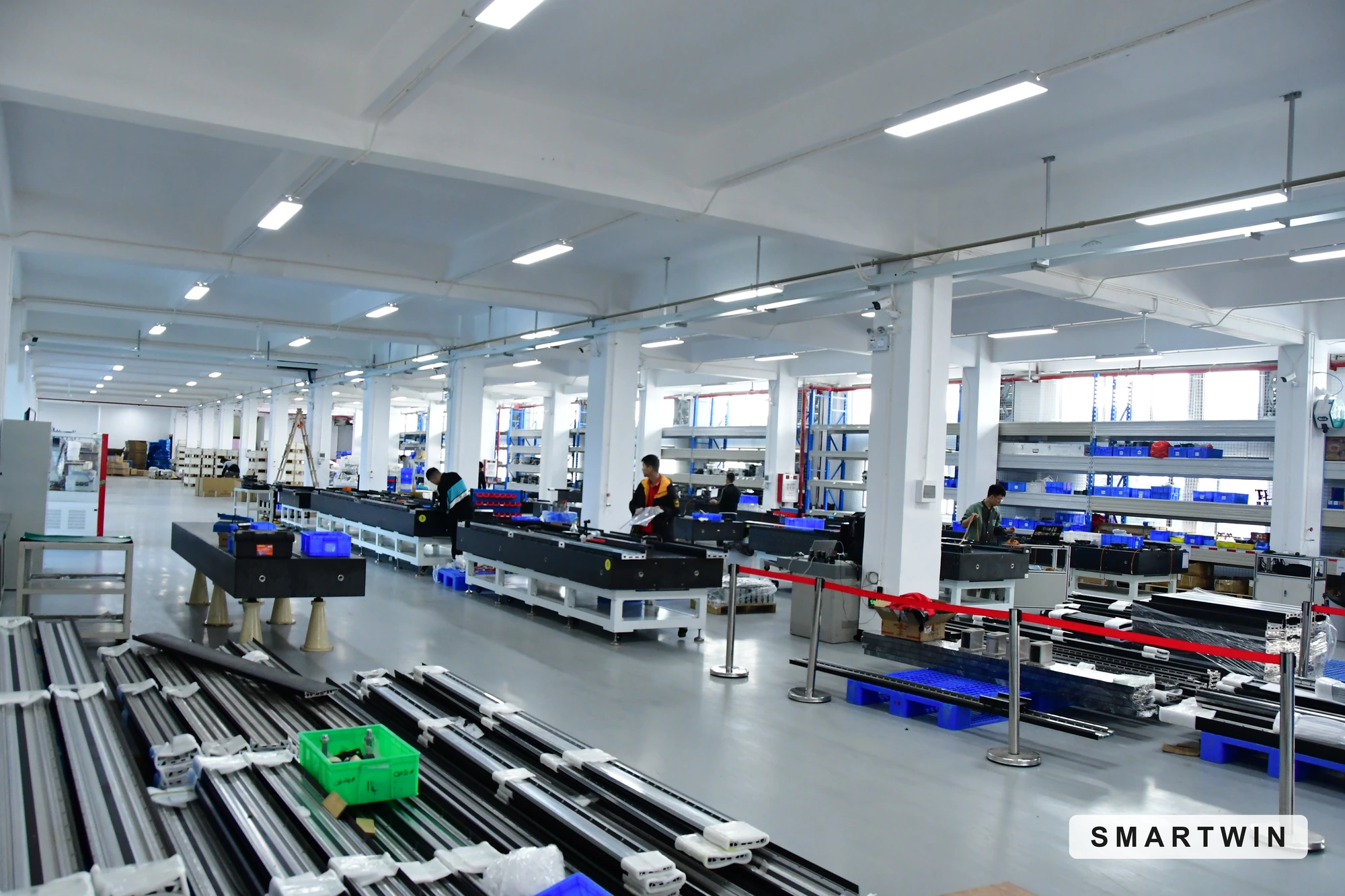
At Smartwin, motors go through dielectric withstand voltage testing, thrust characteristic testing and continuous-load aging before shipment. These checks help confirm that electrical performance and force output remain within the expected range.
The same control needs to carry through winding, assembly and final inspection. If these steps are handled differently from batch to batch, small variations can eventually show up in motor temperature, dimensions or operating behavior.
Smartwin also operates under ISO 9001, ISO 45001 and ISO 14001 management systems, providing a more structured framework for production and quality control.
For a linear motor manufacturer, stable production means keeping the same product standard across repeat orders, rather than relying on one good sample.
What Long-Term Support Should an Iron Core Linear Motor Manufacturer Provide?
Support does not end when the motor is shipped. Installation, commissioning and later machine adjustments can all bring up new requirements that were not fully visible during the initial selection.
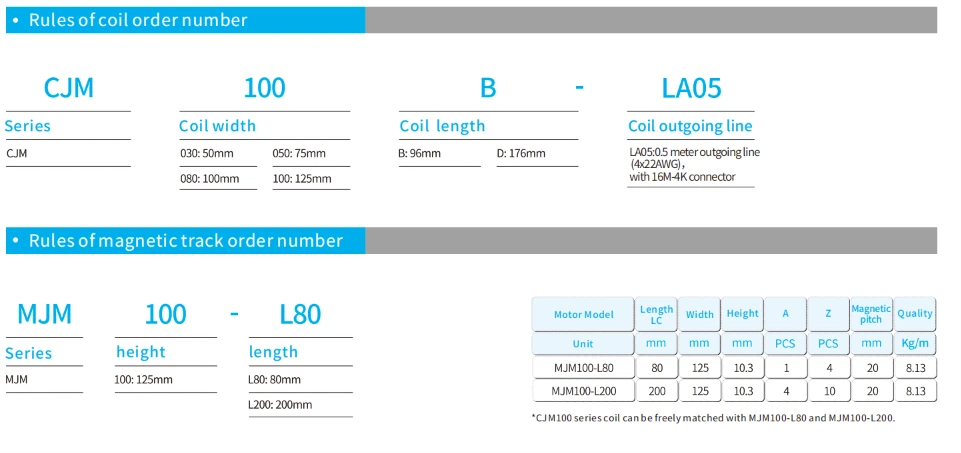
At Smartwin, support continues through motor selection, application matching, technical documentation and after-sales service. When needed, the motor can also be matched with drivers and encoders as part of a complete direct-drive system rather than treated as a standalone component.
Installation guidance is another important part of that support. Smartwin provides information on mover and stator installation, air-gap requirements and maintenance, which helps reduce problems during machine integration and later operation.
This becomes especially useful when machine conditions change, another axis is added or the same motor needs to be replaced later. A dependable iron core linear motor manufacturer should be able to stay involved after delivery and continue supporting the application as it develops.
Conclusion
Choosing an iron core linear motor manufacturer is not only about finding a motor that meets the required thrust. The more important factors are how the product is made, how the application is understood, whether production remains stable and what support is available after delivery.
Smartwin combines motor development, production, application matching and technical support to help keep the selection and integration process more consistent from the first sample through repeat orders.
FAQ About Iron Core Linear Motor Manufacturers
1. What should I ask an iron core linear motor manufacturer before requesting a quote?
It helps to provide the moving mass, stroke, target speed, acceleration, cycle time, installation direction and any special cooling or encoder requirements. These details make the recommendation more accurate than asking only for a specific thrust value.
2. How can I tell whether a linear motor manufacturer has real technical capability?
A useful sign is how the manufacturer responds to the machine requirement. Instead of immediately recommending a model, they should be able to discuss force margin, duty cycle, thermal conditions, guideway design and feedback requirements.
3. Why does batch consistency matter for iron core linear motors?
Differences in winding, magnetic assembly, dimensions or electrical characteristics can affect tuning, temperature rise and installation. Stable production helps reduce extra adjustment when the same motor is ordered again.
4. Can an iron core linear motor manufacturer provide customized motors?
Yes, depending on the manufacturer. Customization can include motor dimensions, magnet track length, cable configuration, mounting details, cooling and encoder integration. Any change that affects performance should be reviewed before production.
5. What quality checks are important for an iron core linear motor?
Common checks include electrical insulation testing, thrust verification, dimensional inspection and load or aging tests. The exact process can vary, but the key is that the same standards are applied consistently.
6. What support should be available after the motor is delivered?
Useful support can include installation guidance, commissioning assistance, technical documentation, troubleshooting, replacement support and help with later machine changes.
Back To List