

 En



How Do You Verify Linear Motor Consistency Before Volume Production?

A direct drive linear motor may meet every performance requirement during prototype testing, yet show measurable differences when manufactured in larger quantities. Variations in winding characteristics, magnetic components, and assembly tolerances can affect thrust output, electrical behavior, and thermal performance across production batches.
Before volume production begins, manufacturers need to establish whether the approved motor design can be reproduced consistently. This requires a documented performance baseline, controlled testing of critical parameters, and an evaluation of production-representative batches. The objective is not to eliminate every difference between motors, but to keep variation within acceptable limits while maintaining the performance required by the equipment.
Why Does Linear Motor Performance Vary After Sample Approval?
Sample approval confirms that a linear motor meets the required specifications, but maintaining the same performance across production batches can be more challenging. Variations in winding resistance, magnet properties, and assembly tolerances may affect thrust output and electrical performance, even when the motor design remains unchanged.
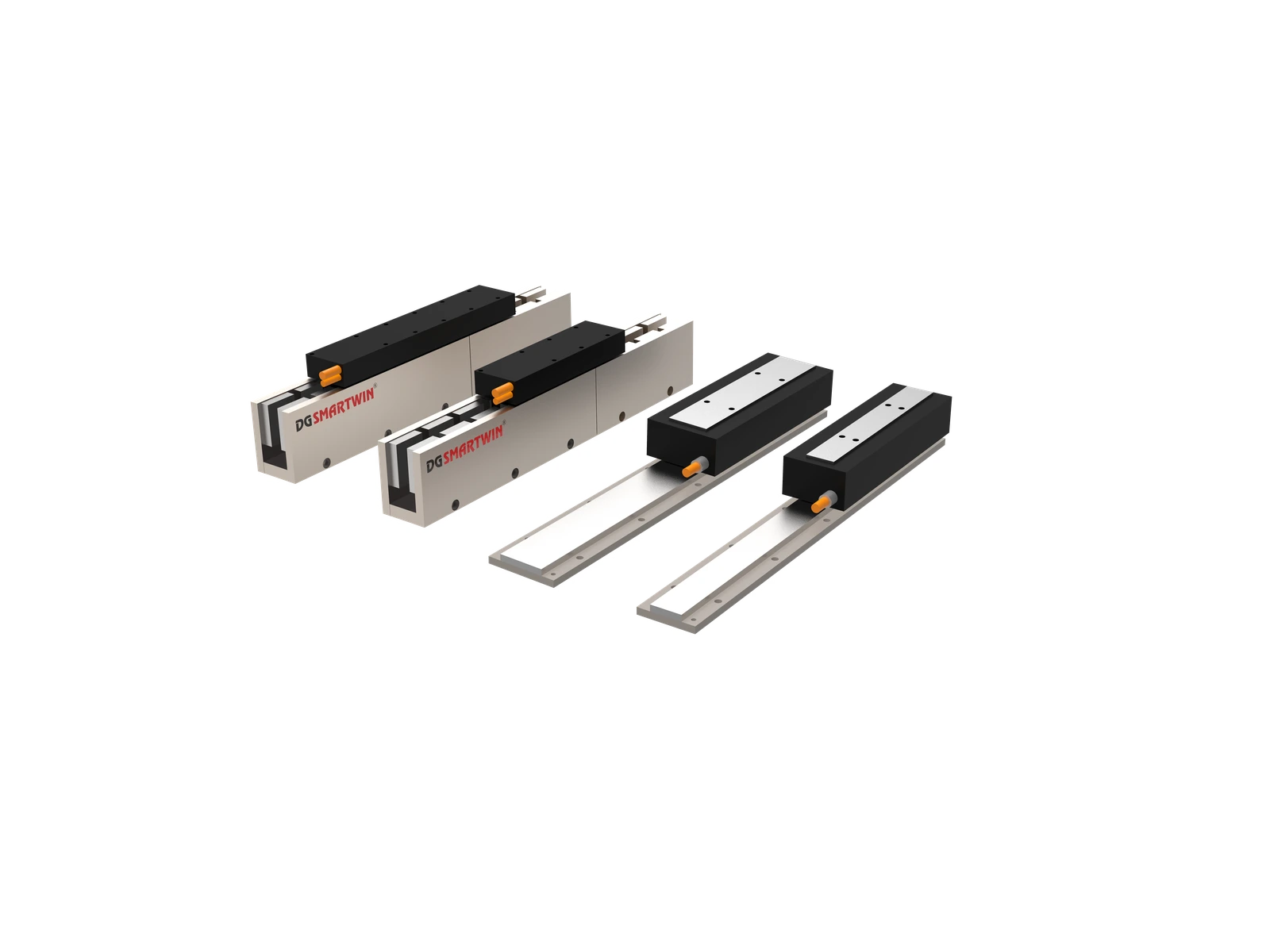
Both ironless linear motors and iron core linear motors can experience these differences, although the factors affecting their performance may vary. Minor variations are normal in manufacturing, but they must remain within approved limits to ensure consistent performance throughout volume production.
Establish a Performance Baseline for Direct Drive Linear Motors
A physical reference sample is useful, but it cannot replace documented specifications and measurement records. Engineers need a consistent basis for comparing production motors with the configuration originally approved.
1. Record the Approved Motor Configuration
The reference should identify the motor model, design revision, winding configuration, magnetic components, electrical connections, and critical mechanical dimensions.
For customized motors, mounting interfaces, cable arrangements, and other application-specific requirements should also be documented. This helps prevent a revised configuration from being evaluated against results obtained from a different design.
2. Define Test Conditions and Acceptance Limits
Electrical and electromagnetic measurements depend on the conditions under which they are taken. Phase resistance changes with winding temperature, while thrust measurements are influenced by current, air gap, and the measurement arrangement.
Each critical parameter therefore requires an agreed test method and acceptance range. These limits should come from the approved motor specification and application requirements rather than being based solely on one successful prototype measurement.
3. Preserve Reference Measurements
Numerical measurements provide more information than a simple Pass/Fail record. They allow engineers to examine whether the characteristics of later production units remain comparable with the approved reference.
For example, a batch may meet its resistance specification while consistently measuring higher than the original samples. Such a pattern can indicate a change in materials, production conditions, or the measurement process that warrants further review.
Which Linear Motor Parameters Should Be Tested?
Linear motor production testing should focus on electrical characteristics, thrust performance, mechanical dimensions, and thermal behavior. The specific parameters and acceptance limits depend on the approved motor design and its operating requirements.
| Parameter | What It Verifies | Key Test Condition |
| Phase Resistance | Winding and connection consistency | Controlled winding temperature |
| Insulation Performance | Electrical insulation integrity | Specified test voltage and duration |
| Force Constant | Thrust generated relative to current | Defined current basis and air gap |
| Back EMF | Electromagnetic characteristics | Controlled travel speed and measurement setup |
| Mechanical Dimensions | Mounting and assembly compatibility | Approved drawing tolerances |
| Thermal Response | Behavior under sustained loading | Consistent duty cycle and cooling conditions |
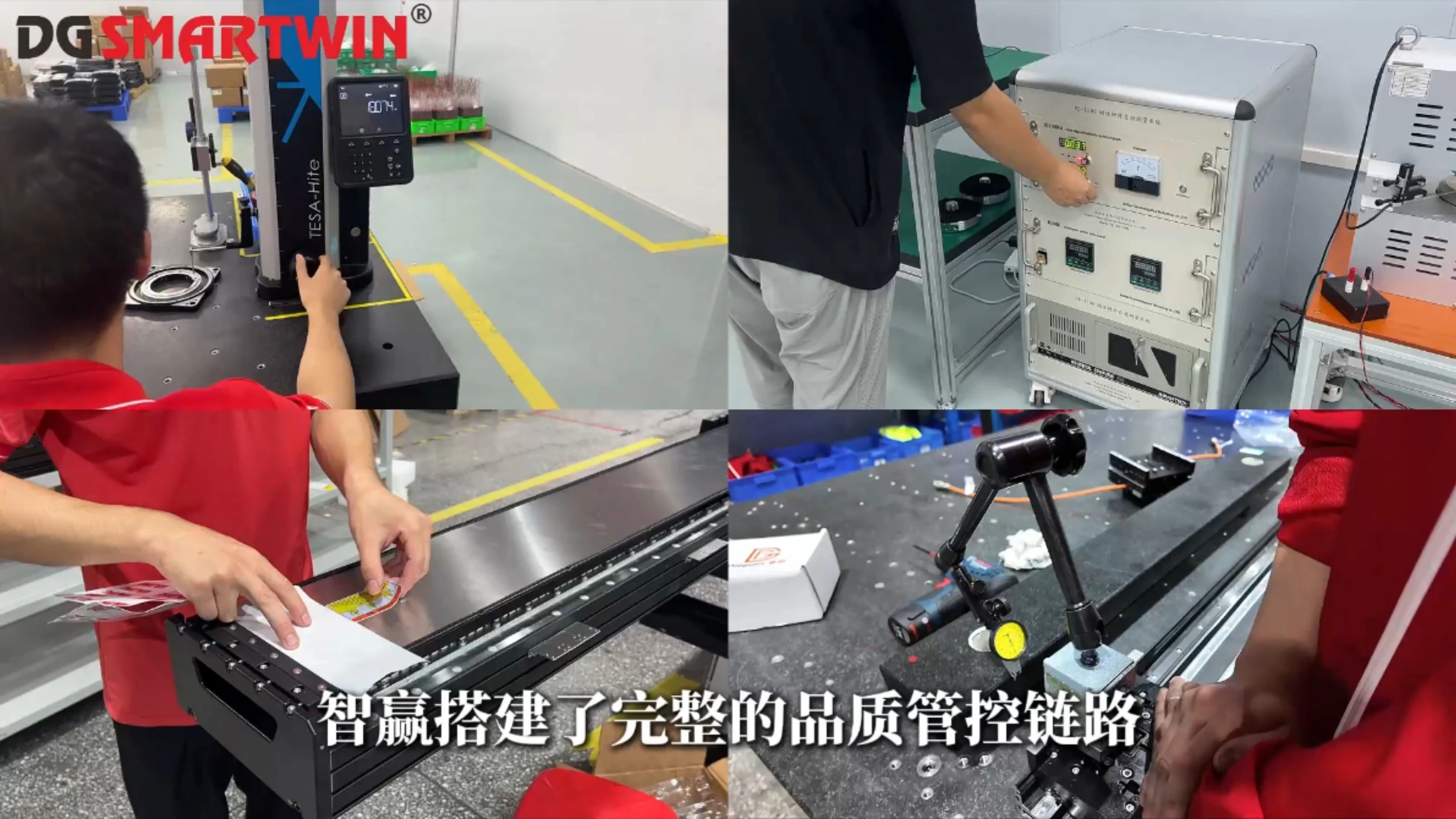
Among these parameters, force constant and thermal response are particularly relevant when evaluating a high thrust linear motor. Force measurements help identify differences in electromagnetic performance, while sustained-load testing reveals how the motor behaves as winding temperature increases. For example, SMARTWIN's quality-control procedures include thrust characteristic testing and continuous-load aging tests, which provide complementary evidence when evaluating motor performance.
However, not every test needs to be repeated on every production unit. Electrical and dimensional inspections can be incorporated into routine production checks, while longer thermal tests may be conducted on representative samples. The inspection frequency should be determined by the motor's application requirements and the risks associated with performance variation.
Positioning accuracy and speed stability also require careful interpretation. These characteristics depend on the complete linear motor drive system, including the encoder, servo drive, and mechanical components. When comparing production motors, engineers should distinguish motor-level measurements from system-level results to avoid attributing unrelated performance differences to the motor itself.
How Do Manufacturing Processes Affect Ironless and Iron Core Linear Motors?
Consistent performance begins with manufacturing operations that influence the motor's electrical, magnetic, and mechanical characteristics. Final inspection can identify nonconforming products, but stable production also depends on maintaining control over these operations.
1. Winding and Electrical Assembly
Winding geometry, conductor properties, and connection methods affect resistance and electromagnetic characteristics. Even when two motors share the same external dimensions, differences in their internal electrical assembly may produce measurable performance variation.
Production checks should therefore be linked to the approved winding specifications and connection requirements. This provides a practical basis for investigating unusual electrical measurements.
2. Magnet and Mechanical Assembly
Magnet selection, polarity arrangement, and positioning influence the magnetic circuit and force generation. Mechanical tolerances determine whether the intended relationship between the coil and magnet track can be maintained during testing and installation.
For example, SMARTWIN's CFW iron-core linear motor series specifies an installation air gap of 0.7 ± 0.2 mm. This model-specific requirement illustrates why mechanical clearances need to be controlled when comparing force measurements. It should not be applied as a general tolerance to other linear motor designs.
3. Process Settings and Inspection Records
Adjustments to production fixtures, assembly equipment, or manufacturing procedures may affect product characteristics without changing the nominal design.
Recording significant process changes alongside inspection results helps engineers determine whether a performance shift is associated with a particular manufacturing operation. It also supports more targeted corrective action when deviations occur.
How to Verify Precision Linear Motors Before Mass Production
Pilot production helps determine whether precision linear motors can maintain consistent performance under actual manufacturing conditions. Using the intended materials, equipment, and assembly procedures, engineers can compare key measurements across multiple units to identify variations that may not appear during initial sample testing.
For example, consider two pilot batches with an approved force constant range of 45–55 N/A. Batch A measures between 49 and 51 N/A, while Batch B ranges from 46 to 54 N/A. Although both batches meet the specified limits, Batch B shows greater variation, which may indicate differences in materials, assembly conditions, or the testing process. These hypothetical values illustrate why meeting individual specifications does not always demonstrate stable production performance.
Before approving mass production, engineers should evaluate both the measurement spread and any noticeable shifts between batches. Where sufficient data are available, statistical process control or process capability analysis can support this assessment. The sampling plan should reflect production volume, application requirements, and the risks associated with performance variation.
Maintain Production Traceability and Control Manufacturing Changes
Production traceability helps manufacturers identify the causes of performance differences between batches. By linking each motor or production lot to its design revision, critical components, and inspection results, engineers can investigate whether unexpected variations are related to material changes or specific manufacturing processes.
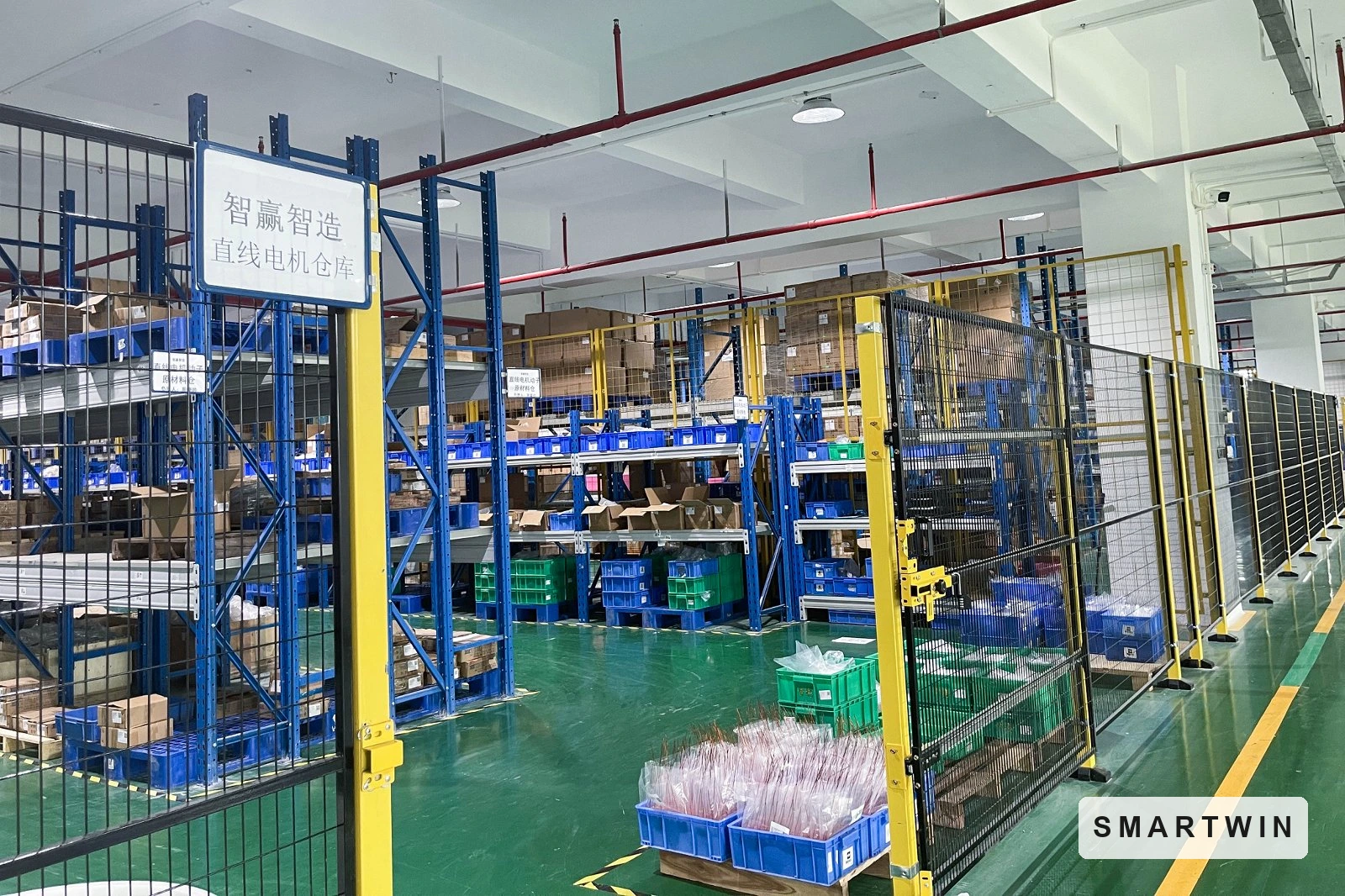
For SMARTWIN's customized linear motors, this is particularly important when OEM customers require repeat production of an approved design. A change in winding configuration, magnet specifications, or mounting dimensions may affect motor performance or integration with existing equipment. Where the motor is paired with SMARTWIN's servo drives and encoders, the impact of such changes can also be assessed at the motion-system level, helping determine whether additional validation is necessary.
When changes could affect approved specifications, the relevant parameters should be retested before the revised configuration enters production. Keeping records of these evaluations, along with any corrective actions, helps maintain consistency across subsequent orders and reduces the risk of unexpected integration issues.
When Is a Linear Motor Ready for Volume Production?
A linear motor is ready for volume production when pilot-batch results demonstrate that the approved design can be manufactured consistently under normal production conditions. The final review should focus on three requirements:
1. Performance Compliance: Tested motors meet the approved electrical, mechanical, and applicable thermal specifications, with results obtained under defined test conditions.
2. Process Stability: Critical parameters remain within acceptable limits, and significant variations identified during pilot production have been investigated and resolved.
3. Production Readiness: Inspection procedures, sampling requirements, and change-control measures are established to maintain consistency in subsequent batches.
Meeting these requirements provides a practical basis for production approval. If critical deviations remain unresolved, further testing or manufacturing adjustments may be necessary before increasing production volume.
Conclusion
Verifying linear motor consistency before volume production requires more than confirming that individual samples meet their specifications. Manufacturers must demonstrate that critical performance characteristics can be reproduced across production batches under controlled conditions.

By combining approved performance requirements, pilot-batch evaluation, and effective production records, equipment manufacturers can reduce unexpected performance differences and establish a more reliable foundation for repeat orders.
Frequently Asked Questions
Does Every Linear Motor Need to Undergo the Same Production Tests?
No. Testing requirements depend on the motor design, application conditions, and potential consequences of failure. Electrical and dimensional checks may be performed on individual units, while extended thermal or sustained-load tests can follow an approved sampling plan. The inspection frequency should reflect the importance of each parameter and the agreed acceptance criteria.
Can Linear Motors Pass Inspection and Still Show Performance Variation?
Yes. Individual motors may satisfy the same specifications while showing differences in measured values. Such variation is generally acceptable when it remains within approved limits and the manufacturing process is stable. However, a noticeable shift in batch averages or measurement spread may indicate a process change that requires investigation.
When Should a Linear Motor Be Retested After a Manufacturing Change?
Retesting is necessary when a manufacturing change could affect approved performance requirements. Changes to winding specifications, magnet materials, or critical assembly procedures may require additional electrical, thrust, or dimensional verification. The scope of testing should depend on the potential impact of the change and any customer approval requirements.
Contact Smartwin to discuss your linear motor consistency verification and volume production requirements.
Back To List