

 En
En



Absolute Linear Encoder Applications in High Precision Motion Systems
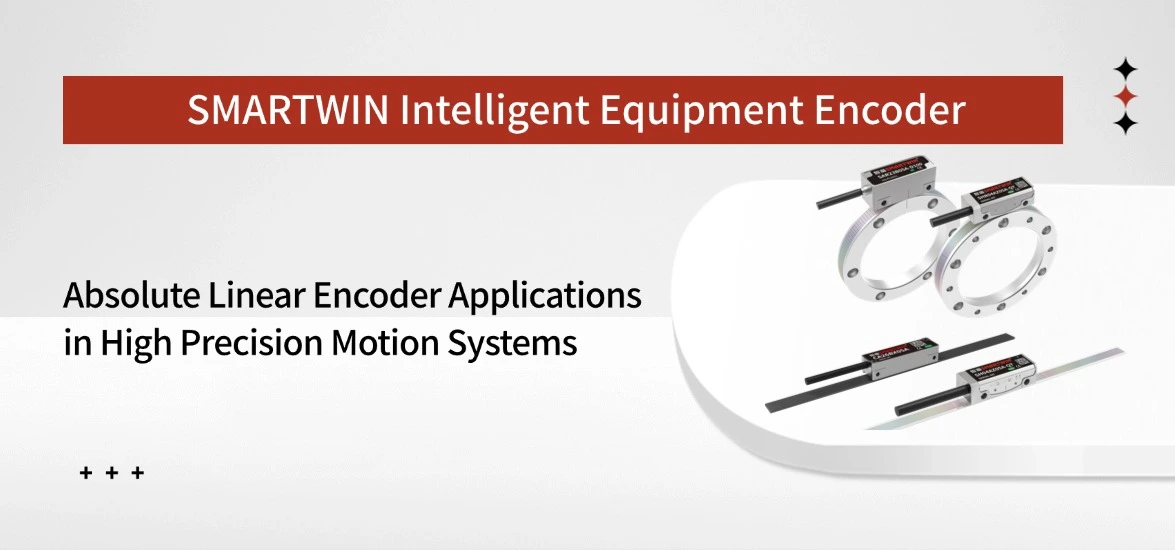
High-precision motion systems depend on knowing exactly where a moving axis is throughout operation. An absolute linear encoder provides a defined position reference for applications where accurate, repeatable, and reliable motion is essential.
This article looks at where absolute linear encoders are used, what performance matters in different motion systems, and how application requirements influence encoder selection.
What Is an Absolute Linear Encoder?
An absolute linear encoder measures the position of a moving axis and provides a unique position value for each location within its measuring range. The position is therefore tied to a defined point along the measurement scale, allowing the motion system to identify where the axis is without first establishing its location through a separate reference movement.
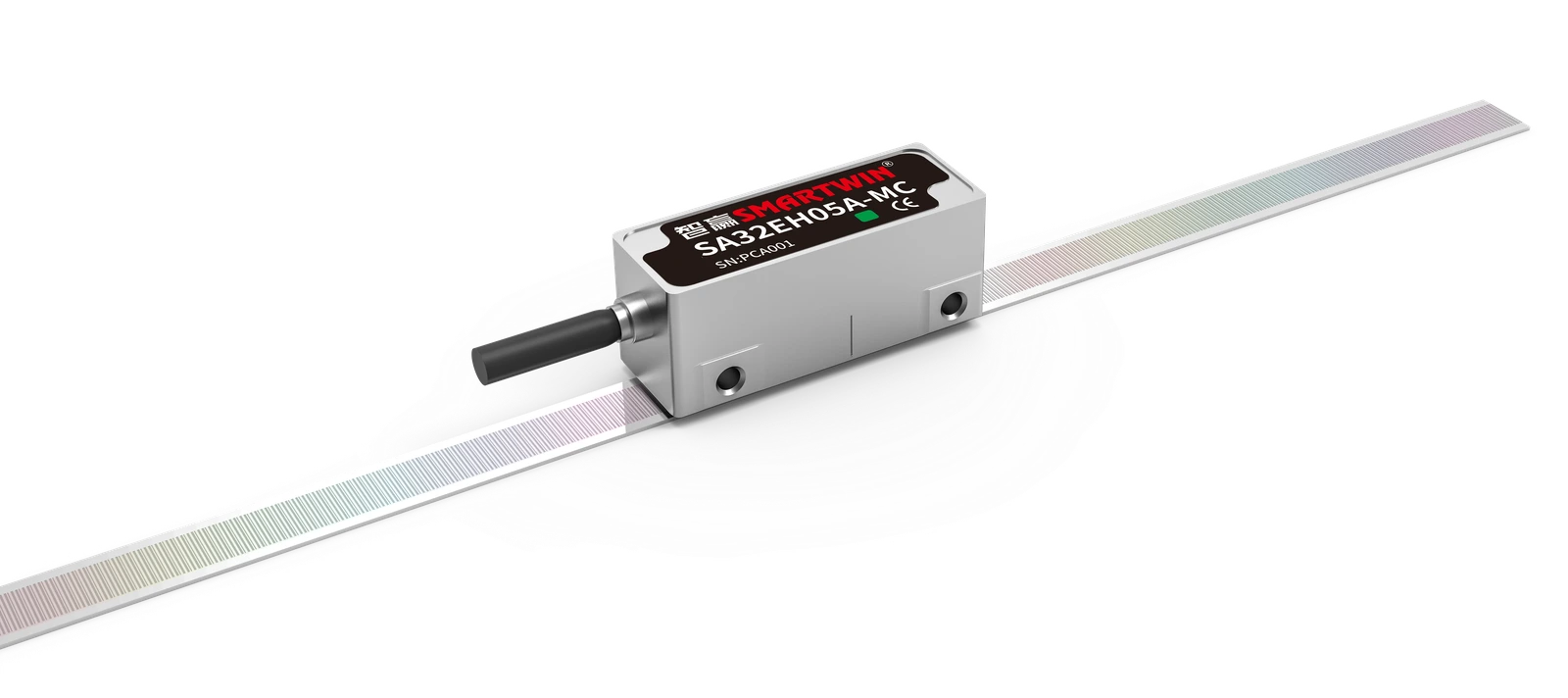
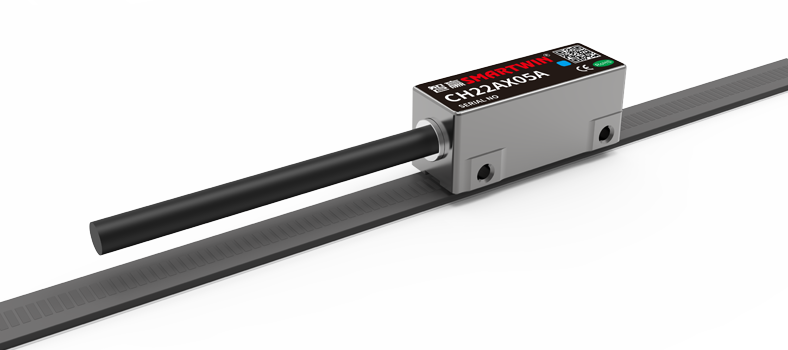
The encoder typically consists of a measuring scale and readhead that work together to detect linear position and transmit the resulting data to the control system. Depending on the design, the measurement principle may be optical or magnetic, while the output interface must match the controller used by the machine.
For precision motion applications, the value of an absolute encoder is not determined by resolution alone. Positioning accuracy, repeatability, maximum operating speed, measuring length, and interface compatibility all affect whether the feedback system is suitable for a particular axis.
Why Is Absolute Position Feedback Important in Precision Motion?
High-precision equipment depends on maintaining a reliable relationship between commanded motion and the physical position of the moving axis. A positioning stage may need to align a workpiece, place a component, move an inspection sensor to a defined coordinate, or coordinate motion with other axes. In each case, the control system needs dependable position information to execute the process correctly.
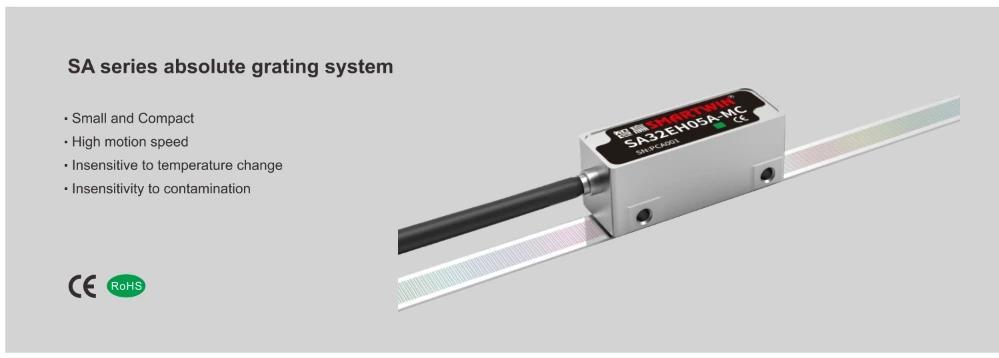
Absolute feedback is especially useful when the machine starts or resumes operation after an interruption. Because the current axis position can be identified directly, the system can establish its position state without moving the stage simply to locate a reference point. This can be important when tooling, sensors, wafers, panels, or other components are already positioned within the working area.
The requirement becomes more demanding in multi-axis and highly automated systems. Each axis may operate with a different travel range, speed, and positioning tolerance, yet their movements must remain coordinated within the same process. Reliable absolute position information gives the control system a defined positional basis for managing these movements and helps reduce unnecessary recovery motion before production can continue.
Where Are Absolute Linear Encoders Used?
Absolute linear encoders are used in precision motion systems for different reasons. A positioning stage may require fine motion feedback at higher speeds, while semiconductor equipment must coordinate several movements within a controlled process. Inspection systems place greater emphasis on returning consistently to known measurement locations. These differences determine which encoder characteristics matter most in each application.
1.Precision Linear Stages
Precision linear stages are widely used for alignment, assembly, measurement, and other tasks that require controlled movement between defined coordinates. In linear motor and direct-drive systems, the encoder measures displacement directly along the moving axis, giving the controller position information from the stage itself. This is particularly useful in compact XY and XYZ platforms where several axes work together within a limited motion range.
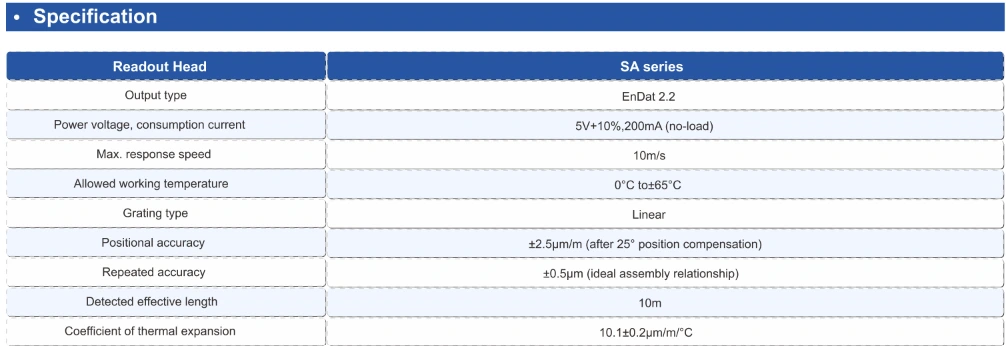
These stages may combine very fine positioning with rapid movement, making both resolution and response speed important. Smartwin's SA32 absolute optical encoder offers 0.005 μm and 0.01 μm resolution options and supports speeds up to 10 m/s. This combination can meet applications where fine position measurement and high-speed stage movement need to work together.
2.Semiconductor and Display Equipment
Semiconductor and display equipment often combines several motion tasks within the same machine. A stage may position a wafer or panel, scan an inspection area, perform alignment, or transfer a component between process locations. The demands can vary from one axis to another, particularly when multiple stages operate within the same production sequence.
Absolute measurement gives each controlled axis a known position without adding a separate reference movement before operation. For stages covering larger working areas, accuracy across the travel becomes an important consideration. With positioning accuracy of ±2.5 μm/m, the SA32 provides a practical option for precision equipment that needs reliable position measurement over linear motion.
3.Precision Inspection and Measurement Systems
In inspection and measurement equipment, the location of the stage is closely connected to the measurement itself. A camera may scan a surface, a probe may move between inspection points, or a workpiece may be positioned beneath a stationary sensor. The system must be able to associate each measurement with the intended physical location.
Repeatability becomes especially important when the same coordinates are visited across multiple inspection cycles. With ±0.5 μm repeatability, the SA32 can support applications that depend on consistent positioning from one cycle to the next. The final result also depends on factors beyond the encoder, including installation accuracy, mechanical stability, thermal behavior, and motion control performance.
4.Automated Production Equipment
SMT machines, dispensing systems, and precision assembly equipment rely on repeated motion sequences throughout production. One axis may move quickly between stations while another performs short placement or dispensing movements. Absolute position feedback helps the control system maintain a clear position reference across these different operations and can simplify position recovery when production is interrupted.
System integration matters just as much as motion performance in this type of equipment. The encoder must communicate correctly with the controller responsible for coordinating the machine, so interface compatibility needs to be considered early in the design. The SA32 supports EnDat 2.2, providing an absolute feedback option for control systems built around this interface.
What Performance Matters in High Precision Motion Applications?
Selecting an encoder for a high-precision motion system involves more than looking for the finest resolution or the highest speed. Each specification describes a different aspect of measurement performance, and the right combination depends on how accurately, how fast, and how far the axis needs to move. Understanding these differences makes it easier to match encoder performance to the actual motion requirements.
1.Resolution and Positioning Accuracy
Resolution refers to the smallest position increment that the encoder can distinguish or output. Positioning accuracy describes how closely the measured position corresponds to the actual position over the specified measuring range.
These two values are related to position measurement, but they are not interchangeable. A linear absolute encoder may provide very fine resolution while its positioning accuracy remains at a different level. Fine resolution gives the control system more detailed position information, whereas accuracy indicates how closely that information represents the true physical position. Both should therefore be checked against the positioning tolerance required by the machine.
2.Repeatability
Repeatability describes how consistently the encoder can reproduce the same position under repeated conditions. This differs from accuracy: a measurement can be highly repeatable even if there is a consistent offset from the true position.
For motion processes that return to the same coordinates repeatedly, repeatability helps indicate how much variation can occur from one positioning cycle to the next. It should be considered together with positioning accuracy when consistent motion performance is required over repeated operation.
3.Response Speed
As the axis moves faster, the encoder must continue to deliver reliable position information throughout the required velocity range. Response speed therefore becomes an important consideration in systems that combine precise positioning with rapid travel.
The maximum supported speed may also depend on the encoder configuration, including the selected resolution and signal processing method. Instead of choosing an encoder simply because it has a high maximum speed, the more useful approach is to confirm that the required resolution and feedback performance can be maintained at the machine's actual operating velocity.
4.Measuring Length
Measuring length determines the linear distance over which the encoder can provide position feedback. It needs to cover the working stroke of the axis while also fitting the mechanical layout and installation conditions of the machine.
Longer travel also makes the way accuracy is specified more important. An accuracy value expressed in μm/m describes position error relative to the measuring distance, while resolution and repeatability describe different aspects of performance. Looking at these values separately helps avoid assuming that a fine resolution will automatically provide the same level of accuracy across a long travel range.
5.Interface and System Compatibility
An absolute encoder must be able to communicate correctly with the motion controller, so interface compatibility is part of the selection process rather than an isolated electrical detail. The interface determines how absolute position data is transferred and must be supported by the control architecture used in the machine.
Protocols such as EnDat and BiSS-C are designed for absolute position communication, but they are not automatically interchangeable. The controller's supported protocol, encoder configuration, and integration requirements should all be confirmed before the feedback system is finalized.
How Do Motion Requirements Change Across Applications?
The same absolute linear encoder is not necessarily the right choice for every precision motion system. What matters most depends on the movement itself: how far the axis travels, how quickly it moves, how closely it must reach a target position, and whether it needs to return to that position repeatedly.
For example, a short-stroke positioning stage may benefit from fine resolution and tight repeatability, while an axis covering a larger working area needs enough measuring length without losing the required accuracy over distance. A high-speed scanning axis introduces another consideration—the encoder must maintain reliable position feedback at the intended operating velocity.
These differences can be summarized by looking at the main motion task rather than the equipment category:
| Motion Requirement | What It Means for the Axis | Encoder Consideration |
|---|---|---|
| Fine positioning | Small movements must be clearly detected | Resolution and accuracy |
| Repeated positioning | The axis returns to the same coordinates many times | Repeatability |
| High-speed travel | Position must remain available during rapid movement | Response speed |
| Long linear travel | Feedback is required across a larger working stroke | Measuring length and accuracy over distance |
| Coordinated motion | Position data is shared within a multi-axis control system | Interface and system integration |
In practice, several of these requirements often exist on the same axis. A stage may need to travel quickly between process locations and then settle accurately at the target, while another axis in the same machine may move more slowly but cover a much longer distance. This is why encoder selection should be based on the complete motion profile rather than a single performance value.
Defining the motion profile first also makes specification comparison more meaningful. Instead of asking which encoder has the highest resolution or fastest response, the more useful question is whether its resolution, accuracy, repeatability, speed, and measuring range work together within the conditions required by the axis.
Conclusion
Choosing an absolute linear encoder starts with understanding how the axis needs to move. Resolution, accuracy, repeatability, speed, measuring length, and system compatibility should be considered together rather than judged by a single specification.
For precision stages, inspection systems, semiconductor equipment, and automated machinery, matching the encoder to the actual motion requirements is key to reliable position feedback. Contact Smartwin to discuss the right encoder solution for your precision motion system.
Frequently Asked Questions
1. What is an absolute linear encoder used for?
An absolute linear encoder provides position feedback along a linear axis and is commonly used in precision stages, semiconductor equipment, inspection systems, and automated machinery. It is particularly useful where the control system needs a defined axis position without performing a separate reference movement.
2. Why are absolute linear encoders used in high-precision motion systems?
High-precision systems depend on reliable position information to control movement between defined coordinates. Absolute feedback allows the controller to identify the axis position directly, supporting applications that require precise positioning, coordinated movement, or consistent operation after startup.
3. Does higher encoder resolution always mean higher positioning accuracy?
No. Resolution describes the smallest position increment an encoder can distinguish or output, while positioning accuracy describes how closely the measured value corresponds to the actual position. A finer resolution therefore does not automatically produce the same level of positioning accuracy.
4. What should I consider when choosing an absolute linear encoder?
Start with the required positioning accuracy, resolution, repeatability, operating speed, and measuring length. The encoder's sensing technology, interface, installation conditions, and compatibility with the motion controller should also match the design of the machine.
5. Can absolute linear encoders be used for high-speed motion?
Yes. An absolute linear encoder can support high-speed motion when its response capability is suitable for the operating velocity of the axis. Resolution and speed should be evaluated together because the available maximum speed may vary with the encoder configuration.
6. Which applications benefit most from absolute position feedback?
Applications that require a known position at startup, repeated movement between defined coordinates, or coordinated multi-axis operation can benefit from absolute feedback. Typical examples include precision positioning stages, semiconductor and display equipment, inspection systems, SMT equipment, and precision automation.
Back To List