

 En
En



Digging into the core value of closed-loop control, DGSMARTWIN drives unlock more process possibilities for direct-drive motors
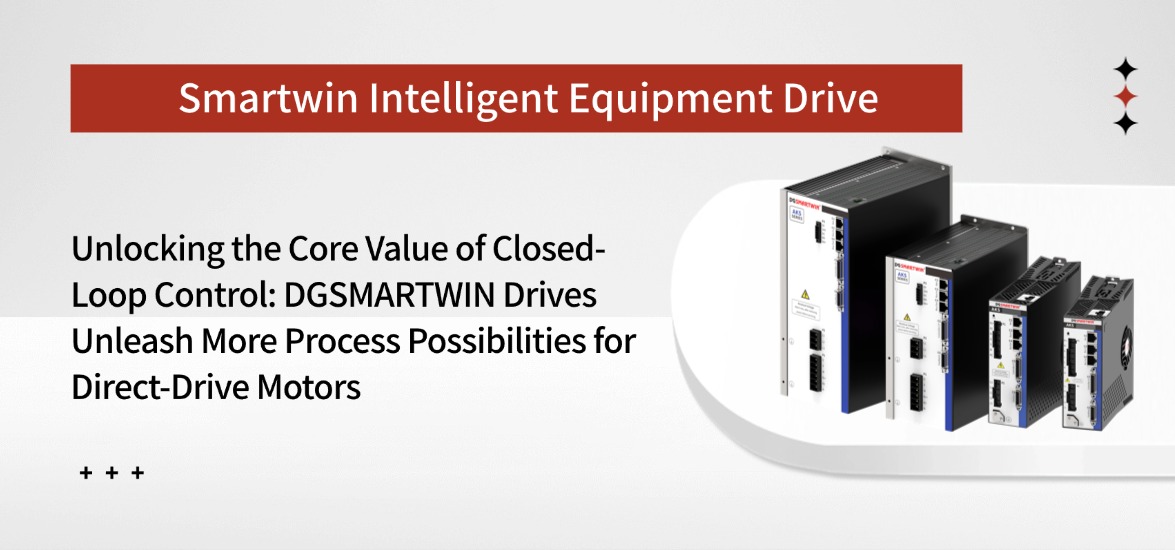
Digging into the core value of closed-loop control, DGSMARTWIN drives unlock more process possibilities for direct-drive motors
I. In closed-loop motion systems, drives are an underrated critical unit
During equipment selection, engineers tend to focus on visible parameters of the motor body such as torque, speed and outer diameter, yet overlook the importance of the drive in the entire motion chain. The motor only converts electric energy into torque. The final operating smoothness, positioning accuracy and disturbance rejection performance of the equipment are jointly determined by the drive’s closed-loop algorithm and signal processing capability. The same motor paired with drives of different performance levels will show distinct differences in response, jitter suppression and positioning stability, which is especially prominent in high-dynamic and high-precision direct-drive systems.
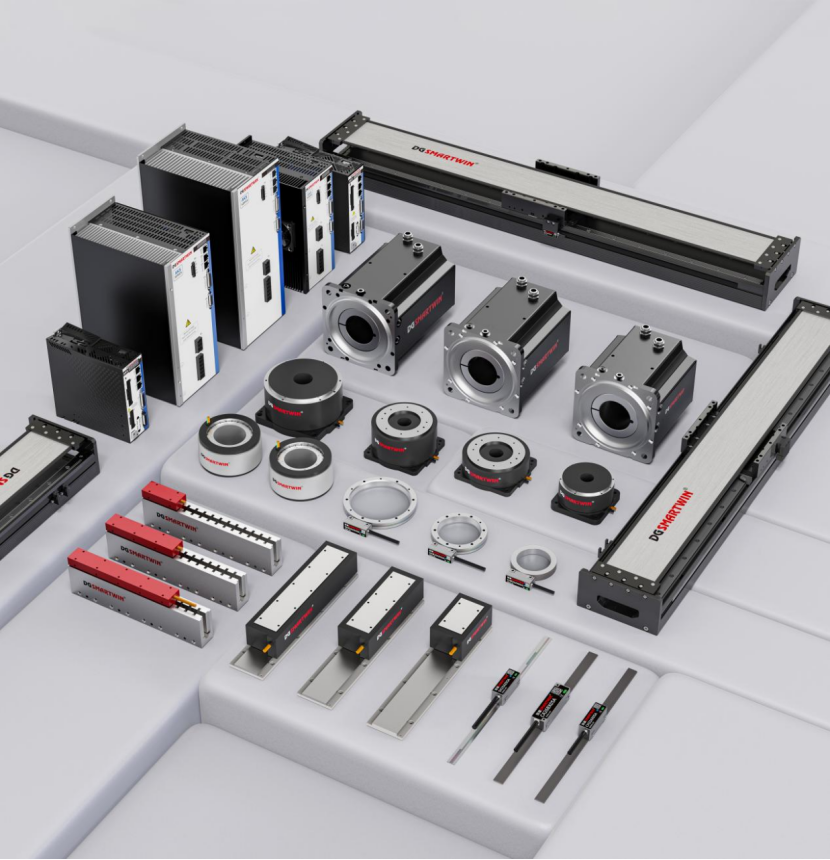
The difficulty of closed-loop control lies not in "whether feedback is available", but whether the system can make timely and accurate corrections after receiving feedback. Industrial processes are increasingly diversified, and a single control mode can hardly meet all production requirements. This demands the drive to have complete control mode switching capability, robust signal processing performance, and hardware reliability to withstand complex electromagnetic environments. By integrating motors, drives and encoders into one unified collaborative system, DGSMARTWIN aims to avoid the common dilemma where individual components perform well yet fail to achieve proper compatibility when assembled together.
II. Multi-mode Closed-loop Algorithm for Diverse Industrial Process Scenarios
DGSMARTWIN AKS series drives adopt mature current speed position three-loop closed-loop algorithm with fast response to correct motion deviation in real time, and effectively suppress mechanical resonance and start-stop impact. The cascaded structure from inner loop to outer loop defines that the current loop governs torque, the speed loop handles dynamics, and the position loop manages end positioning. Only with proper coordination of the three loops can the system maintain stability during high-speed reciprocation and low-speed dwelling. Targeting the low-speed characteristics of direct-drive motors, the R&D team has carried out special optimization on the underlying algorithm, taking into account cogging force compensation and dynamic feedforward to prevent jitter and overshoot of equipment under non-standard working conditions.
More importantly, the drive supports three operation modes: position, speed and torque, which can be switched online during operation. One set of hardware handles multiple processes. Position mode is used for precision point positioning to guarantee repeat positioning performance; speed mode is suitable for uniform scanning and continuous transfer stations; torque mode delivers constant torque output, ideal for special processes such as flexible press-fitting, tension control and torque testing. Versatile mode capabilities allow a single machine to perform multiple different process actions. This is the "one machine, multiple functions" required by flexible manufacturing, and also differentiates DGSMARTWIN drives from products that only provide basic point-to-point control.
III. Hardware Protection and Signal Processing to Counter Various Interference Sources on Industrial Sites
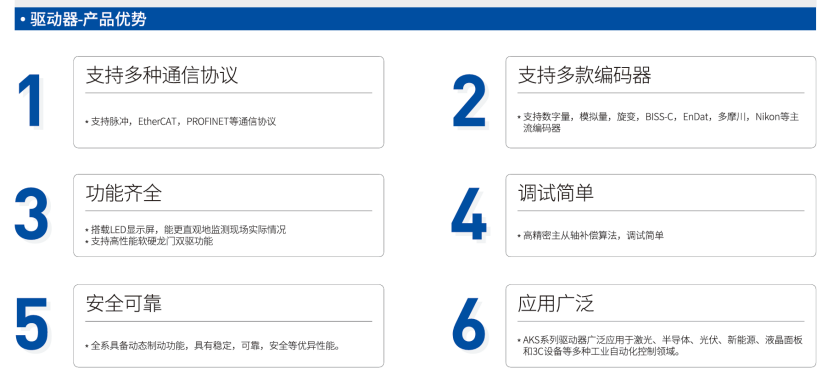
Interference sources in factory sites are usually far more complex than those in laboratories. With densely arranged frequency converters, welding machines and high-power equipment, electromagnetic noise exists everywhere. Once the signal is distorted, random alarms and positioning jumps may occur, and troubleshooting will be time-consuming and labor-intensive. DGSMARTWIN drives adopt industrial-grade components, optimize the shielding layout of circuit boards, and apply multi-stage digital filtering to process encoder feedback signals, ensuring stable and reliable links for command issuance and position feedback. Meanwhile, it supports multiple control methods including pulse and EtherCAT, and is compatible with various encoder types such as incremental, Hall, resolver, sine/cosine, BiSS and EnDat, reducing wiring interference risks brought by extra adapter modules.
The protection logic is also comprehensive. Overcurrent, overvoltage, overheating, overload and encoder faults can be monitored in real time. Protection actions will be triggered immediately upon abnormality to prevent secondary damage to the motor body and mechanical mechanisms and lower the risk of hardware scrappage. The whole product line is equipped with STO function as standard, along with dynamic braking, overspeed prevention and multiple other protections to safeguard personnel safety and equipment assets. For production lines requiring long-time continuous operation, this capability of "immediate loss control upon abnormality" carries more practical significance than merely pursuing peak performance.
IV. Data Output Empowers Smart Factories with Convenient Commissioning
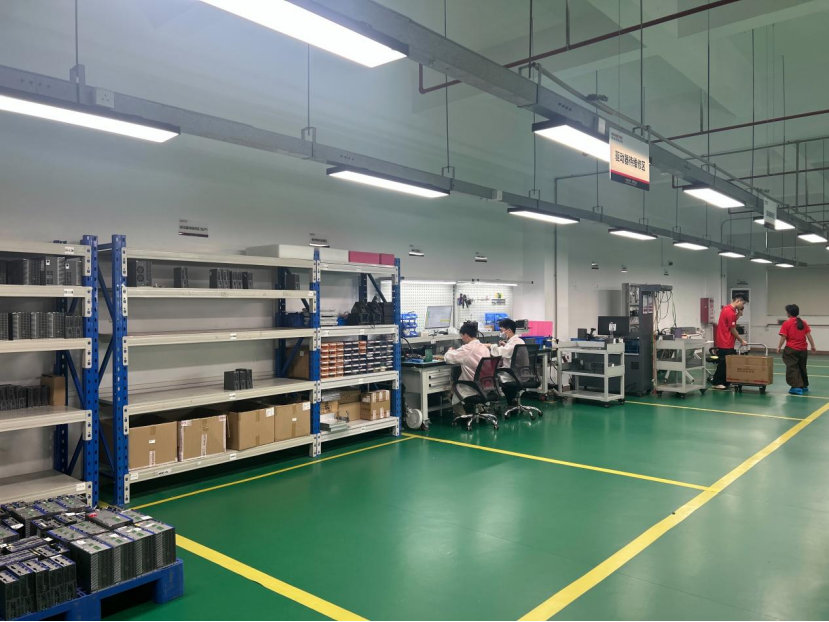
Within the architecture of digital production lines, the drive is not merely a motion execution unit but also a critical data acquisition node. DGSMARTWIN drives can collect information including current, temperature, operating status and alarm logs, and upload data to the host computer and factory platform via mainstream industrial buses. Based on such operational data, equipment-side component condition assessment can be implemented to support predictive maintenance. Maintenance can be scheduled during production gaps to reduce unplanned downtime. Shifting from "repair after failure" to "data-driven maintenance reminder" represents a substantial upgrade in production line operation and maintenance logic.
Commissioning is also considered in product design. Basic parameters are pre-configured for normal working conditions; the system can run after simple configuration upon power-on, shortening the prototype commissioning cycle. Meanwhile, a full set of advanced adjustable parameters is open for fine tuning, including closed-loop gain, filter coefficients, acceleration/deceleration curves and alarm thresholds. When confronted with difficult working conditions such as resonance or low-speed instability, engineers can carry out targeted optimization according to the actual load inertia and mechanical characteristics of the equipment to achieve optimal operating status for each unit. The addition of automatic inertia identification and one-click tuning for three-loop parameters further lowers the commissioning barrier. Therefore, DGSMARTWIN drives can serve experienced system integrators, and adapt to project schedules featuring rapid prototyping and iterative development.