

 En
En



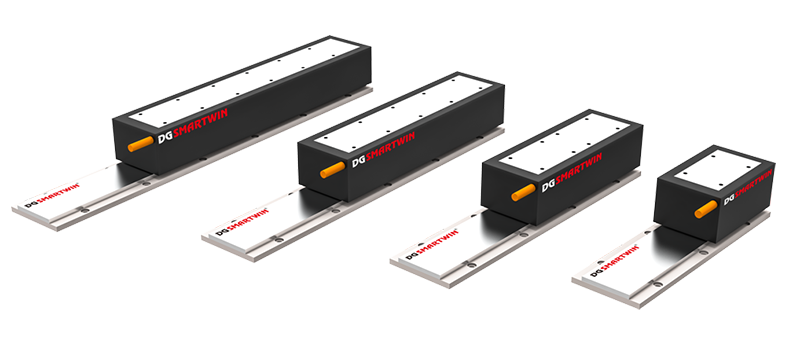
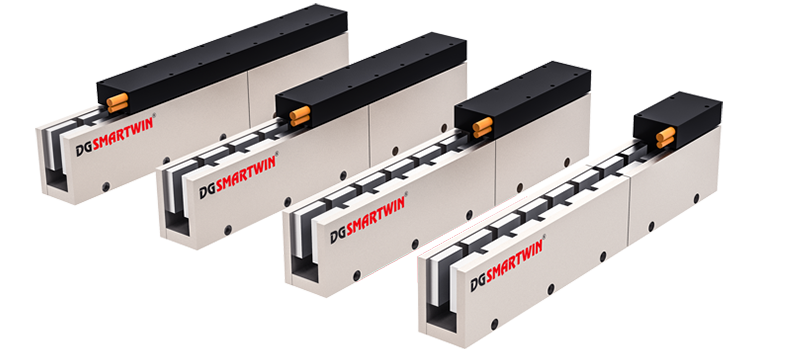
Ironless Linear Motor
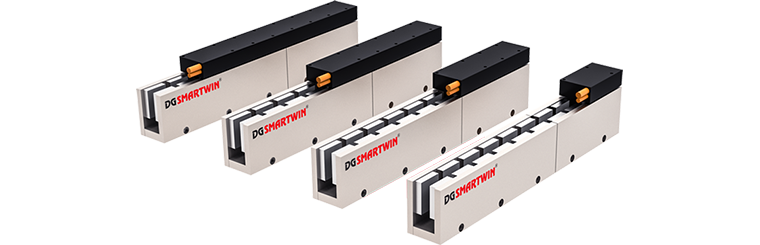

High speed and high precision
Directly drives the load to achieve a high speed of 5m/s, with full closed-loop direct drive and long stroke design.

High acceleration
Enhanced acceleration significantly improves load lightweighting, with reduced thermal conduction and high positioning accuracy.

Simplified structure
Multiple rotors can be installed on a single stator, offering a simple configuration and enabling various actions on the same shaft.

Easy to use
Extremely low noise, maintenance-free, no oil scattering, easy to maintain a clean working environment
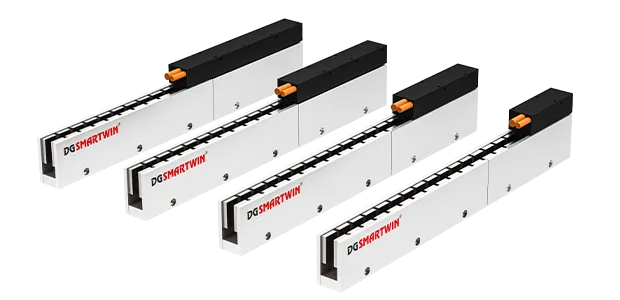
Continuous thrust 25.5N~51N
Peak thrust 127.6N~255.2N
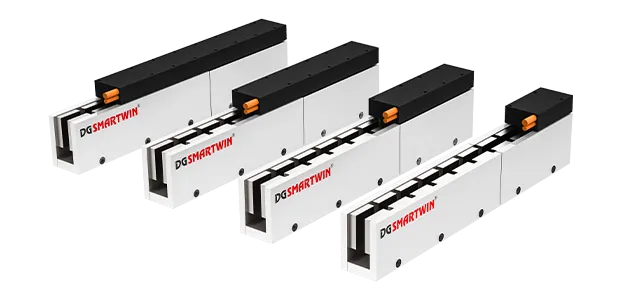
Continuous thrust 64.2N~128.3N
Peak thrust 279N~558N
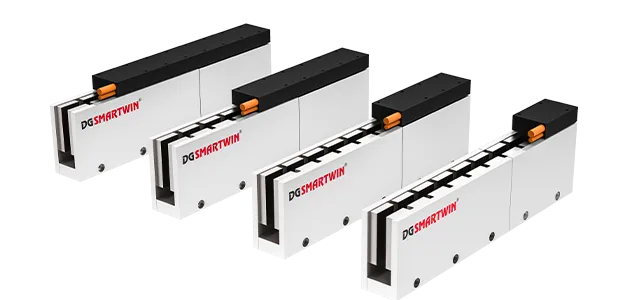
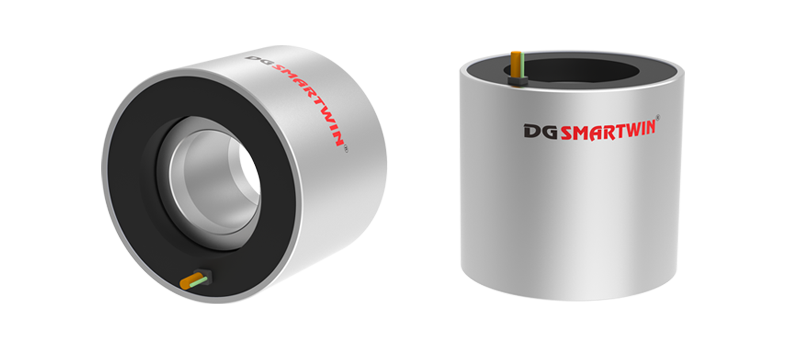
Continuous thrust 119.8N~239.5N
Peak thrust 676.9N~1353.7N
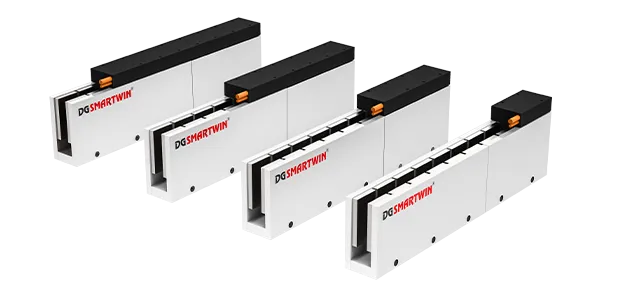
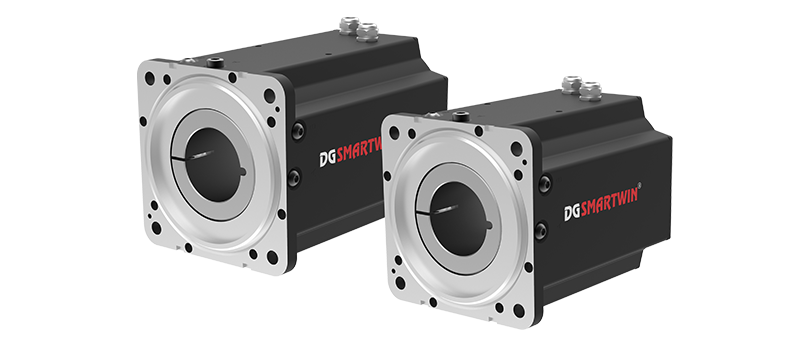
Continuous Thrust 205.5N~411.0N
Peak Thrust 1479.6N~2959.2N
Ironless Linear Motor FAQ
- Q:
What is an ironless linear motor?
A: An ironless linear motor, also known as a coreless linear motor, is a direct drive motor without an iron core in the moving coil. This structure helps reduce cogging force and provides smooth, accurate, and low-vibration linear motion
. Ironless linear motors are suitable for applications that require high precision, high speed, low noise, and smooth motion performance. They are commonly used in semiconductor equipment, inspection systems, laser processing, medical devices, and other precision automation machines. - Q:
What are the benefits of ironless linear motors?
A: Ironless linear motors offer smooth motion, low vibration, low noise, high precision, fast response, and excellent dynamic performance. Their coreless design helps reduce cogging and makes them suitable for sensitive precision applications.
They are especially useful for lightweight loads, high-speed motion, clean environments, and systems that require stable positioning accuracy. For applications where motion smoothness is more important than maximum thrust, an ironless linear motor is often the preferred choice. - Q:
What is the difference between ironless and iron core linear motors?
A: The main difference between ironless and iron core linear motors is their internal structure and motion performance. An ironless linear motor, also called a coreless linear motor, has no iron core in the moving coil. This design helps reduce cogging force, vibration, and force ripple, making it suitable for high precision, smooth motion, low noise, and clean working environments.
An iron core linear motor uses an iron core structure to generate higher magnetic force. It usually provides stronger thrust and higher force density, making it suitable for heavy-load, high-thrust, and high-acceleration applications.
In general, an ironless linear motor is a better choice for applications that require smooth motion, high precision, and low vibration. An iron core linear motor is more suitable when the machine requires higher thrust, stronger load capacity, and powerful direct drive performance. - Q:
Which applications are suitable for ironless linear motors?
A: Ironless linear motors are suitable for applications that require smooth, accurate, and low-vibration linear motion. Common applications include semiconductor equipment, optical inspection systems, laser processing machines, medical devices, precision measuring equipment, and clean automation systems.
They are also a good choice for applications where low noise, high response speed, and stable velocity control are important. - Q:
Are ironless linear motors suitable for high-precision and low-vibration motion?
A: Yes. Ironless linear motors are especially suitable for high-precision and low-vibration motion. Their coreless and cog-free design helps reduce motion disturbance and improve positioning stability.
When combined with a high-resolution encoder, suitable servo drive, and proper motion control system, an ironless linear motor can deliver excellent precision and smoothness for demanding automation equipment. - Q:
Can ironless linear motors be customized for special applications?
A: Yes. We can evaluate customized ironless linear motor solutions based on your application requirements. Please provide the required parameters, estimated quantity, machine type, installation space, accuracy requirements, and application industry.
Our technical team will review your project and recommend a suitable ironless linear motor solution for your equipment.