

 En



What Makes a Reliable Linear Encoder Manufacturer for Precision Equipment?
Introduction
Choosing a linear encoder manufacturer involves more than comparing product specifications and prices. In precision automation, an encoder plays an important role in measuring position and providing feedback for machine movement. Its performance depends not only on sensing technology but also on manufacturing quality, installation conditions, and compatibility with the equipment.
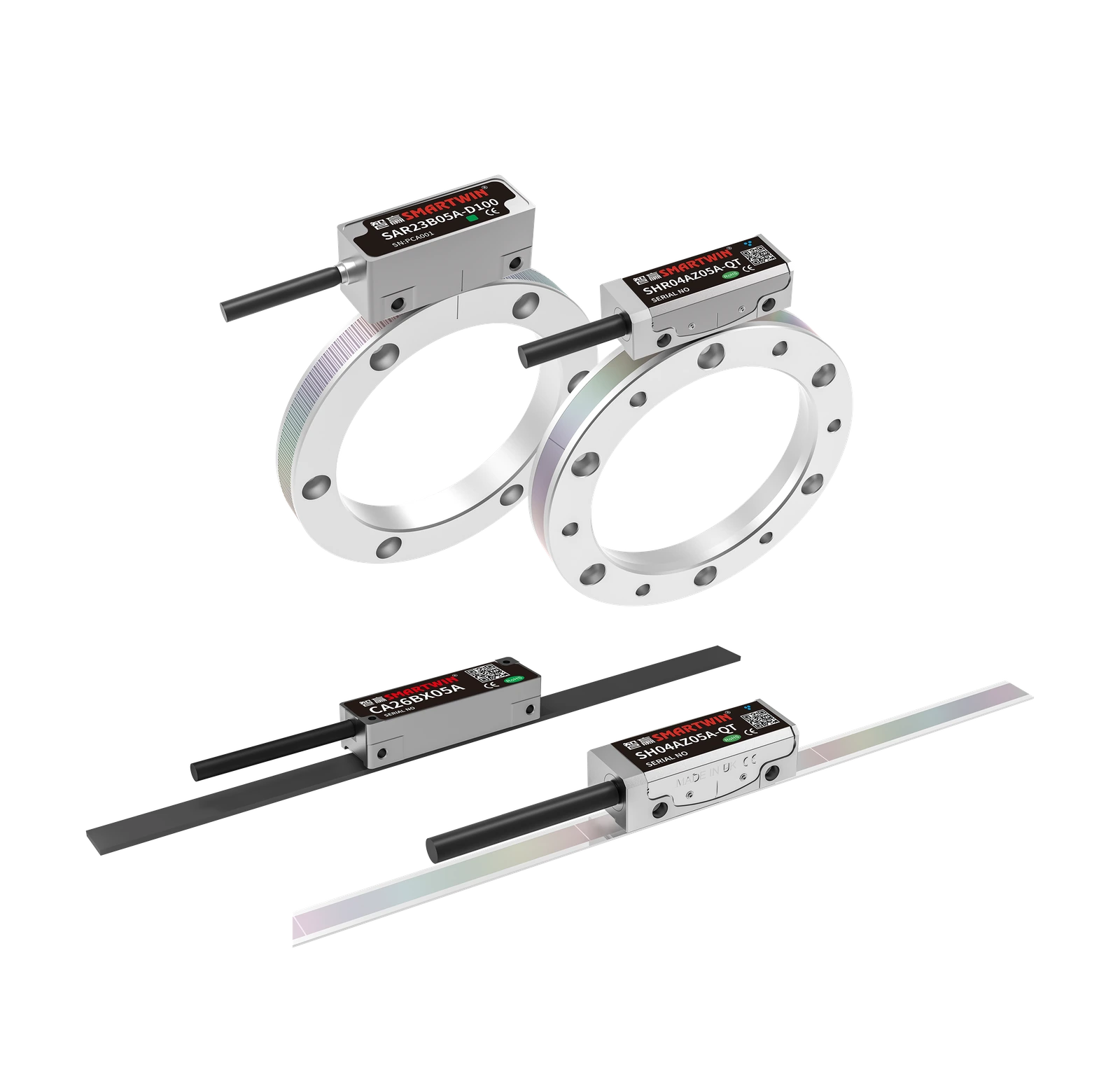
A manufacturer may offer high-resolution linear encoders, but can it maintain consistent product quality across different orders? Can it provide suitable configurations when standard products do not meet a machine's requirements? And what evidence supports its published accuracy specifications?
These questions help distinguish a manufacturer with genuine engineering and production capabilities from a supplier that simply offers encoder products. This article looks at the factors worth examining, from manufacturing processes and accuracy verification to customization and technical support.
What Manufacturing Capabilities Should a Linear Encoder Manufacturer Have?
A manufacturer's engineering and production capabilities determine whether it can develop suitable products and maintain consistent quality during manufacturing. A broad product catalog may indicate market coverage, but it does not necessarily demonstrate control over product design or critical production processes.
In-House R&D and Product Engineering
Linear encoder development involves several interconnected technologies, including sensing elements, signal processing, electronic circuits, and mechanical structures. These elements must work together to deliver the required measurement performance.
A manufacturer with relevant engineering capabilities can evaluate these factors during product development rather than relying entirely on standard components or external designs. This becomes particularly valuable when an application requires a specific measuring length, compact readhead, different output signal, or modified installation arrangement.
There is also a distinction between basic product customization and genuine engineering development. Changing a cable length or connector is relatively straightforward, whereas modifying the sensing structure or developing a different feedback configuration may require additional design and validation work.
SMARTWIN's product development history reflects its expansion into motion control components. In 2022, the company introduced linear motor servo drives and optical linear encoders, extending its product range beyond linear motors and motion modules.
Production Processes and Product Consistency
Even a well-designed encoder can produce inconsistent results if critical manufacturing processes are not properly controlled. Variations in component quality, assembly tolerances, alignment, and electronic processing may affect the performance of finished products.
A closer look at the production process can reveal how a manufacturer manages these risks. Relevant questions include how incoming components are inspected, which assembly steps require dimensional control, and what functional tests are performed before shipment.
Consistency becomes especially important when the same encoder is purchased repeatedly. A replacement unit should maintain the agreed mechanical and electrical specifications so that it can be integrated into existing equipment without unnecessary redesign or adjustments.
Production capacity is therefore only one part of manufacturing capability. Equally important is whether the manufacturer can maintain the same quality requirements as order quantities increase.
How Can You Verify a Linear Encoder Manufacturer's Accuracy and Quality?
Accuracy is often one of the first specifications compared when sourcing a high precision linear encoder. However, a value on a datasheet is only meaningful when its definition, measurement conditions, and supporting test evidence are clear.
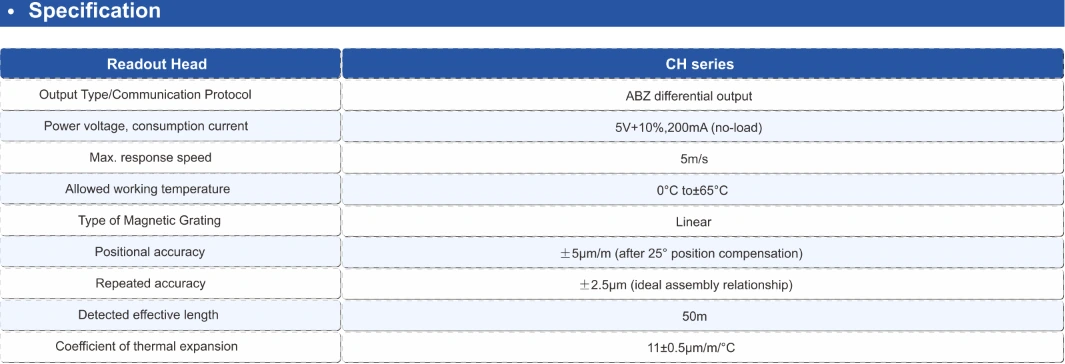
Understanding the difference between common measurement parameters is a good starting point.
Understand Accuracy, Resolution and Repeatability
Accuracy, resolution, and repeatability describe different aspects of encoder performance. Although these terms frequently appear together in product specifications, they should not be treated as interchangeable.
| Parameter | What It Means | What to Check |
| Accuracy | Closeness of a measurement to the actual position under defined conditions | Maximum deviation and measurement conditions |
| Resolution | Smallest position increment the encoder can distinguish or report | Signal period, interpolation, and output increment |
| Repeatability | Ability to reproduce consistent measurements under the same conditions | Measurement variation across repeated tests |
Consider an encoder with a very fine output resolution. This does not automatically mean its measured position will be equally accurate across the entire measuring length. Resolution describes the smallest reported position increment, whereas accuracy concerns the deviation between the measured and actual position.
The conditions behind an accuracy specification also deserve attention. Reference temperature, measuring length, mounting conditions, and test procedures can all influence the reported result. Comparing specifications without checking these details may lead to an incorrect assessment of two products.
Another distinction concerns encoder accuracy and machine positioning accuracy. The encoder is part of the machine's measurement chain, but mechanical deformation, thermal expansion, mounting alignment, and control-system behavior can also affect the final positioning result.
Check Calibration and Inspection Records
Published specifications become more meaningful when the manufacturer can provide supporting measurement records. Depending on the product and purchasing requirements, these may include factory inspection reports, accuracy test results, calibration data, and product-specific measurement records.
A useful report should identify the measuring range, reference conditions, test method, and recorded deviations. These details help determine whether the reported results are relevant to the intended application.
We should also distinguish between a manufacturer's inspection report and an accredited calibration certificate. The former records the manufacturer's own testing results, while the latter is issued by a laboratory whose accreditation covers the relevant calibration activity. They serve different purposes and should not be presented as equivalent.
If a project requires formal measurement documentation, confirm the required certificate type before ordering. This avoids a situation where the encoder meets its quoted specifications but the available documentation does not satisfy the customer's quality or acceptance requirements.
Evaluate Quality Control Across Production Batches
Testing one sample is not enough to establish long-term product consistency. A manufacturer also needs procedures for controlling quality throughout production.
Incoming component inspection, assembly checks, functional testing, final inspection, and nonconforming product management all contribute to this process. Batch traceability adds another layer of control by making it possible to investigate the production history when a problem occurs after delivery.
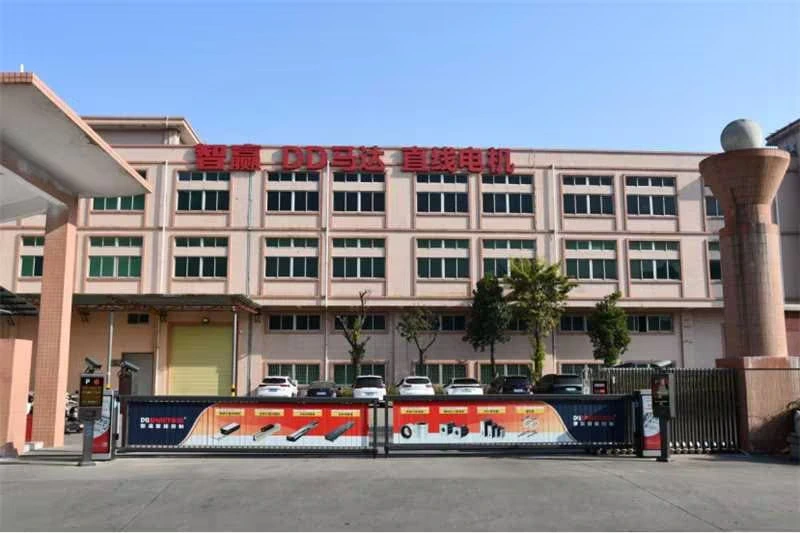
SMARTWIN has established an ISO-certified management system and is equipped with manufacturing facilities and inspection and testing instruments. These provide part of the company's manufacturing and quality management foundation. Product-specific accuracy, however, should still be evaluated through the corresponding inspection and measurement records.
ISO 9001 certification can indicate that a company operates an established quality management system. It does not independently verify the measurement accuracy of a particular encoder, so product-specific test results remain important.
Can a Linear Encoder Manufacturer Provide Custom Solutions for Precision Equipment?
Standard encoder models cover many common applications, but machine designs do not always follow standard dimensions or electrical configurations. Customization becomes relevant when measuring range, installation space, feedback requirements, or environmental conditions differ from those supported by existing products.
Custom Measuring Length and Mechanical Design
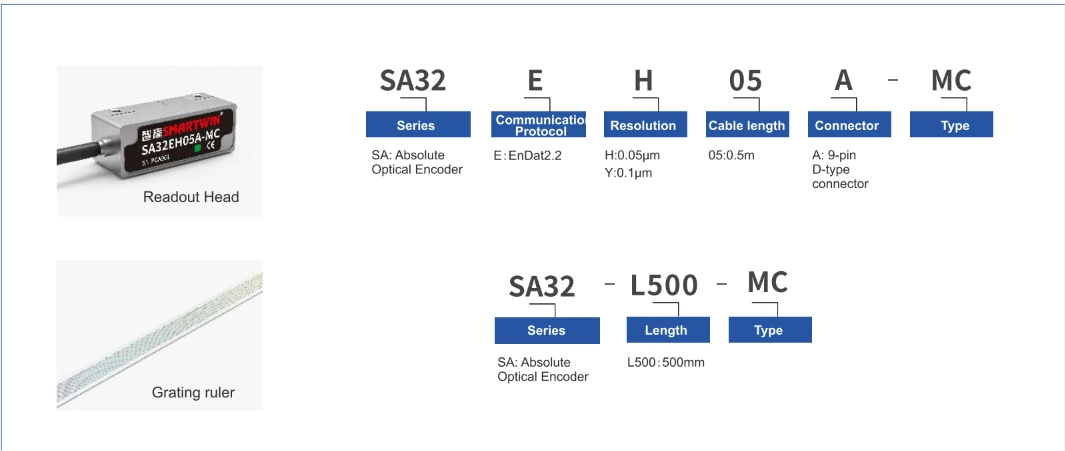
Measuring length is an obvious starting point when discussing a custom linear encoder, but it is not the only mechanical consideration. The readhead size, mounting orientation, available installation space, cable exit direction, and distance between the readhead and scale may also affect product suitability.
For example, a compact inspection platform may have limited space around the moving axis. A standard readhead or mounting arrangement could interfere with nearby mechanical components, even if its measuring range is sufficient.
Providing a mechanical drawing is often more useful than describing the required dimensions in words. It allows the manufacturer to assess mounting clearances, alignment requirements, and potential installation conflicts before production begins.
Incremental or Absolute Feedback: Which Configuration Do You Need?
The choice between incremental and absolute linear encoders depends largely on how the machine establishes and retains position information.
Incremental encoders measure relative movement through changes in their output signals. A reference procedure, commonly called homing, is generally required to establish the machine's position after startup or when the position reference has been lost.
Absolute encoders provide an encoded position value within their defined measuring range. Depending on the encoder architecture and system configuration, they can provide position information after a power interruption without relying solely on incremental counting.
| Consideration | Incremental Linear Encoder | Absolute Linear Encoder |
| Position Information | Relative movement | Encoded absolute position |
| Reference Requirement | Generally requires homing or referencing | Can provide position without relying solely on homing |
| Typical Application | Equipment with an established referencing procedure | Equipment requiring position information after power interruption |
| Selection Priority | Interface, resolution, and reference method | Absolute coding, interface, and position range |
Neither type is universally better. An incremental encoder may be sufficient when the machine can perform a reliable homing procedure. An absolute encoder becomes more attractive when position recovery after power interruption is an important operating requirement.
The communication interface must also match the receiving device. A suitable feedback configuration should be confirmed before selecting the final model.
Electrical Interface and Motion Control Compatibility
Mechanical fit does not guarantee electrical compatibility. The encoder's output signal must be supported by the controller or servo drive receiving the feedback.
Depending on the product design, incremental encoders may use differential signals such as TTL/RS422, while absolute encoders may support serial interfaces such as SSI or BiSS. Each interface has its own electrical and communication requirements.
Before requesting a quotation, identify the controller or servo drive model, required output interface, resolution, maximum operating speed, and cable requirements. These details help the manufacturer determine whether an existing configuration is suitable or whether a customized solution is needed.
The objective is not to select the encoder with the highest specification in every category. It is to find a configuration that meets the machine's measurement requirements and communicates reliably with the existing control system.
Does the Manufacturer Understand Your Application and Operating Environment?
A product's technical specifications do not always reveal how well it will perform in a particular machine. Application experience helps manufacturers understand the conditions that influence encoder selection, especially when equipment operates in environments with mechanical vibration, contamination, temperature changes, or strong magnetic fields.
Encoder Selection for Different Precision Equipment
Semiconductor equipment and precision inspection platforms typically place strong emphasis on measurement accuracy, repeatability, and stable position feedback. Installation space and thermal conditions can also influence the selection, particularly in compact positioning stages.
CNC machines and general industrial automation introduce different operating conditions. Coolant, oil, dust, and vibration may affect the required protection level and mounting arrangement. Here, environmental suitability and long-term mechanical stability can be just as important as nominal resolution.
Linear motor systems present another consideration: the encoder may be installed close to a motor that generates a magnetic field. The sensing technology, installation distance, and surrounding magnetic environment should therefore be evaluated together.
SMARTWIN's motion control products are used in equipment serving industries such as semiconductors, lithium batteries, display panels, 3C electronics, and photovoltaics. These industries involve different positioning and equipment integration requirements, making application-specific component selection an important part of motion system development.
How Do Environmental Conditions Affect Encoder Performance?
Temperature variation can cause thermal expansion in both machine structures and measurement components. This may change the relationship between the encoder's measured position and the actual mechanical position, making operating temperature and thermal compensation relevant to the overall measurement system.
Contamination also deserves attention. Dust, oil, and other particles may affect the sensing area or installation conditions, depending on the encoder's construction. Vibration and mechanical movement can influence mounting stability and signal quality over time.
Magnetic linear encoders installed near linear motors require particular care. Depending on the sensing principle, magnetic field strength, installation distance, and shielding arrangement, the surrounding field may influence measurement behavior.
Rather than assuming that every magnetic encoder is suitable for every linear motor installation, ask the manufacturer for recommended mounting distances and relevant test data. Verification under the intended operating conditions provides a more reliable basis for selection than general claims about electromagnetic immunity.
What Technical Support Should a Reliable Linear Encoder Supplier Provide?
A supplier's responsibility does not end when the encoder leaves the factory. Installation, commissioning, and troubleshooting can reveal issues that are difficult to identify from product specifications alone.
The quality of technical support is therefore another factor worth considering when selecting a long-term supplier.
Installation and Commissioning Support
Incorrect installation can affect measurement performance even when the encoder itself meets its specifications. Mounting alignment, readhead clearance, scale positioning, and cable routing all need to follow the product's installation requirements.
Clear installation instructions and technical documentation make this process easier. When additional assistance is required, the manufacturer's engineering team should be able to explain mounting requirements, signal conditions, and initial configuration.
For example, unstable feedback after installation may result from incorrect alignment, poor signal connections, cable interference, or unsuitable configuration. A supplier familiar with these issues can help narrow down the cause instead of immediately recommending product replacement.
Troubleshooting and Long-Term Product Support
Abnormal feedback, intermittent signals, and unexpected measurement deviations can affect machine operation long after initial commissioning. Resolving these problems may require reviewing product specifications, installation conditions, electrical connections, and operating records.
Long-term support also involves maintaining consistent product specifications, providing suitable replacement units, and communicating changes to product configurations. These details become particularly important when an encoder is integrated into equipment that will be manufactured and serviced over several years.
A supplier that understands the equipment's technical requirements can contribute more than one that simply processes individual product orders.
How Should You Evaluate and Select a Linear Encoder Manufacturer?
After examining manufacturing, measurement, customization, and technical support, the next step is to compare potential suppliers against the actual requirements of the machine.
A structured evaluation helps prevent decisions based solely on brand recognition or quoted price.
| Evaluation Criteria | Questions to Ask the Manufacturer |
| Manufacturing | Which engineering and production processes are controlled in-house? |
| Accuracy | Can you provide product-specific accuracy test results? |
| Quality Control | How are production consistency and batch traceability maintained? |
| Customization | Can you adapt measuring length, structure, and electrical interface? |
| Application Experience | Have you supplied encoders for similar equipment or operating conditions? |
| Technical Support | Can you assist with installation, commissioning, and troubleshooting? |
| Long-Term Supply | Can you maintain product specifications and support future replacement requirements? |
Before requesting a quotation, prepare the basic technical information for the intended application. This normally includes measuring length, required accuracy, resolution, maximum speed, encoder type, output interface, installation dimensions, and operating environment.
For a customized design, mechanical drawings and the controller or servo drive model can make the initial technical assessment more accurate. They also help identify compatibility issues before sample development begins.
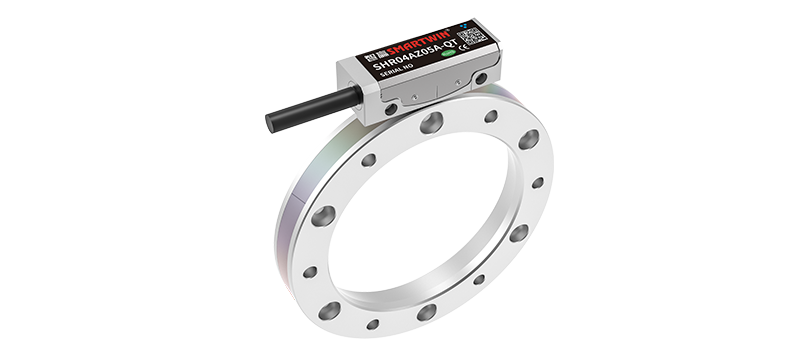
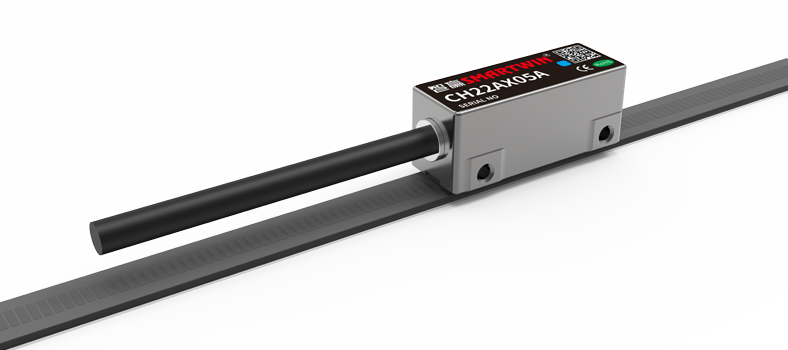
SMARTWIN offers linear encoder solutions for different measurement and feedback requirements. Our selection process considers the required measuring range, feedback configuration, installation conditions, and equipment compatibility rather than relying on a single specification.
Frequently Asked Questions About Linear Encoder Manufacturers
What Should I Look for in a Linear Encoder Manufacturer?
Look for relevant product engineering, controlled production processes, verifiable measurement performance, and application-specific technical support. Customization capability and long-term product consistency are also important when selecting a manufacturer for precision equipment.
How Can I Verify a Linear Encoder Manufacturer's Accuracy Claims?
Request product-specific accuracy test results and review the measuring range, reference temperature, measurement method, and test conditions. Where formal calibration evidence is required, confirm whether the manufacturer can provide documentation from an appropriately accredited laboratory.
Can Linear Encoder Manufacturers Provide Custom Measuring Lengths?
Some manufacturers can provide customized measuring lengths and mechanical configurations, depending on their product design and manufacturing capabilities. Providing the required travel distance, installation dimensions, and operating conditions helps determine whether a custom solution is feasible.
What Is the Difference Between a Linear Encoder Manufacturer and a Supplier?
A manufacturer develops or produces encoder products and generally has direct control over relevant engineering or production processes. A supplier may manufacture products directly or distribute products from other brands. Buyers should clarify who is responsible for product design, quality control, technical support, and after-sales service.
What Information Should I Provide When Requesting a Custom Linear Encoder?
Provide the measuring length, required accuracy, resolution, maximum speed, incremental or absolute feedback preference, electrical interface, installation dimensions, and operating environment. A mechanical drawing and controller or servo drive model can also help the manufacturer evaluate compatibility.
Conclusion
Selecting a reliable linear encoder manufacturer requires a broader assessment than comparing product specifications. Engineering capability, manufacturing consistency, measurable accuracy, customization options, and technical support all influence whether a supplier can meet the requirements of precision equipment.
The most suitable manufacturer is one that can demonstrate its capabilities with relevant technical evidence and provide a solution that fits the actual application. A clear understanding of measurement requirements and supplier responsibilities also makes long-term cooperation more predictable.
SMARTWIN develops motion control components, including linear motors, servo drives, and linear encoders. If you are developing precision equipment or evaluating an encoder solution, share your measuring range, accuracy requirements, installation conditions, and feedback interface with our team for a technical assessment.
Contact Smartwin to discuss your linear encoder requirements for precision equipment.
Back To List