

 En
En



How to Choose the Right Iron Core Linear Motor
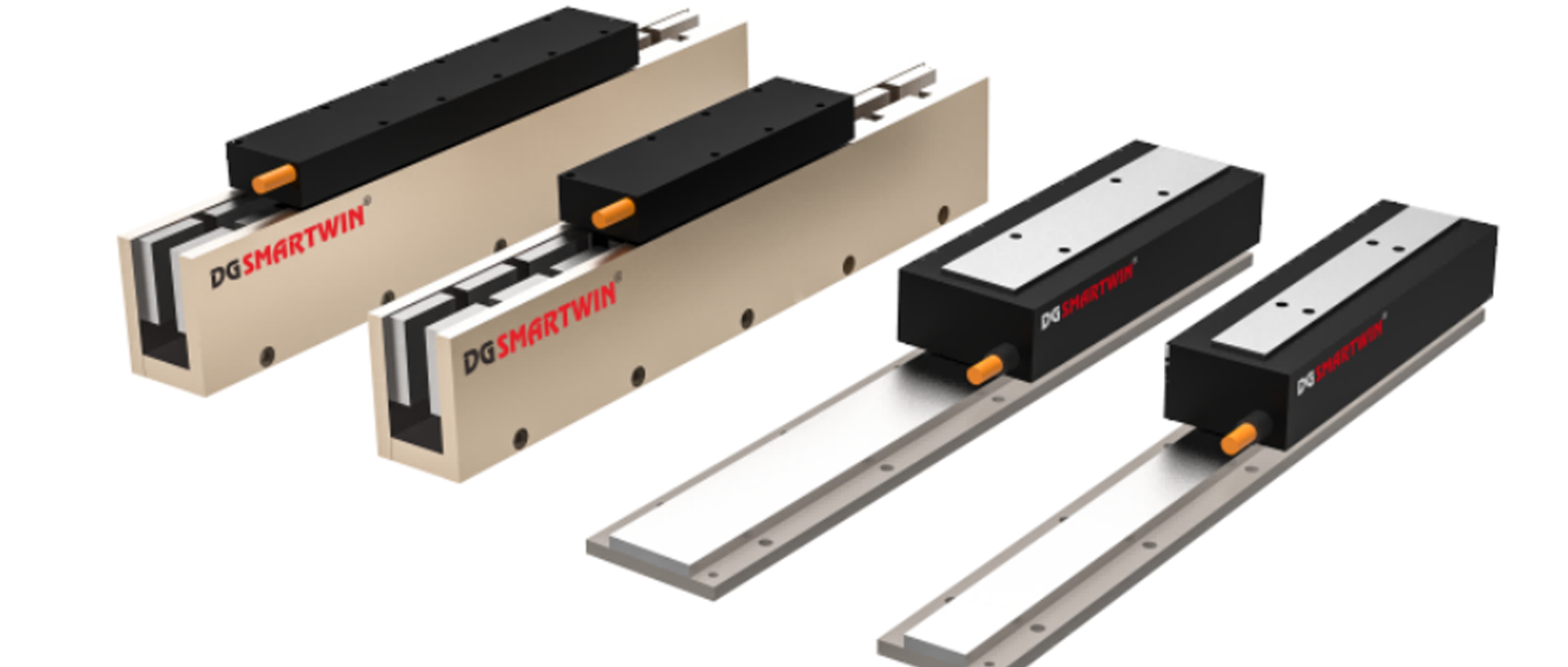
This guide explains how to evaluate the key selection factors before requesting an iron core linear motor quote, and how Smartwin can support buyers with direct drive motion solutions for industrial automation.
Table of Contents
1.How to Match an Iron Core Linear Motor to Load and Force Requirements
2.How Stroke, Speed, and Acceleration Affect Iron Core Linear Motor Selection
3.Accuracy and System Design for Iron Core Linear Motor Applications
4.Cooling, Duty Cycle, and Installation Space for Iron Core Linear Motors
5.How Smartwin Supports Iron Core Linear Motor Selection
How to Match an Iron Core Linear Motor to Your Load and Force Requirements
1.Start with Your Real Moving Load
The first step in selecting an iron core linear motor is understanding your real moving load. You should not only consider the weight of the workpiece. The motor must move the entire moving structure.
In most automation systems, your moving mass may include the workpiece, moving table, fixture, clamp, carriage, slider, tool head, and cable carrier. If these parts are ignored, the selected motor may not provide enough force during acceleration or continuous operation.
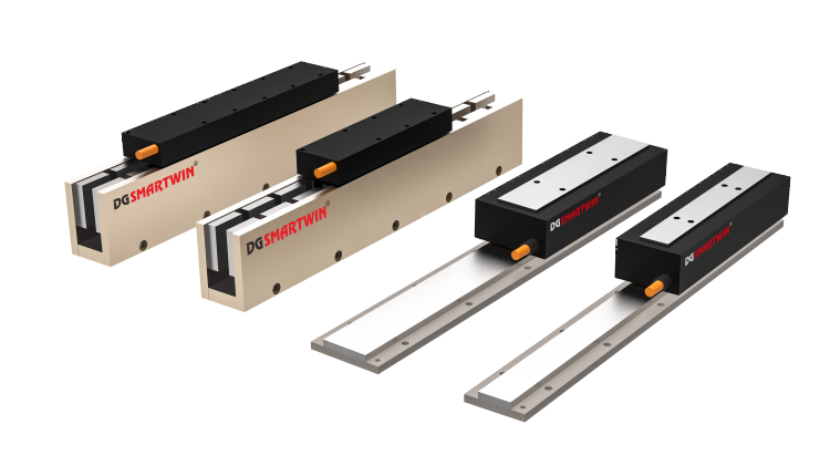
Your mounting direction also matters. A horizontal axis, vertical axis, and inclined axis have different force requirements. For vertical motion, you need to consider gravity and safety holding requirements. For high-speed horizontal motion, acceleration and friction may become more important.
That is why your linear motor load calculation should start with the complete moving structure, not just the product being processed.
2.Understand Continuous Force and Peak Force
Force is one of the most important parameters in iron core linear motor selection, but you should not treat it as one simple number.
Force Type | What It Means | Why It Matters |
Continuous force | Force the motor can provide during stable operation | Affects long-term running, heating, and reliability |
Peak force | Short-time force used for acceleration or impact load | Affects start-stop performance and dynamic response |
If your motor does not have enough continuous force, it may overheat or fail to maintain stable performance during long production cycles. If the peak force is too low, your machine may not reach the required acceleration or cycle time.
However, choosing a much larger high thrust linear motor is not always the best solution. Oversizing can increase the cost of the motor, magnet track, servo drive, machine structure, and cooling system. A better approach is to match the motor to your actual load, acceleration, duty cycle, and safety margin.
How Stroke, Speed, and Acceleration Affect Iron Core Linear Motor Selection
1.Stroke Length Affects Your Whole Linear Motor System
Stroke length has a direct impact on the entire linear motor system. A longer stroke does not only mean a longer travel distance. It may also require a longer magnet track, guide rail, encoder, cable management structure, and machine base.
Before choosing an iron core linear motor, you should distinguish between effective stroke and total installation length. Effective stroke is the actual working travel distance. Total installation length may include acceleration distance, deceleration distance, mechanical limit space, sensor space, and cable routing space.
This is important because a small change in stroke length may affect the total system cost. For example, increasing the travel distance may require a longer magnetic track and encoder. It may also require changes to your machine frame or protection cover.
For accurate selection and quotation, you should provide not only the required stroke, but also your available installation space.
2.Speed and Acceleration Should Match Your Machine Cycle
You may need a high speed linear motor, but speed alone is not enough for proper selection. In real applications, acceleration, deceleration, cycle time, and stop time are just as important.
For long-stroke transport systems, maximum speed may be the key factor. For short-stroke pick-and-place applications, acceleration may be more important than top speed. For laser processing or CNC applications, speed stability and motion smoothness may affect processing quality.
A clear motion profile should include:
Your stroke length
Target speed
Acceleration time
Deceleration time
Dwell time
Cycles per minute
These details help us evaluate peak force, continuous force, heat generation, and drive capacity. Without this information, an iron core linear motor for automation may look suitable in theory but fail to match your actual production cycle.
Accuracy and System Design for Iron Core Linear Motor Applications
1.A Linear Motor Alone Does Not Guarantee High Accuracy
An iron core linear motor can support high-performance direct drive motion, but the motor alone does not determine your final machine accuracy.
In a precision motion system, accuracy depends on many factors, including the encoder, servo drive, guide rail, mechanical base, installation quality, control tuning, and thermal stability.
You should clearly define three different requirements:
Accuracy: how close the actual position is to the target position
Repeatability: how consistently the system returns to the same position
Resolution: the smallest position change the feedback system can detect
For many industrial applications, repeatability may be more important than absolute accuracy. For inspection, measurement, and semiconductor-related equipment, both accuracy and stability may be critical.
When evaluating an iron core linear motor application, you should avoid the assumption that direct drive alone will solve all precision problems. Your complete motion system must be designed around the required positioning performance.
2.Match Your Motor, Drive, Encoder, and Guide Rail
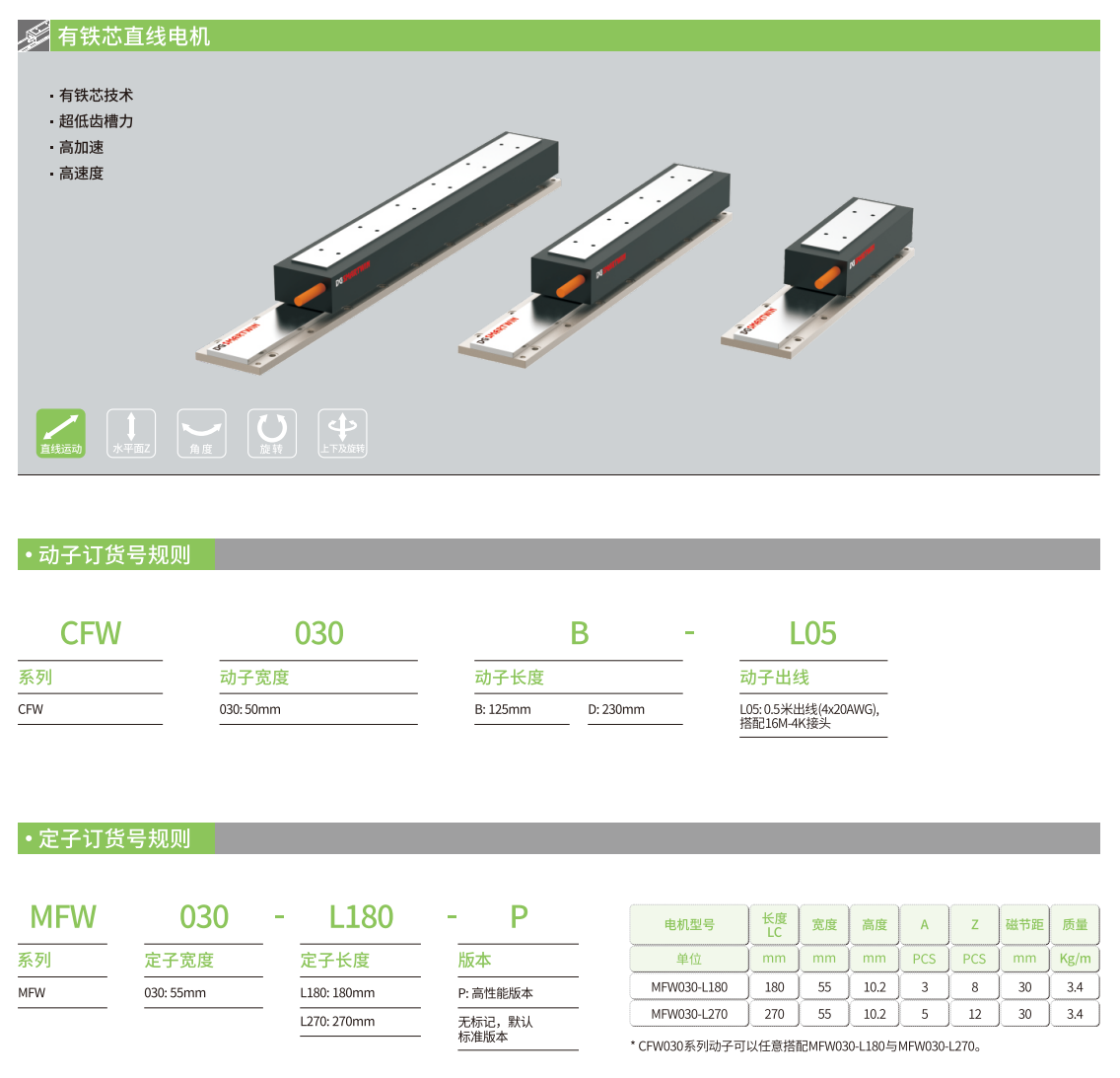
For a direct drive linear motor system, your motor should be matched with the right drive, feedback device, guide rail, and mechanical structure.
The encoder provides position feedback. The drive controls current and motion response. The guide rail supports the load and affects straightness and rigidity. The mechanical base influences vibration, alignment, and thermal stability.
If one part of the system is mismatched, your machine may experience vibration, poor repeatability, unstable speed, or positioning error.
This is why working with a linear motor manufacturer that understands system matching can reduce your engineering risk. For precision automation equipment, a system-based selection approach can help you shorten development time and improve machine reliability.
Cooling, Duty Cycle, and Installation Space for Iron Core Linear Motors
1.Duty Cycle and Cooling Affect Your Long-Term Performance
Cooling is often ignored during the early quotation stage, but it can strongly affect the long-term performance of iron core linear motors.
A motor that runs for a few seconds and then stops has a very different thermal condition from a motor that runs continuously for hours. Your duty cycle determines how much heat is generated and how much time the system has to dissipate that heat.
High load, high acceleration, high cycle frequency, and continuous operation can all increase motor temperature. If heat is not controlled, your system may suffer from reduced force output, servo alarms, accuracy drift, or shorter service life.
Depending on your application, cooling may involve natural cooling, heat dissipation through the mounting base, forced air cooling, or other thermal design methods.
The key point is simple: continuous force must be evaluated together with duty cycle and cooling condition. A motor that works well in intermittent operation may not be suitable for continuous high-duty operation.
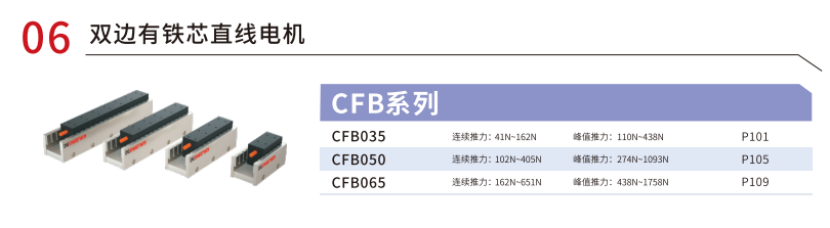
2.Check Your Installation Space and Mechanical Structure Early
Installation space is another critical factor when selecting a custom iron core linear motor or standard model.
Your available space should include the motor body, magnet track, encoder position, cable outlet, cooling interface, guide rail arrangement, limit sensor, and protective structure. In retrofit projects, space is often even more limited because the new direct drive system must fit into an existing machine frame.
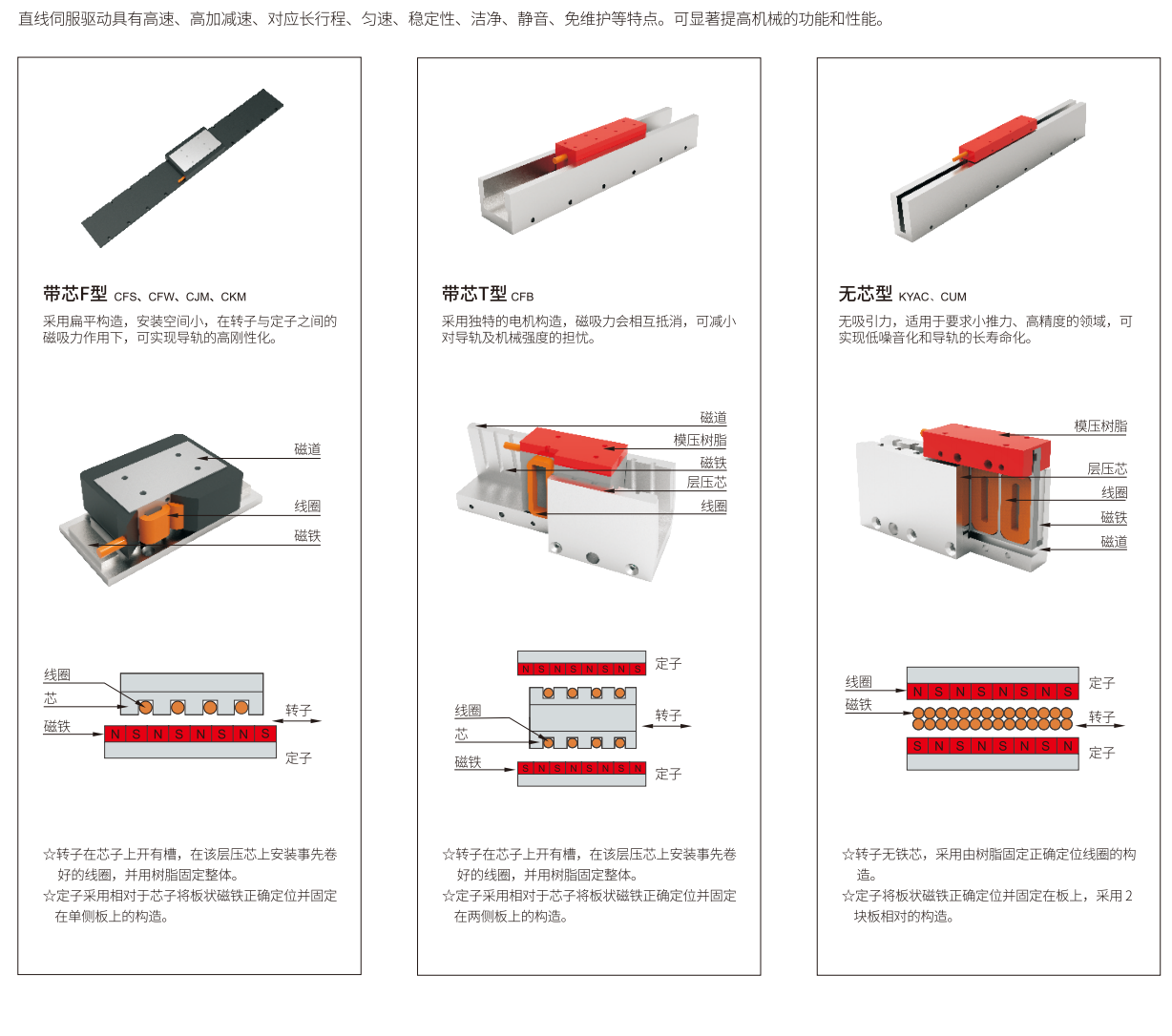
Iron core linear motors can also generate magnetic attraction between the forcer and magnet track. This means your mechanical structure and guide rail system must have enough rigidity to maintain stable air gap and motion accuracy.
If your installation space is limited, a custom iron core linear motor solution may be more practical than modifying the entire machine. Customization can help match force, stroke, mounting size, cable direction, and system layout to your actual equipment design.
How Smartwin Supports Your Iron Core Linear Motor Selection
For your project, this means we do not only look at the iron core linear motor itself. We also consider how the motor works together with the drive, encoder, guide rail, machine structure, and application environment.
With our professional R&D team and application experience, we can help you evaluate the right iron core linear motor solution based on your required force, stroke, speed, accuracy, installation space, and machine performance goals.

If you are not sure which linear motor is right for your machine, our team can help you evaluate your load, stroke, speed, accuracy, and installation requirements to recommend a suitable iron core linear motor solution for your application.
FAQs
1. How do I choose the right iron core linear motor?
To choose the right iron core linear motor, you should evaluate your load, required force, stroke length, speed, acceleration, accuracy, duty cycle, cooling condition, and installation space. The motor should match your actual machine cycle instead of only focusing on the highest thrust rating.
2. What information should I provide before requesting an iron core linear motor quote?
You should provide your moving load, stroke length, mounting direction, required speed, acceleration, accuracy, repeatability, duty cycle, available installation space, cooling requirements, application environment, and estimated quantity. These details help us recommend a more suitable iron core linear motor solution.
3. What is the difference between continuous force and peak force?
Continuous force is the force the motor can provide during stable long-term operation. Peak force is the short-time force used for acceleration, deceleration, or impact load. Both values are important when selecting a high thrust linear motor.
4. Is a higher thrust iron core linear motor always better?
No. A larger motor may provide more thrust, but it can also increase the cost of the motor, magnet track, drive, cooling system, and machine structure. The better choice is a motor that matches your load, acceleration, duty cycle, and safety margin.
Back To List