

 En
En



How to Calculate the Required Force for an Iron Core Linear Motor
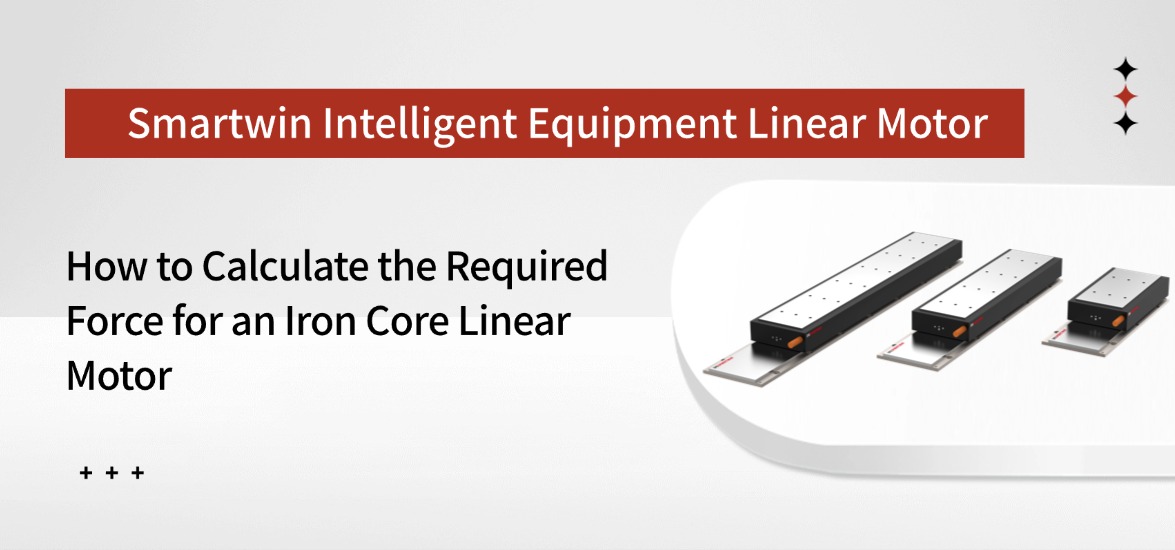
This guide explains the calculation logic in a simple and application-focused way, so you can better understand what data to prepare before asking Smartwin for an iron core linear motor selection recommendation.
Table of Contents
1.Why Force Calculation Matters for Iron Core Linear Motors
2.Start with the Total Moving Mass for Linear Motor Load Calculation
3.Calculate Acceleration Force and Motion Resistance
4.Peak Force vs Continuous Force in Iron Core Linear Motor Selection
5.Apply a Practical Safety Margin for Required Linear Motor Thrust
6.How Smartwin Helps You Calculate the Required Force
Why Force Calculation Matters for Iron Core Linear Motors
An iron core linear motor is often used in machines that require high thrust, fast response, and stable direct linear motion. Before choosing a model, you need to understand how much force the motion axis actually needs.
Many sizing problems happen because the force is estimated too simply. Some users only consider the workpiece weight, while ignoring the moving table, fixture, tool head, cable carrier, acceleration, friction, or vertical motion direction. In real operation, these factors can significantly affect the final force demand.
A clear linear motor force calculation helps you avoid two common problems. If the motor is undersized, the axis may not reach the expected speed or acceleration. If the motor is oversized, the system may cost more than necessary. The purpose of calculation is to match the motor to the real motion condition, not just to choose the largest thrust rating.
Start with the Total Moving Mass for Linear Motor Load Calculation
1.Include all moving parts, not only the workpiece
The first step in linear motor load calculation is to define the total moving mass. This means all parts that move with the motor, not only the product being processed.
For example, the moving mass may include the workpiece, moving table, fixture, clamp, carriage, slider, tool head, and cable carrier. In laser processing, CNC equipment, inspection systems, and automation platforms, these additional parts can have a major impact on force demand.
If you ignore part of the moving mass, the calculated required force may be too low. This can lead to weak acceleration, longer cycle time, or unstable motion under load.
2.Consider the mounting direction
The direction of movement also changes the force requirement. A horizontal axis mainly needs to overcome acceleration and friction. A vertical axis must also overcome gravity. An inclined axis may need to consider both acceleration force and part of the load weight.
That is why two machines with the same load weight may still require different linear motor thrust. The moving direction, mechanical layout, and load behavior all need to be considered before selecting an iron core linear motor.
Calculate Acceleration Force and Motion Resistance
1.Use acceleration force as the starting point
The basic formula for acceleration force is:
Acceleration Force = Moving Mass × Acceleration
This means the required force increases when the moving mass becomes heavier or when the machine needs faster acceleration.
For example, if your machine has a heavy moving table and a short cycle time, the motor may need high acceleration force even if the stroke is not long. This is common in high-speed automation, loading axes, pick-and-place systems, and industrial equipment with repeated fast motion.
In simple terms, the higher the moving mass and acceleration, the higher the force demand.
2.Add motion resistance for real machine conditions
Real machines do not move in ideal conditions. Besides acceleration force, you also need to consider motion resistance.
This may include guide rail friction, bearing resistance, cable drag, seal resistance, gravity on vertical or inclined axes, and external process forces such as cutting, pressing, or contact load.
A practical force structure can be written as:
Required Force = Acceleration Force + Friction Force + Gravity Force + External Process Force
You do not always need a complex calculation at the early stage. But you should identify which resistance factors exist in your machine. This helps prevent underestimating the true force demand.
Peak Force vs Continuous Force in Iron Core Linear Motor Selection
1.Peak force supports acceleration and short-time demand
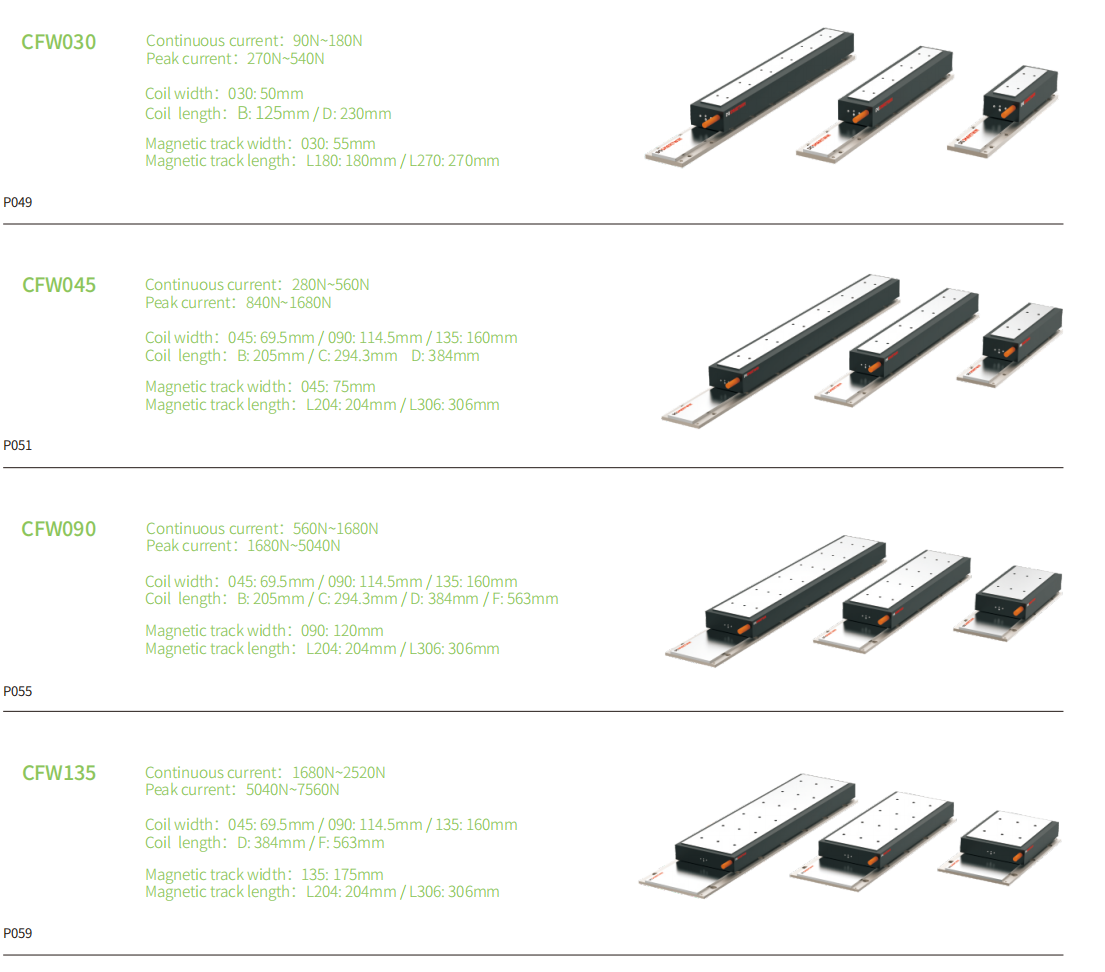
In iron core linear motor selection, peak force refers to the short-time force needed during acceleration, deceleration, or sudden load changes.
Peak force is important when your machine needs fast start-stop motion, short cycle time, high acceleration, or quick response under heavy load. If peak force is insufficient, the motor may still move the axis, but it may not reach the expected production speed.
For this reason, peak force is closely related to machine productivity and dynamic performance.
2.Continuous force affects heat and long-term operation
Continuous force refers to the force the motor can provide during long-term operation without exceeding thermal limits.
This value is especially important for machines with frequent cycles, high duty operation, or long production hours. If the required continuous force is too close to the motor’s limit, the motor may heat up quickly or become unstable during operation.
Apply a Practical Safety Margin for Required Linear Motor Thrust
A safety margin helps protect your motion system from real-world changes. Load weight may vary, friction may increase over time, cables may add drag, and external process forces may change during operation.
That is why the calculated required linear motor thrust should not be equal to the motor’s maximum limit. A practical margin gives the system enough reserve for stable operation.
However, the margin should not be too large. Oversizing the motor may increase the cost of the motor, drive, magnetic track, structure, and installation space. A good safety margin should balance reliability and cost.

A simple way to think about it:
Factor to Check | Why It Matters |
Moving mass | Determines the basic force demand |
Acceleration | Strongly affects peak force |
Mounting direction | Affects gravity force |
Duty cycle | Affects continuous force and heat |
External resistance | Prevents under-sizing |
Safety margin | Adds reserve for real operation |
The right margin depends on your application. A stable horizontal axis may need less reserve than a vertical axis, high-cycle machine, or system with impact force.
How Smartwin Helps You Calculate the Required Force
At Smartwin, we do not calculate force based only on the workpiece weight. We review the full motion condition, including total moving mass, stroke, speed, acceleration, mounting direction, duty cycle, resistance, and application environment.
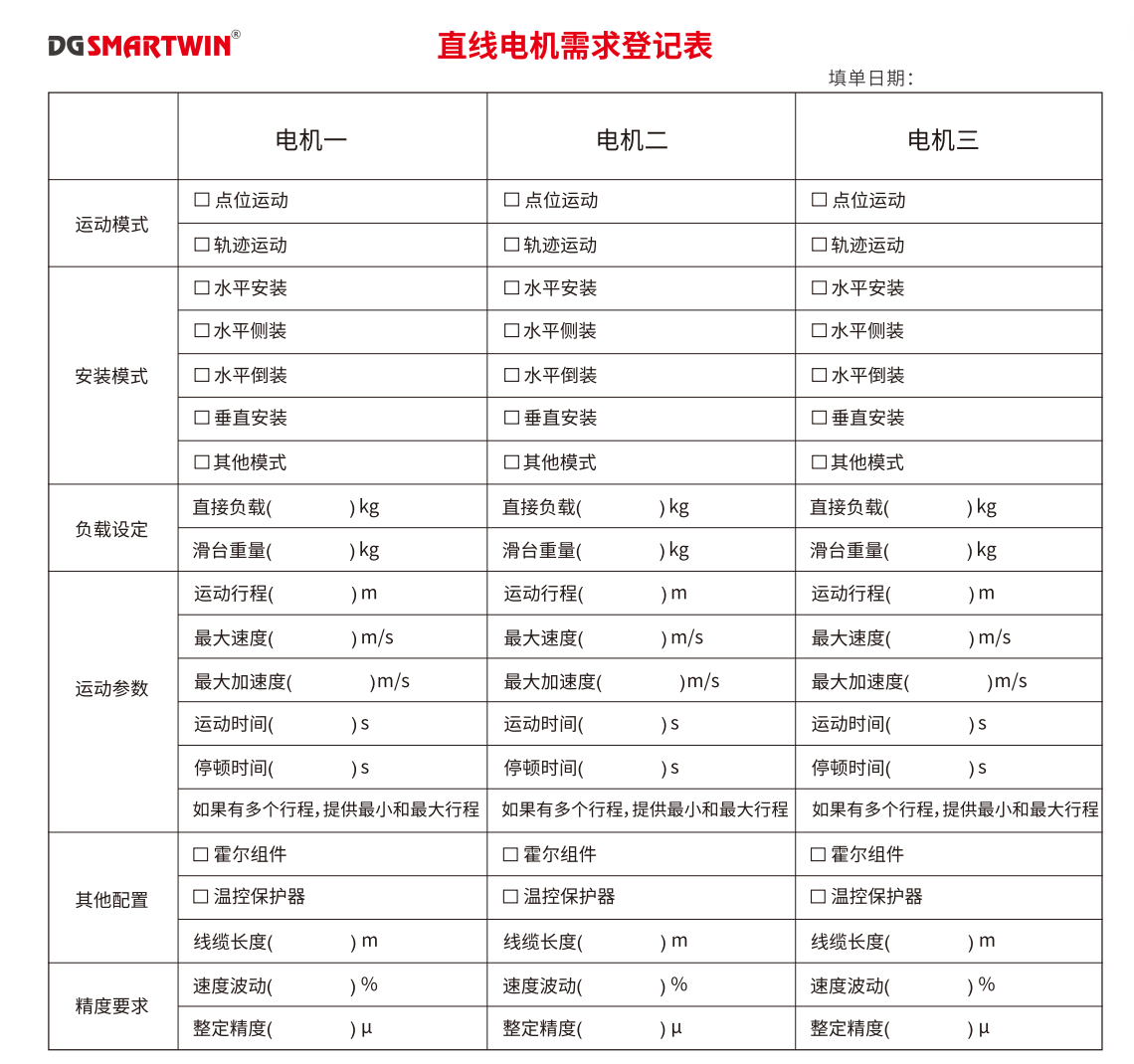
If you are not sure how to calculate the required force for your machine, you can send us your moving mass, stroke, speed, acceleration, mounting direction, duty cycle, and working conditions. Smartwin can help you review the parameters and recommend a suitable iron core linear motor solution for your application.
The goal is not only to choose a motor with enough thrust. It is to help your machine achieve the right balance of force, speed, reliability, and practical integration.
FAQs
1.What should be included in the moving mass?
The moving mass should include all parts that move with the motor, such as the workpiece, moving table, fixture, clamp, carriage, slider, tool head, cable carrier, and moving cables.
2.Why is mounting direction important in linear motor force calculation?
Mounting direction changes the force requirement. A horizontal axis mainly needs to overcome acceleration and friction, while a vertical axis must also overcome gravity. An inclined axis may require both acceleration force and partial gravity compensation.
3.What is the difference between peak force and continuous force?
Peak force is the short-time force needed for acceleration, deceleration, or sudden load changes. Continuous force is the force the motor can provide during long-term operation without exceeding thermal limits.
4.Why does continuous force matter for an iron core linear motor?
Continuous force affects heat and long-term stability. If the required continuous force is too close to the motor’s limit, the motor may heat up quickly or become unstable during operation.
5.How can Smartwin help with linear motor force calculation?
Smartwin can review your moving mass, stroke, speed, acceleration, mounting direction, duty cycle, resistance, and working conditions. Based on these parameters, we can help recommend a suitable iron core linear motor solution for your application.
Back To List