

 En
En



Common Mistakes When Choosing a Linear Motor
This article explains the most common mistakes in linear motor selection and how you can avoid them. It also shows how Smartwin helps you review the complete motion axis and recommend a practical Smartwin linear motor solution for your application.
Table of Contents
1.Choosing by Linear Motor Thrust Rating Only
2.Ignoring the Real Linear Motor Motion Profile
3.Choosing the Wrong Linear Motor Type for the Application
4.Overlooking the Linear Motor System: Drive, Encoder, and Guide Rail
5.Ignoring Linear Motor Installation Space and Working Environment
6.How Smartwin Helps You Avoid Linear Motor Selection Mistakes
Choosing by Linear Motor Thrust Rating Only
A common mistake is treating the highest thrust value as the safest choice. In real machine design, a larger thrust rating does not automatically mean better performance. It may also bring higher cost, larger structure, stronger drive requirements, and more installation constraints.
The problem is that a single thrust value cannot fully reflect your actual working cycle. A motor with a high force rating may still be unsuitable if the application involves frequent start-stop motion, limited cooling space, or strict positioning stability.
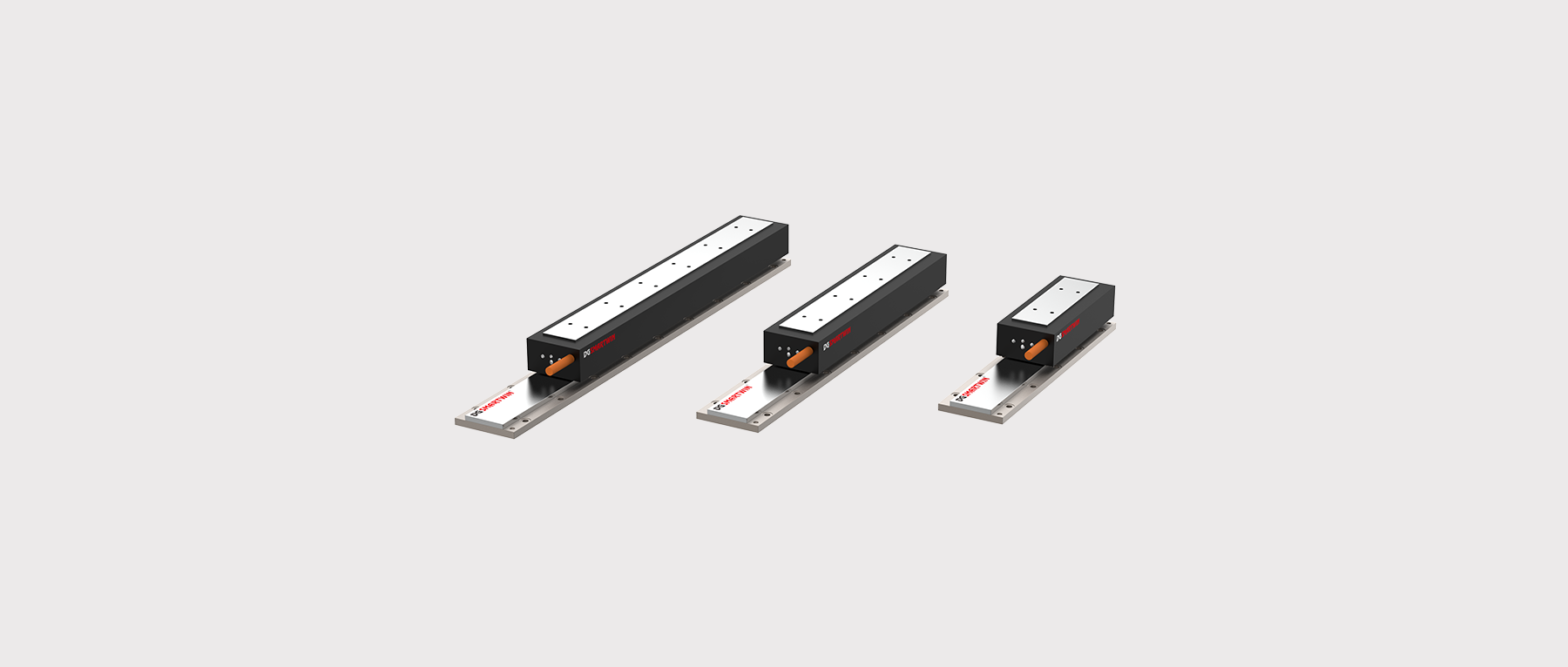
Instead of choosing by thrust rating alone, you should match the motor to the real application. Check whether the motor can support your load, motion rhythm, installation conditions, and long-term operation requirements. This helps avoid both underperformance and unnecessary oversizing.
Ignoring the Real Linear Motor Motion Profile
Another mistake is providing only load and stroke while ignoring the complete linear motor motion profile. In real applications, the motor does not simply move from point A to point B. It must accelerate, reach speed, decelerate, stop, and repeat the cycle.
A useful motion profile should include stroke length, target speed, acceleration time, deceleration time, dwell time, cycle frequency, and duty cycle. These details are important for accurate linear motor sizing.
If the motion profile is missing, the selected motor may not match the real production rhythm. For example, a short-stroke application with fast repeated motion may require higher acceleration force than a long-stroke system with slower movement. Ignoring this can lead to poor cycle time, drive mismatch, unstable response, or excessive heat.
Choosing the Wrong Linear Motor Type for the Application
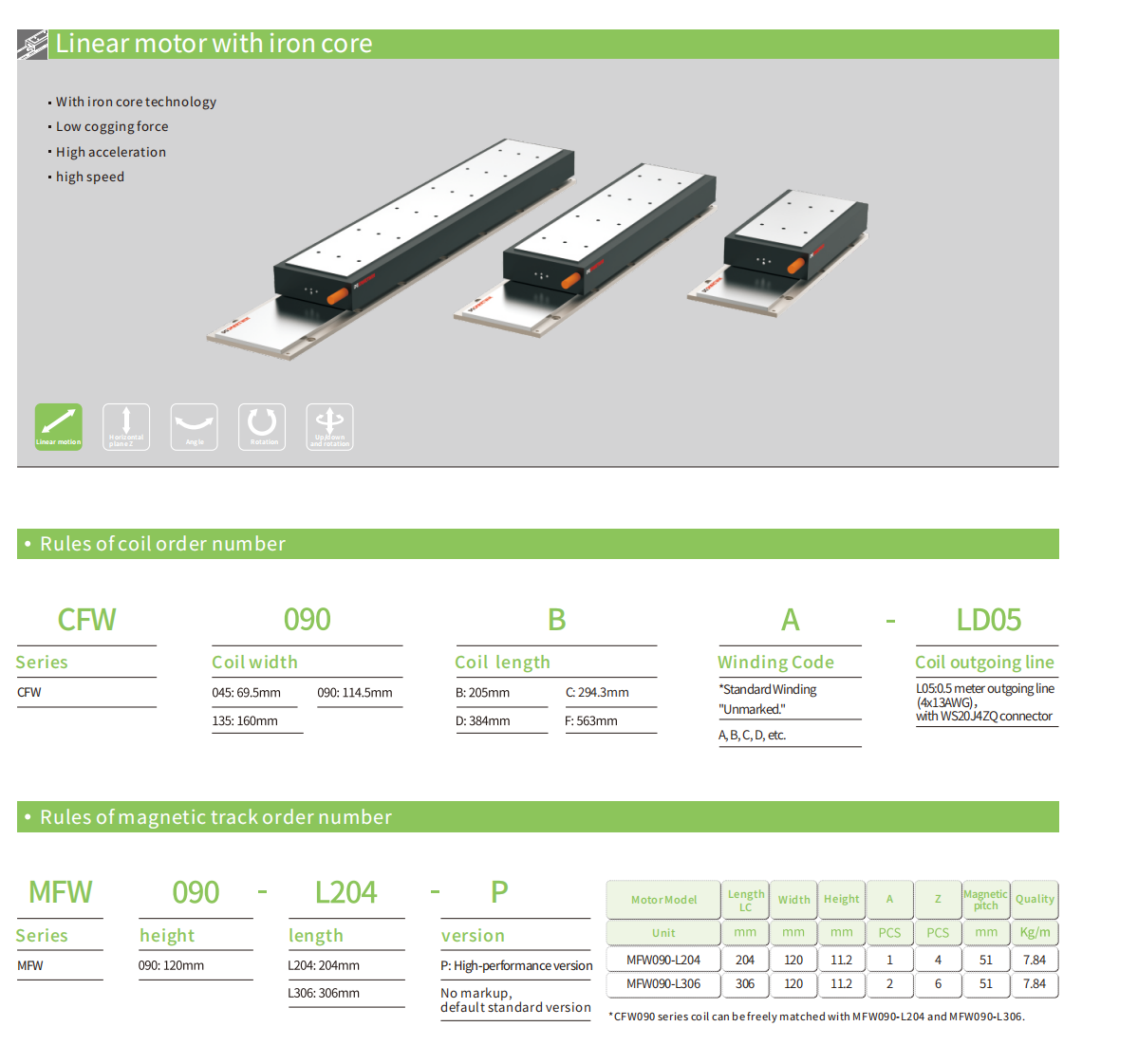
A third mistake is choosing a motor type before understanding what the application really needs. Iron core linear motor and ironless linear motor designs serve different priorities.
Motor Type | Better For | Possible Issue If Misused |
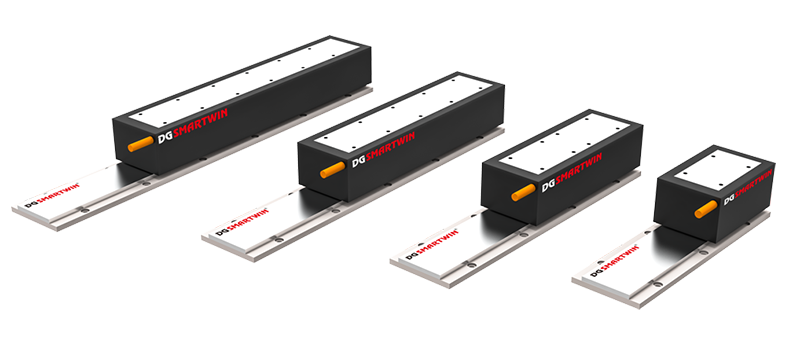
Iron core linear motor | High thrust, heavy load, high acceleration, compact high-force output | May not be ideal for ultra-smooth low-force motion |
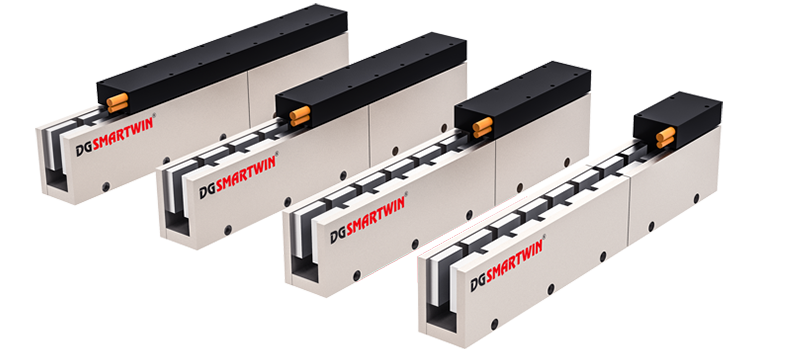
Ironless linear motor | Low vibration, cog-free motion, lightweight precision movement | May not provide enough force for heavy-duty applications |
If your machine requires strong thrust and heavy-load motion, an iron core design may be more suitable. If your application requires extremely smooth low-speed motion, low vibration, or light moving mass, an ironless design may be the better choice.
The key is not choosing one type because it sounds more advanced. The key is matching the motor structure to the real motion requirement.
Overlooking the Linear Motor System: Drive, Encoder, and Guide Rail
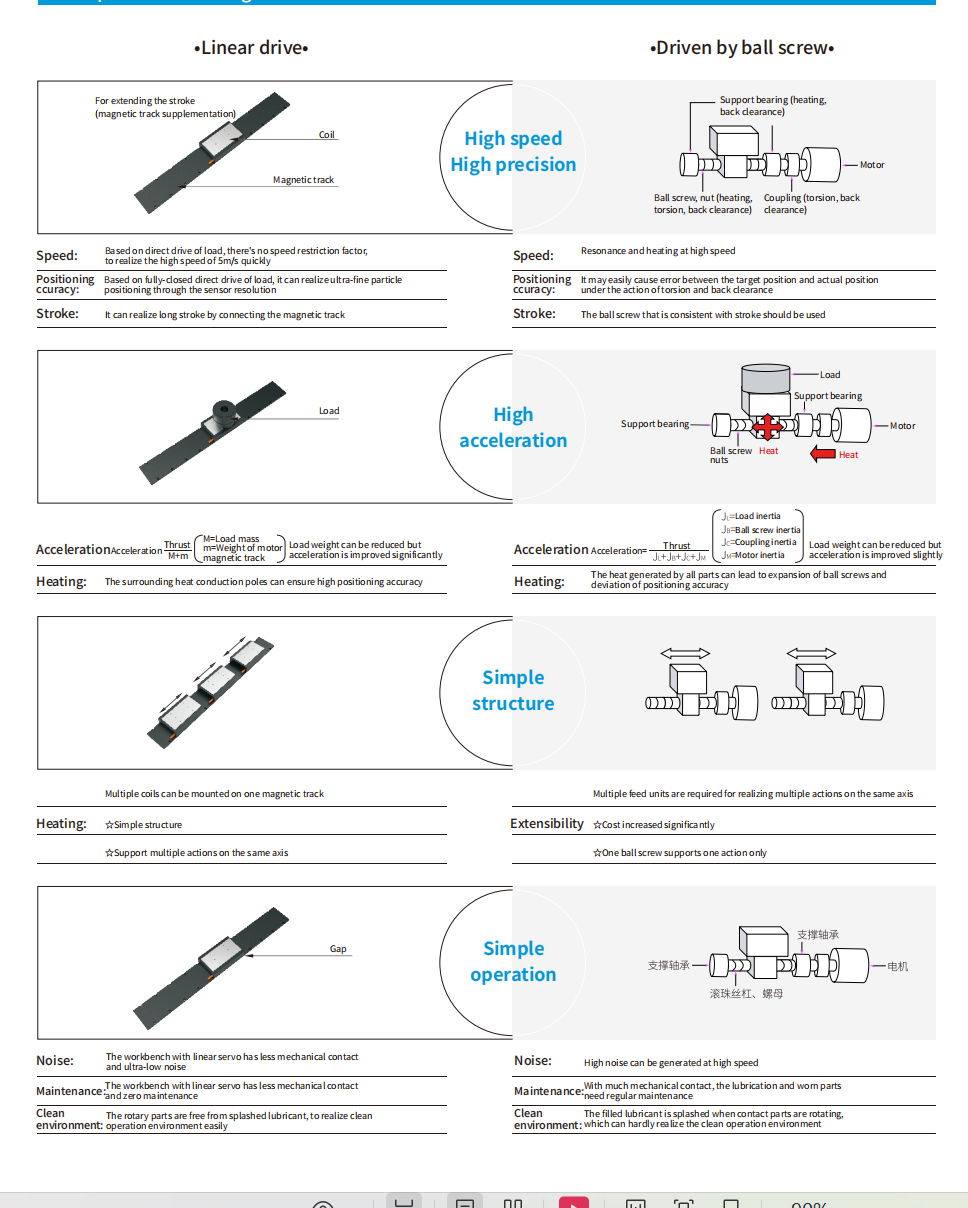
A linear motor should be selected as part of a complete linear motor system, not as a separate component. The motor, drive, encoder, guide rail, controller, and mechanical structure must work together to achieve stable motion.
If the system is not matched properly, even a suitable motor may perform poorly. The machine may experience difficult tuning, unstable speed, vibration, poor repeatability, or positioning errors. For example, the encoder affects feedback accuracy, the drive affects response, and the guide rail affects rigidity and straightness.
To avoid this mistake, evaluate the full motion axis before final selection. For high-speed, high-precision, or heavy-load applications, the motor should be considered together with feedback, drive control, and mechanical support.
Ignoring Linear Motor Installation Space and Working Environment
A motor may meet the technical requirements but still fail during integration if linear motor installation is not checked early. Available space should include more than the motor body. You also need to consider the magnetic track, encoder position, guide rail layout, cable outlet, protection cover, and maintenance access.
The working environment is another key factor. Dust, metal chips, oil mist, high temperature, vibration, or cleanroom requirements can affect motor performance and service life. If these conditions are ignored, the system may require later redesign or extra protection.
To avoid installation problems, confirm the machine layout and operating environment before choosing a standard or custom linear motor solution. This helps reduce structural changes and improves long-term reliability.

How Smartwin Helps You Avoid Linear Motor Selection Mistakes
Smartwin helps reduce selection mistakes by looking at the motion system as a whole. Instead of treating the motor as a separate part, we consider how the linear motor works with the driver, encoder, feedback system, and mechanical structure. This is important because many problems, such as vibration, positioning error, difficult commissioning, or unstable high-speed motion, often come from poor system matching rather than the motor itself.
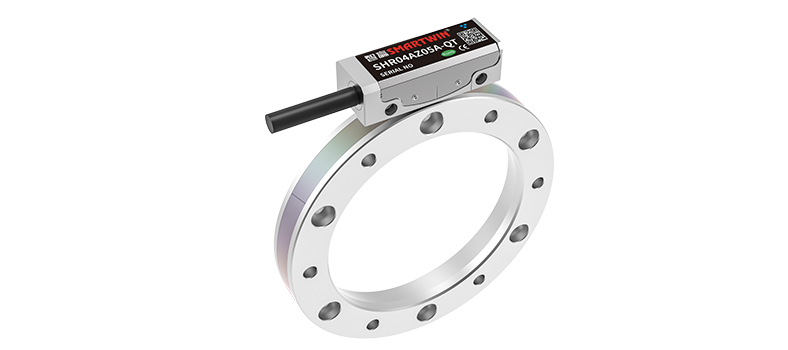
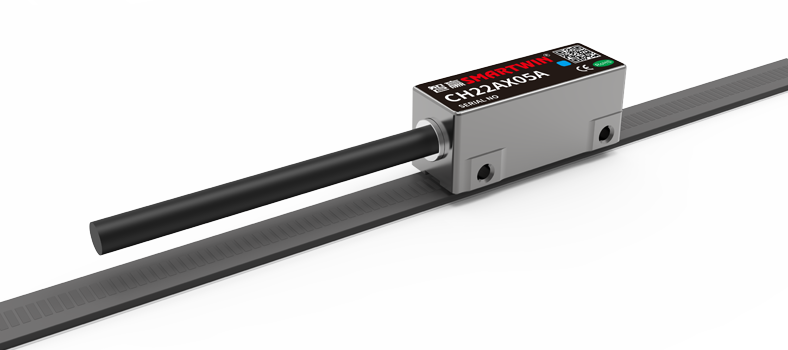
Smartwin’s direct drive solution is built around the combination of linear motor, driver, and encoder. This allows us to support projects where motion accuracy, response speed, and integration stability are critical. For applications that require better feedback control, our encoder and drive-related product capabilities can help improve system matching and reduce debugging risk.
Another advantage is Smartwin’s standardized and modular product thinking. For customers, this means the motion solution does not always need to start from a fully custom design. Standardized linear motors, drives, and encoders can be flexibly combined according to different application needs, helping reduce selection complexity, shorten commissioning time, and improve project efficiency.
If you are unsure whether your current motor choice may cause performance or integration problems, Smartwin can help you review the complete motion axis and provide a more practical linear motor solution for your machine.
FAQs
1.Why should I consider the complete linear motor system?
A linear motor does not work alone. The drive, encoder, guide rail, controller, cable system, and mechanical structure all affect performance. Poor system matching may cause vibration, unstable speed, or positioning errors.
2.What installation factors should I check before choosing a linear motor?
You should check the motor body, magnetic track, encoder position, guide rail layout, cable outlet, protection cover, maintenance access, and available installation space.
3.When do I need a custom linear motor?
You may need a custom linear motor when standard models cannot fit your machine structure, stroke requirement, cable layout, feedback method, or working environment.
4.How can Smartwin help avoid linear motor selection mistakes?
Smartwin can review your complete motion axis, including motor type, driver, encoder, feedback system, mechanical structure, and application conditions. This helps reduce mismatch risk and supports a more practical linear motor solution.
Back To List