

 En



Linear encoder


high precision
Multiple resolution options can meet different needs.

high motion speed
The encoder features high motion speed, meeting high-speed requirements.

compact structure
Compact and space-saving design can meet, meeting space constraints.

high resistance to contamination
The encoder has excellent anti-contamination capability, reducing the impact of the environment on its performance.


Inductive type Incremental optical grating ruler
Output type digital quantity

Inductive type Incremental optical grating ruler
Output type digital quantity

Linear Encoder FAQ
- Q:
When should you choose an absolute linear encoder instead of an incremental one?
A: An absolute linear encoder is suitable when a machine needs to determine its position immediately after power-up without a conventional homing cycle. This is particularly useful for automated equipment where returning to a reference point would interrupt production or increase startup time.
An incremental encoder is a practical option when the system can establish its reference position during startup. The choice depends on the machine's operating sequence, feedback requirements, and controller compatibility. - Q:
Which is better for your application: a magnetic or optical linear encoder?
A: A magnetic linear encoder is often suitable for industrial environments involving dust, oil, vibration, or long travel distances. An optical linear encoder may be preferred for precision motion systems requiring fine position feedback and high measurement performance.
Neither technology is universally better. Consider the required accuracy, resolution, measuring length, operating speed, and installation conditions. Comparing the specifications of available models helps determine which technology is better suited to the application. - Q:
How do you choose between CH22, CA26, SH04, and SA32 linear encoders?
A: SMARTWIN offers four linear encoder series with different sensing technologies and feedback methods:
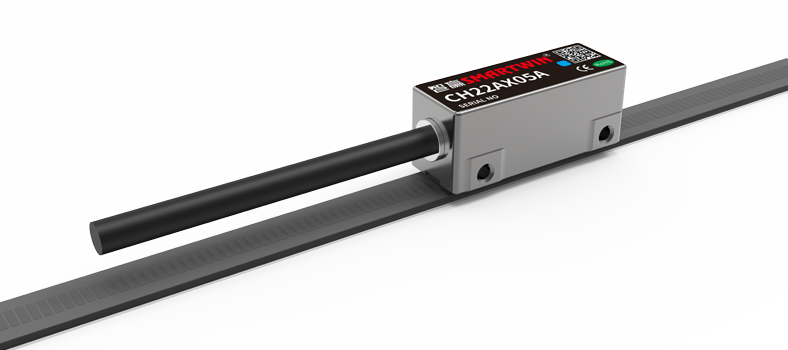
CH22: Incremental magnetic encoder for industrial position feedback and long-travel applications.
CA26: Absolute magnetic encoder for systems requiring absolute position information after power-up.
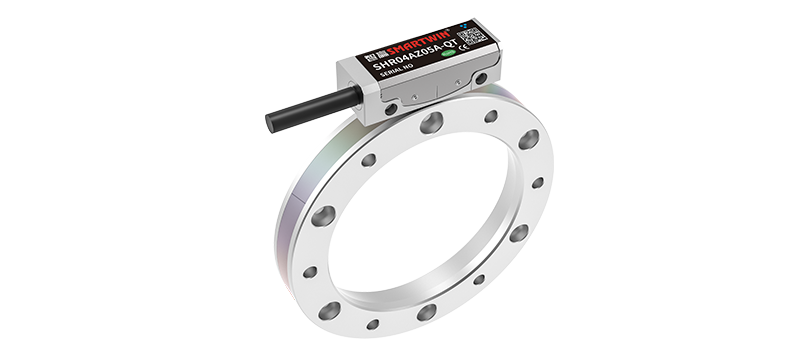
SH04: Incremental optical encoder for precision motion applications requiring optical position feedback.
SA32: Absolute optical encoder with an EnDat 2.2 interface for compatible precision motion controllers.
If the application involves contamination or long travel, the magnetic series may be worth considering. For precision optical measurement, compare the SH04 and SA32 according to the required feedback type. Final selection should also account for accuracy, speed, mounting requirements, and controller compatibility. - Q:
What linear encoder specifications matter most for long-travel or high-speed motion?
A: For long-travel applications, check the effective measuring length, positioning accuracy, and installation tolerances across the full stroke. High-speed motion also requires sufficient encoder response speed and reliable signal transmission.
For example, the SMARTWIN CH22 supports measuring lengths up to 50 m and a maximum response speed of 5 m/s. The SH04 optical series offers different resolution and speed configurations, allowing engineers to evaluate the trade-off between feedback resolution and operating speed.
The selected encoder must meet the application's requirements under its actual mounting and operating conditions. - Q:
How does a linear encoder provide position feedback in a linear motor system?
A: A linear encoder measures the actual displacement of the moving axis and sends position feedback to the motion controller. The controller compares this feedback with the commanded position and adjusts the motor drive to reduce position error during operation.
Because the encoder measures linear movement directly, it can provide feedback without relying on a rotary transmission mechanism. For a closed-loop linear motor system, the encoder's accuracy, signal interface, response speed, and installation arrangement must match the controller and motion requirements. - Q:
What should you check before installing a linear encoder on a precision motion stage?
A: Check the available mounting space, scale alignment, readhead position, scanning gap, and measuring length before installation. The mounting structure must maintain the required relationship between the readhead and scale throughout the axis travel.
Cable routing and access for adjustment also matter, particularly on high-speed or frequently moving stages. Follow the selected encoder's installation drawings and tolerances rather than applying the same mounting settings to different optical or magnetic models. - Q:
What linear encoder solutions does SMARTWIN offer as a manufacturer?
A: SMARTWIN develops linear encoders for precision automation, including CH22 and CA26 magnetic encoders and SH04 and SA32 optical encoders. These products cover incremental and absolute position feedback for different motion control applications.
As a linear encoder manufacturer, SMARTWIN also develops linear motors and servo drives, allowing encoder selection to be considered alongside the complete motion system. Equipment manufacturers can provide their measuring length, accuracy, interface, and installation requirements for evaluation of suitable encoder configurations.